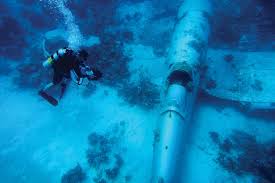
Get ready to plunge into a real-life adventure that’s part history lesson, part sci-fi thriller! In 2013, the BentProp Project teamed up with Scripps Institution of Oceanography to send robotic submarines on a noble mission: scouring the Pacific Ocean near Palau for the remains of U.S. airmen whose planes went down during World War II. Armed with sonar, cameras, and a whole lot of heart, these autonomous underwater vehicles (AUVs) are diving deep to uncover lost heroes and bring peace to their families. It’s a high-tech, high-stakes treasure hunt that’s as moving as it is mega-cool—let’s swim into this robotic rescue party!
Robo-Subs to the Rescue
Picture a sleek, torpedo-shaped robot gliding through the turquoise waters of Palau, scanning the ocean floor like a detective with a magnifying glass. That’s the scene in 2013, as BentProp—a nonprofit dedicated to finding WWII MIAs (Missing in Action)—joined forces with Scripps to deploy AUVs in a search for downed U.S. planes. These autonomous subs, like the REMUS 100, are kitted out with side-scan sonar to map the seabed and high-res cameras to snap pics of anything shiny, like a B-24 Liberator’s wing or a P-38 Lightning’s propeller.
The mission focused on Palau’s coral reefs and lagoons, where fierce 1944 battles left dozens of U.S. airmen missing after their planes crashed into the sea. BentProp’s founder, Pat Scannon, had already found 30 wreck sites over decades, but the ocean’s vastness called for robotic help. The AUVs swam pre-programmed paths, diving to 200 feet and covering miles of terrain in a single go. When they spotted something suspicious—like a fuselage or landing gear—they pinged the team, who sent human divers to confirm. “It’s like finding a needle in a haystack, but with robots!” Scannon might’ve cheered.
Why It’s So Freakin’ Awesome
This project’s a blast because it’s a perfect mix of heart and high-tech! The AUVs aren’t just gadgets—they’re heroes on a mission to honor fallen soldiers and give families answers after 70 years. Each robot, weighing about 80 pounds, can work for 22 hours straight, mapping the ocean with sonar that “sees” through murky water. Their cameras catch details human divers might miss, like a serial number on a wing), turning cold cases into warm closure.
The tech’s a hoot, too. REMUS AUVs use GPS and inertial navigation to roam solo, dodging reefs like underwater ninjas. Onboard computers crunch data in real-time, flagging wrecks with eerie precision. The 2013 expedition tested new tricks, like adaptive pathfinding to avoid obstacles, paving the way for smarter searches. It’s not all smooth sailing—currents and coral snags can throw bots off—but every dive’s a step toward history. Plus, the teamwork vibe, with scientists, historians, and Navy divers high-fiving, makes it feel like a blockbuster with a happy ending.
A Future of Deep-Sea Discoveries
The 2013 Palau mission was a game-changer, proving robots can tackle history’s toughest mysteries. By 2025, AUVs are stars in ocean exploration, hunting shipwrecks, mapping reefs, and even chasing lost subs. BentProp’s work continues, with newer REMUS models diving deeper (up to 6,000 meters) and using AI to spot wrecks faster. Imagine a future where robo-divers recover lost treasures, explore alien-like sea vents, or find Cleopatra’s tomb underwater—all while honoring heroes like Palau’s airmen.
So, here’s to the robo-divers of 2013, the underwater sleuths bringing WWII heroes home! They’re proof that the future’s not just techy—it’s a heartfelt, wave-riding adventure. Grab your flippers and join the mission—because when robots search the deep, history’s one big, splashy party!