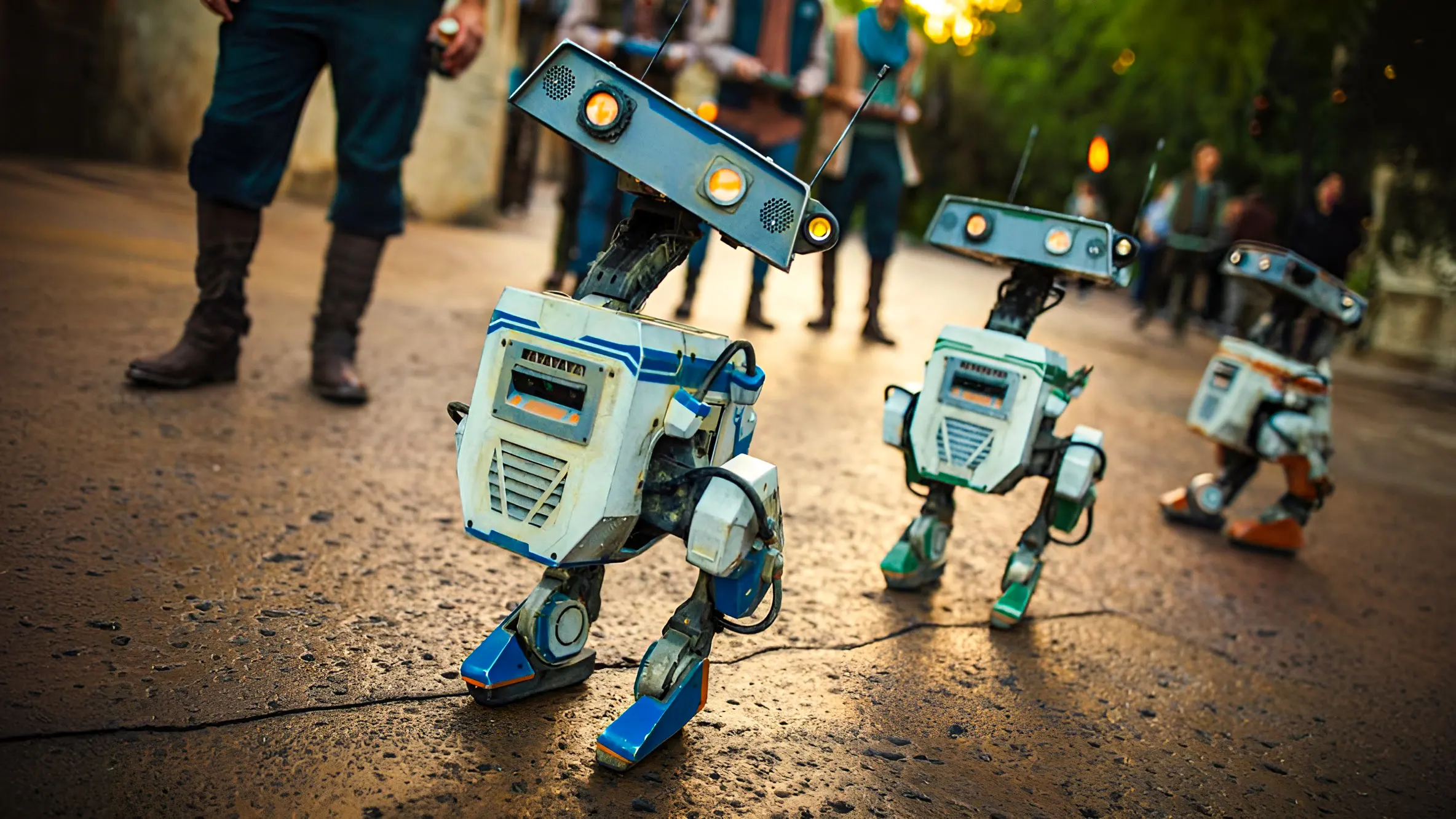
Hold onto your Mickey ears, because Disney Research Studios in Zurich just dropped the most adorable robot at the 2023 IROS conference in Detroit! This child-sized, bipedal bot, looking like a lovechild of WALL-E and a baby chick, waddles, tilts its boxy head, and wiggles its antennae with cartoon-level charm. Using reinforcement learning, Disney’s team, led by Moritz Bächer, taught it to move like an animated character in just months, not years, blending 3D-printed parts with animation wizardry. Popular Science swooned over its charisma, and it’s no wonder—this little guy’s ready to steal hearts and maybe roam Disney parks someday. Let’s toddle into this delightful, wiggly robo-party
The Cutest Bot on Two Legs
Imagine a robot barely taller than a toddler, strutting with the swagger of a Pixar sidekick. Unveiled on October 1, 2023, this unnamed bot—modeled after Star Wars’ BD-1, per New Atlas—sports a compact body, bird-like legs, and a head with four degrees of freedom to nod, tilt, and glance curiously, per IEEE Spectrum. Its expressive moves come from a reinforcement learning pipeline that trains it on a single PC, using simulations to nail cartoonish gaits without defying physics, as Bächer told PopSci. Mostly 3D-printed with off-the-shelf actuators, it’s a low-cost marvel built in months, not years.
This bot’s no stiff-legged droid—it bounces and sways, with antennae twitching like a curious pup’s ears. X posts, like @LiorOnAI’s, praised its sim-trained policy for handling rough terrain and recovering from bumps, while @TrungTPhan noted Disney’s knack for tying emotions to every step or head tilt. Inspired by Disney’s animation legacy, it uses Adversarial Motion Prior (AMP) to learn “cute” moves humans love, per AI Supremacy, making it feel alive. It’s not just a robot—it’s a character you want to hug
Why It’s So Freakin’ Fun
This bot’s a blast because it’s like a cartoon hopped off the screen! Its waddling walk and head-tilting quirks scream Disney magic, making you grin like you’re meeting Baymax or WALL-E. X user @JacklouisP called it a “blueprint for robots with personality,” blending legged robot control and character animation. Unlike clunky humanoids, its expressive body language—crafted by animators and tuned by AI—feels warm and approachable, perfect for theme parks or social settings, per New Atlas.
The tech’s a hoot, too. Reinforcement learning lets animators dream up wild moves, while the system ensures they work in the real world, per Freethink. Simulations slashed training time, and modular parts mean Disney could swap legs or arms for new characters, like a robotic Judy Hopps or Stitch. Sure, it’s not park-ready yet—Disney’s mum on plans, and it might trip on a curb, per IEEE Spectrum—but its charm bridges the human-robot gap, vital as bots enter homes and hospitals, per PopSci. This is Disney Imagineering at its best: imagination plus engineering
A Future Full of Robo-Sidekicks
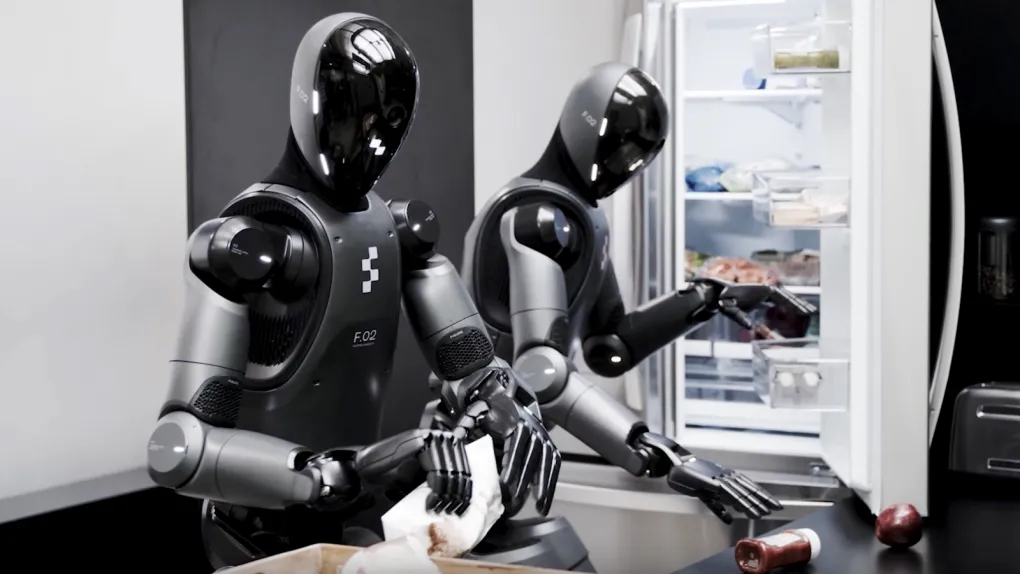
This 2023 debut is a sneak peek at a cuddly robo-future. Disney’s been crafting expressive bots for years, from 2018’s flying Stuntronics to 2024’s Duke Weaselton, a hopping animatronic aided by a robotic kiosk, per IEEE Spectrum. X posts, like @WevolverApp’s, hint at Disney’s Robot Motion Diffusion Model (RobotMDM) for even smoother moves by 2025. The $38 billion humanoid market’s booming, with Figure’s chatty bots and Unitree’s sprinters, but Disney’s edge is emotional connection, per New Scientist.
Picture a future where these bots greet you at Disneyland, lead park tours, or even help in schools, their quirky gaits sparking joy. Challenges remain—complex terrains could stump it, and public safety’s a hurdle, per ResearchGate. But with Disney’s animation know-how and AI leaps, we’re inches from a world of huggable robo-pals. So, here’s to this waddling wonder, bringing cartoon dreams to life! It’s proof the future’s not just high-tech—it’s a bouncy, heart-melting, robo-cute party. Join the Disney bot bash!