
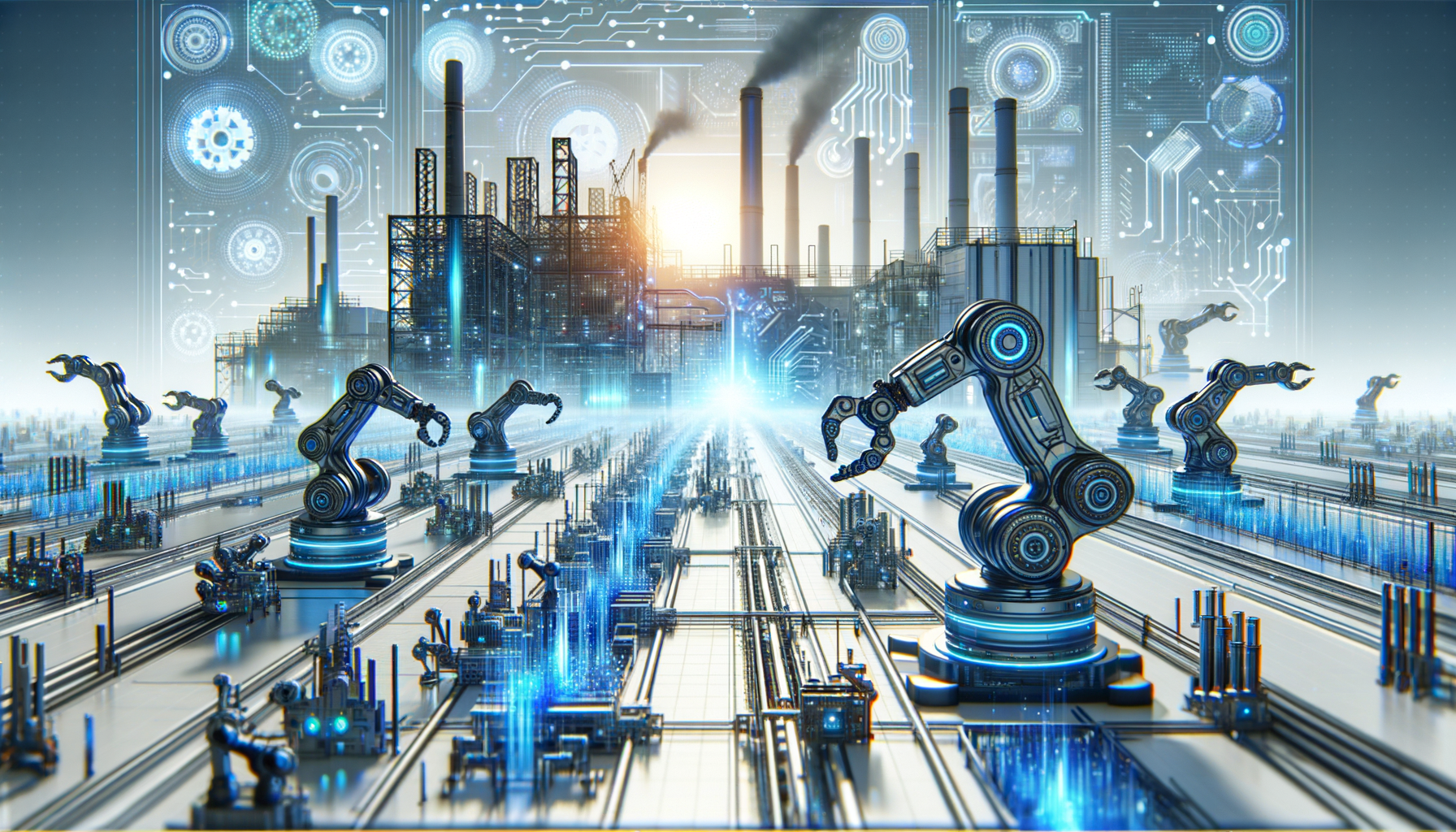
Revolutionizing Industry: Future Trends & Predictions in Industrial Robotics
Industrial robotics is no longer a vision of the distant future but an integral part of the present-day manufacturing landscape. With technological advancements and the onset of Industry 4.0, the Indian robotics market, much like the rest of the world, is experiencing a paradigm shift. This blog post explores the future trends and predictions in industrial robotics that are set to revolutionize the industry.
1. Rise of Collaborative Robots (Cobots)
Cobots: The Next Big Thing in Industrial Robotics
Collaborative robots, or ‘cobots’, are designed to work alongside human workers, augmenting their capabilities, rather than replacing them. Cobots are flexible, easy to program, and safe to interact with. From assembly lines to inspection processes, cobots are predicted to play a significant role in the future of industrial robotics.
Cobots in the Indian Market
With companies like Bajaj Auto and Tata Motors integrating cobots into their production lines, India is already witnessing a surge in cobot applications. The trend is only expected to grow, with the Indian cobot market predicted to reach $341.4 million by 2025.
2. Industrial Internet of Things (IIoT) Integration
IIoT: Enhancing Industrial Robotics
Industry 4.0 is driving a tighter integration between industrial robotics and the Internet of Things (IoT). With IIoT, robots can communicate with each other and with the rest of the factory, leading to increased efficiency, improved quality control, and reduced downtime.
IIoT in the Indian Industrial Landscape
Indian industries are rapidly adopting IIoT solutions. Companies like Bosch and Siemens are pioneering IIoT-integrated robotic systems in India, driving productivity and efficiency to new heights.
3. Autonomous Mobile Robots (AMRs)
AMRs: The Future of Material Handling
AMRs can navigate autonomously in an industrial environment, carrying out tasks such as transportation, inspection, and inventory management. With enhanced sensors, AMRs can operate safely around people and obstacles, making them ideal for warehouse automation.
AMRs in India: A Growing Trend
With the rise of e-commerce and the need for efficient warehousing solutions, AMRs are gaining traction in India. Companies like GreyOrange and Addverb are spearheading the AMR revolution in Indian industries.
4. Artificial Intelligence (AI) and Machine Learning (ML)
AI and ML: Driving Robotic Innovation
AI and ML are enabling robots to learn from their experiences and adapt their actions accordingly. This could lead to robots capable of performing complex tasks with minimal human intervention, potentially revolutionizing industries from manufacturing to healthcare.
AI and ML in Indian Robotics
Indian startups like FluxGen and Systemantics are leveraging AI and ML to build smarter, more efficient robots. As AI and ML technology advances, the potential applications for industrial robotics in India are vast and exciting.
Practical Tips for Robotics Enthusiasts
- Stay updated with the latest trends and advancements in the field of industrial robotics
- Develop skills in programming languages commonly used in robotics, such as Python and C++
- Understand the principles of AI and ML and how they apply to robotics
- Participate in robotics competitions and workshops to gain practical experience
Conclusion
The future of industrial robotics is incredibly promising, particularly in the Indian market. With the rise of cobots, IIoT integration, AMRs, and AI and ML advancements, the industrial landscape is set to undergo a significant transformation. As robotics enthusiasts, it’s an exciting time to be part of this revolution. Embrace the change, stay updated, and keep innovating!