
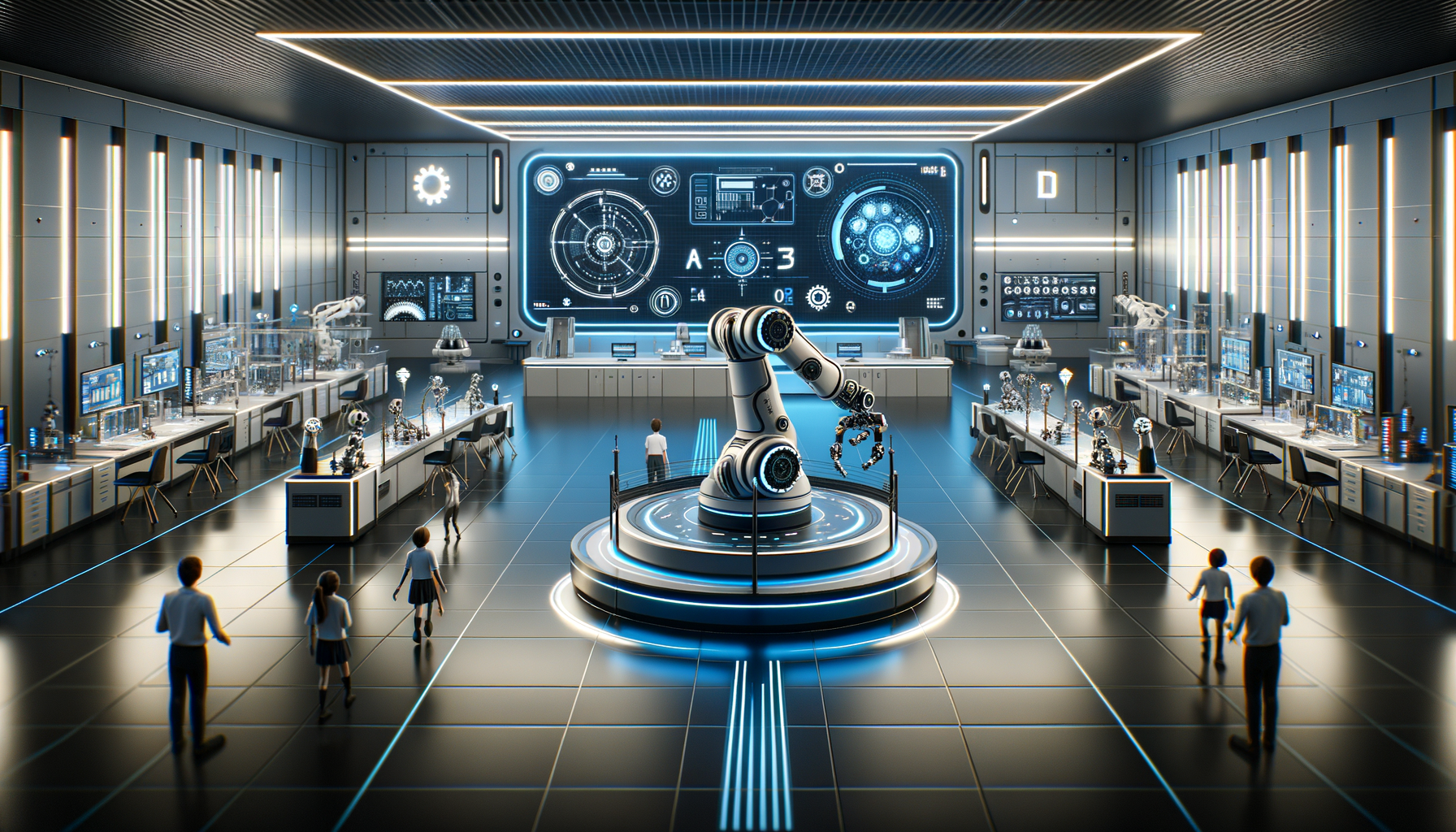
Empowering Future Innovators: A Deep Dive into Educational Robotics
The advent of robotics in education is more than just a trend; it’s a revolution that’s transforming the way students learn. Harnessing the power of educational robotics can ignite a student’s passion for science, technology, engineering, and mathematics (STEM). In today’s blog post, we delve into the world of educational robotics, its benefits, and how it is empowering future innovators, especially in India.
Understanding Educational Robotics
Educational robotics is the use of robots as a teaching tool to stimulate students’ interest in STEM fields. This learning approach combines theoretical knowledge with hands-on experience, enabling students to understand complex concepts in a more engaging and practical way.
Examples of Educational Robotics
- Robotics Kits: Robotics kits are effective learning tools that allow students to build their robots. Kits like LEGO Mindstorms, Arduino Robot Kit, and Indian-based Avishkaar’s Robotronics Full are some popular examples.
- Robotics Competitions: Competitions are platforms where students can showcase their robotics skills. International events like the FIRST Robotics Competition and national contests like the Indian Robot Olympiad encourage students to design, build, and program robots to accomplish specific tasks.
- Programming Tutorials: Several online platforms offer tutorials on coding for robots. Websites like Code.org, Khan Academy, and Indian-based Tech Vidya offer comprehensive guides and resources for students.
The Impact of Educational Robotics
Educational robotics have a profound effect on students’ learning and development. Here’s how:
Enhancing Cognitive Skills
Building a robot is like solving a complex puzzle. It challenges students to think critically and analytically, enhancing their problem-solving skills. Moreover, programming a robot to perform a task encourages algorithmic thinking, which is essential for coding and software development.
Improving Collaboration and Communication
Robotics projects often require teamwork. Students learn to communicate their ideas effectively, delegate tasks, and work cooperatively to achieve a common goal. This fosters a collaborative work ethic, which is vital in today’s interconnected world.
Fostering Creativity and Innovation
With robotics, there’s no one-size-fits-all solution. Students must think outside the box and innovate to overcome challenges. This cultivates creativity and encourages innovation — essential skills for future inventors and entrepreneurs.
Empowering Indian Innovators Through Robotics
India, with its booming tech industry and focus on digital literacy, is a fertile ground for educational robotics. Initiatives like the Atal Innovation Mission by the Indian government aim to cultivate a culture of innovation and entrepreneurship among students. The mission establishes Atal Tinkering Labs in schools across the country, equipped with technologies like robotics, IoT, and 3D printing.
Robotics in Indian Education: The Way Forward
While the incorporation of robotics in Indian education is promising, there’s still a long way to go. Here are a few actionable steps:
- Integrate Robotics into Curriculum: To make learning robotics accessible to all students, it should be integrated into the school curriculum, starting at the primary level.
- Train Teachers: Teachers play a crucial role in facilitating robotics education. Hence, they should be equipped with the necessary skills through professional development programs.
- Encourage Girls in Robotics: Despite the progress, the gender gap in STEM fields persists. Schools should encourage girls to participate in robotics, breaking down stereotypes and promoting gender equality in STEM.
Conclusion
Educational robotics is an exciting frontier in the realm of learning. It nurtures crucial skills in students, preparing them for the future where technology will be an integral part of every field. For countries like India, embracing educational robotics can be a game-changer, empowering the future generation of innovators and leaders. It’s time to embrace this revolution and steer our students towards a future rich with possibilities.