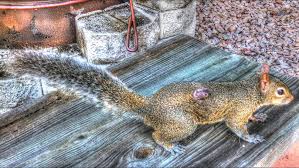
In 2012, a team of brainy biologists turned a science experiment into the ultimate animal prank, pitting a robotic squirrel against a rattlesnake in a California field. Researchers from UC Davis and San Diego State University crafted a pint-sized robot that looks and acts like a real ground squirrel, complete with tail-wagging sass and sand-kicking spunk. Their goal? To trick snakes into spilling their secrets about predator-prey showdowns. Spoiler alert: the robo-squirrel stole the show, and this quirky study is a barrel of laughs packed with scientific awesomeness!
The Squirrel Bot’s Big Trick
Picture a robotic squirrel, cute as a button, chilling in Briones Regional Park, California, ready to rumble with a rattlesnake. This isn’t your average stuffed toy—it’s a high-tech decoy built to mimic ground squirrels’ anti-snake moves. Real squirrels fend off rattlers by puffing up, flagging their heated tails, and kicking sand in a bold “back off!” display. The robo-squirrel, controlled remotely by researchers like Sanjay Joshi from UC Davis, does the same, with a motorized tail that wags like it’s got attitude and a rig to fling dirt for extra flair.
In the experiment, led by grad student Bree Putman and professor Rulon Clark from San Diego State, the robot faced off against real rattlesnakes. When it flagged its tail without heating it, snakes stayed curious but chill. But when the bot cranked up the heat (mimicking a squirrel’s infrared tail signal) and kicked sand, the snakes slithered away, totally thrown off. “It’s like the snake got punk’d!” the researchers might’ve giggled, as their bot revealed how squirrels use a combo of sass and science to scare off predators.
Why It’s So Totally Fun
This study is a riot because it’s like watching a nature documentary directed by a prankster! The robo-squirrel’s antics gave scientists a front-row seat to a drama that’s hard to catch in the wild. By controlling the bot’s moves, researchers could test exactly which behaviors—like tail-heating or sand-kicking—make snakes back down. It turns out, ground squirrels are masters of psychological warfare, using infrared signals (invisible to humans but not snakes) to say, “I see you, and I’m not lunch!” The robot’s success showed how animals communicate in ways we’re just starting to understand.
Plus, the tech is straight-up cool. The robo-squirrel, built on a taxidermy base with motorized parts, is like a science fair project gone viral. Its remote-control system let researchers play puppeteer, tweaking behaviors to see what ticks snakes off. This kind of robotic trickery isn’t just for laughs—it’s helping us learn how animals survive, which could inspire better wildlife conservation or even snake-proofing tech for hikers. Who knew a fake squirrel could be such a hero?
A Future Full of Animal Antics
The robo-squirrel’s 2012 stardom was just the beginning. Today, researchers use robotic animals—like fish, birds, or even cockroaches—to study nature’s secrets, from mating dances to migration patterns. This squirrelly experiment, published in the Proceedings of the National Academy of Sciences, showed how robots can unlock animal behavior mysteries without disturbing the wild. Imagine a future where robo-deer dodge cougars or robo-bees spy on hives, all while we cheer from the sidelines!
So, here’s to the robo-squirrel, the sassiest bot to ever outsmart a rattlesnake! It’s proof that science can be as fun as a barrel of acorns, blending tech, nature, and a sprinkle of mischief. Grab your popcorn and let’s keep rooting for more robotic pranksters in the wild!