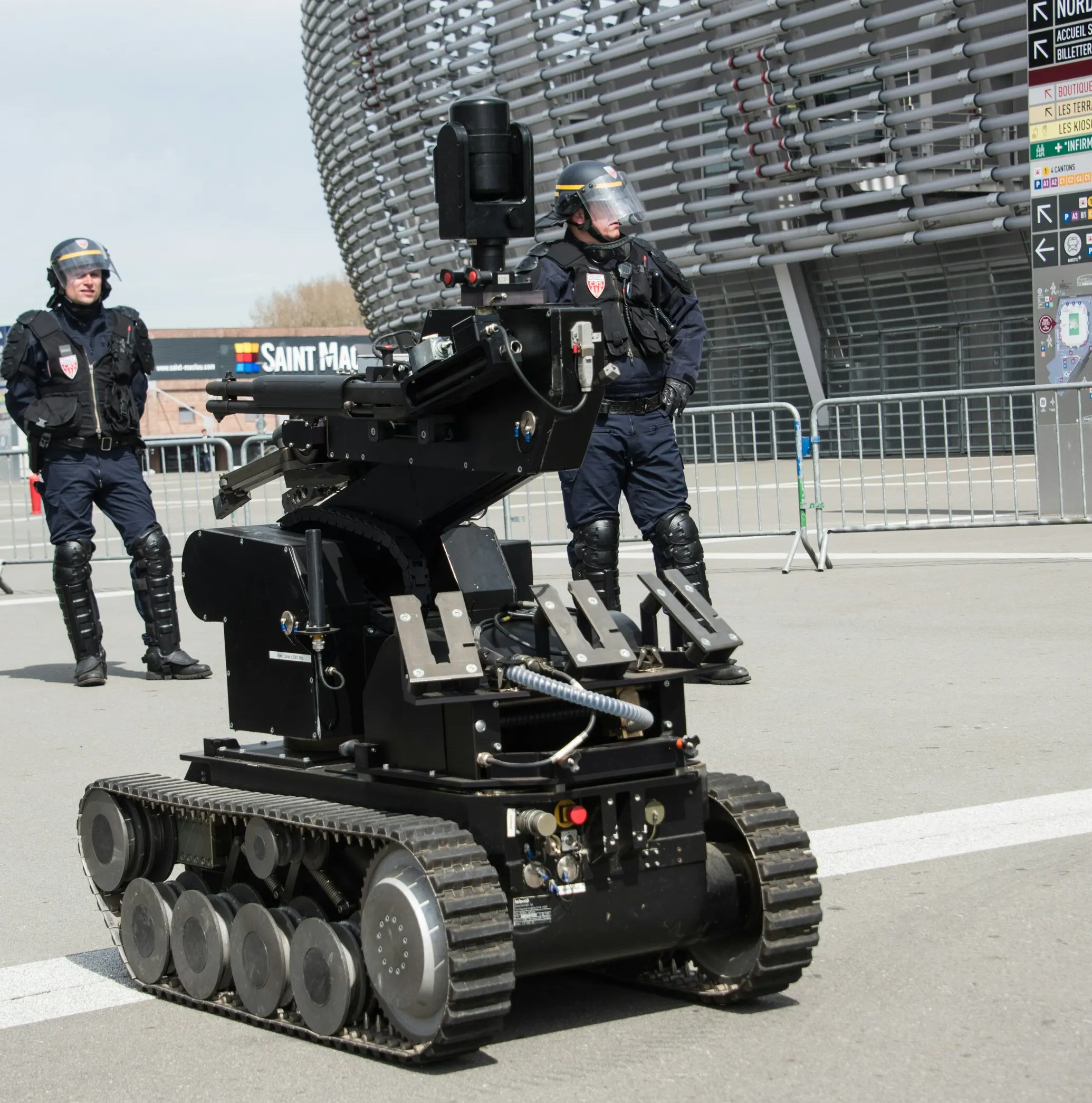
Hold onto your hats, because San Francisco just took us on a wild ride with its police robots! On November 29, 2022, the city’s Board of Supervisors voted 8-3 to let the San Francisco Police Department (SFPD) use robots with deadly force—like explosives—in “virtually unimaginable” emergencies, as reported by Popular Science. Prompted by a California law to inventory military gear, the plan aimed to tackle rare, high-risk scenarios. But after a storm of protests and sci-fi-fueled fears, the board flipped the script on December 6, banning lethal robots for now. This rollercoaster clash of tech and public pushback is a must-see—let’s zoom into this electrifying, robot-rumbling bash
The Robo-Bomb Brouhaha
Picture a bomb-squad robot, typically used to sniff out suspicious packages, suddenly packing a lethal punch. That was SFPD’s pitch: arm their 12 ground robots—think wheeled Remotec models with gripper arms—for extreme cases like mass shootings, per the San Francisco Chronicle. Supervisor Aaron Peskin framed it as a last resort for “horrific situations,” citing the 2017 Las Vegas shooting, per PopSci. The policy required approval from high-ranking SFPD leaders and banned firearms, focusing on explosives to breach structures or neutralize threats, per NPR. It echoed Dallas in 2016, when police used a robot with C-4 to kill a sniper, a first in U.S. policing, per The Washington Post.
But the plan hit a nerve. Critics, including the ACLU and Stop Killer Robots, warned of militarization and dehumanized force, per BBC. X posts, like @SabbySabs2’s, feared robots targeting vulnerable groups like the homeless, while @WORLDSTAR sparked debate with the vote’s 8-3 tally. Protesters outside City Hall waved “No Killer Robots” signs, per NBC News, and Supervisor Dean Preston called it a “sad moment” for straying from 2020’s police reform, per masslive.com. The policy’s vague wording left room for misuse, per The Guardian, and fears grew that it could set a precedent for armed drones, per PopSci.
Why It’s So Freakin’ Intense
This saga’s a thrill because it’s like a sci-fi movie unfolding in real life! Robots that defuse bombs are heroes, but arming them flips the script to dystopian vibes, per PopSci. X user @verge hyped the drama, noting SF’s brief approval of “remote-controlled robots to kill,” while @ABC7 captured the “heated debate.” The public’s roar—44 community groups signed a protest letter, per The Verge—shows people power can pause a robo-takeover. Unlike non-lethal uses, like a 2009 robot negotiating a suspect’s surrender, arming robots risks escalating force, not defusing it, per PopSci’s 2016 piece on LA Sheriff robots.
The tech’s wild, too. SFPD’s robots, like the Remotec F5A, can carry shotguns or explosives, per The Guardian’s Verge citation, but they’re human-controlled, not autonomous, per Forbes. Yet, experts like Ryan Calo told NPR that robots feel like “entities,” muddying responsibility if they misfire. The 2017 Las Vegas and 2022 Uvalde shootings were cited as use cases, but PopSci argued robots wouldn’t solve those crises—Uvalde’s delay was human, not tech-driven. The real kicker? Arming robots could undermine their negotiation role, like delivering pizza to calm a suspect, per PopSci’s 2016 LA story.
A Future Full of Robo-Debates
San Fran’s U-turn isn’t the end. The issue’s back in committee, per NPR, and X posts like @verge’s December 7, 2022, update hailed the reversal as a win against “killer robots.” Oakland nixed shotgun-armed robots but approved pepper spray, per pressherald.com, while Nigeria’s police got armed drones, per Forbes. The $13B robotics market’s growing, with NYPD’s $750,000 Spot robots and Singapore’s Xavier patrol bots, per PopSci’s 2021 and 2024 pieces. But public backlash, like NYPD’s 2021 Spot cancellation, shows resistance, per PopSci’s 2024 K5 story.
Imagine a future where robots negotiate, not detonate, or where laws like New York’s proposed ban on civilian weaponized robots set clear lines, per PopSci 2025. Challenges remain—vague policies, surveillance fears, and untested legal standards for robot force, per The Marshall Project. With 98% of police shootings uncharged, per ACLU, arming robots risks amplifying harm, especially for marginalized groups. But San Fran’s reversal proves communities can steer tech’s path. Here’s to a future where robots save lives, not end them! It’s proof the future’s not just high-tech—it’s a fierce, people-powered, robo-tastic showdown. Join the debate and keep the robots friendly!