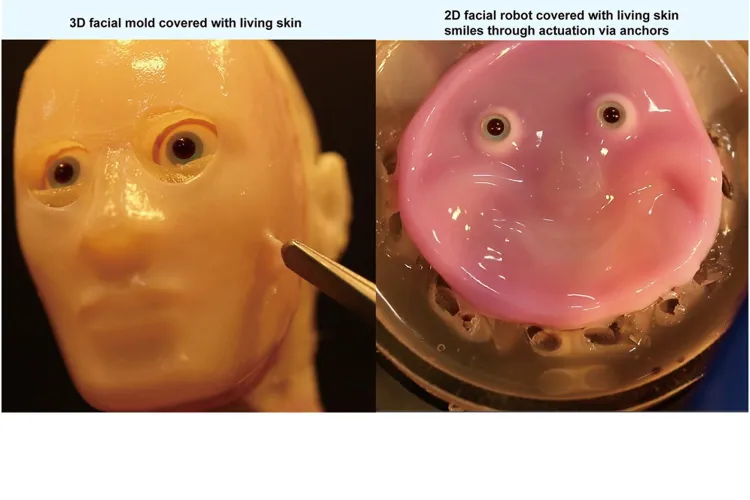
Picture a robot staring at you, its face draped in a glistening, pink blob of lab-grown human skin, like it just stumbled out of a sci-fi horror flick directed by a mad alchemist. That’s the bizarre reality cooked up by researchers at the University of Tokyo, who decided that humanoid robots weren’t creepy enough and needed a fleshy makeover. This isn’t just science—it’s a wild, gooey journey into the twilight zone of robotics, where the line between human and machine gets slathered in a layer of squishy, living weirdness.
The Gooey Genesis
In a lab that probably smells like a mix of antiseptic and existential dread, Tokyo’s researchers bioengineered skin from human cells, crafting a pink, gelatinous layer that looks like it was peeled from a cosmic jellyfish. They didn’t stop at making it—they draped this living goop over a robot’s face, transforming it into a pulsating mask that’s equal parts mesmerizing and “please make it stop.” As if that wasn’t weird enough, they hooked up mechanical actuators to make the skin smile, turning the robot into a grinning, fleshy nightmare that could haunt your dreams or star in a David Lynch film.
This isn’t your average robot facelift. The skin isn’t just a prop; it’s alive, grown from human cells like some kind of Frankensteinian art project. The actuators tug at this gooey canvas, creating expressions that feel like the robot is trying to whisper secrets from another dimension. It’s not just a face—it’s a portal to a world where machines wear our skin like a secondhand costume, and we’re all just along for the ride.
Why So Creepy?
Why would anyone do this? Maybe the researchers are chasing the ultimate humanoid, a robot so lifelike it could pass for your weird cousin at a family reunion. Or maybe they’re just leaning into the chaos, embracing the uncanny valley like it’s a theme park ride. This living skin could one day make robots feel more human—think medical assistants with a warm, fleshy touch or companions that don’t give you the chills. But right now? It’s a pink, smiling blob that makes you question reality, like you’ve stumbled into a parallel universe where robots are auditioning for a body horror flick.
The weirdness doesn’t stop at aesthetics. This experiment is a mind-bending peek into a future where the boundaries between organic and artificial blur into a gooey mess. Are we making robots more human, or are we just dressing them up in our own skin to confront our deepest fears about identity? It’s the kind of question that makes you want to stare into the void—and the void stares back, smiling with a lab-grown grin.
A Strange New Frontier
Tokyo’s fleshy robot face isn’t just a science project—it’s a bizarre cosmic joke, a reminder that humanity’s quest to play god comes with a side of squishy surrealism. As these researchers push the limits of what robots can be, they’re dragging us into a world where machines don’t just mimic us—they wear us. It’s weird, it’s wild, and it’s probably going to keep you up at night wondering if your Roomba is secretly jealous of its skinless cousins. Welcome to 2025, where robots get fleshy, and the uncanny valley just got a whole lot slimier.