
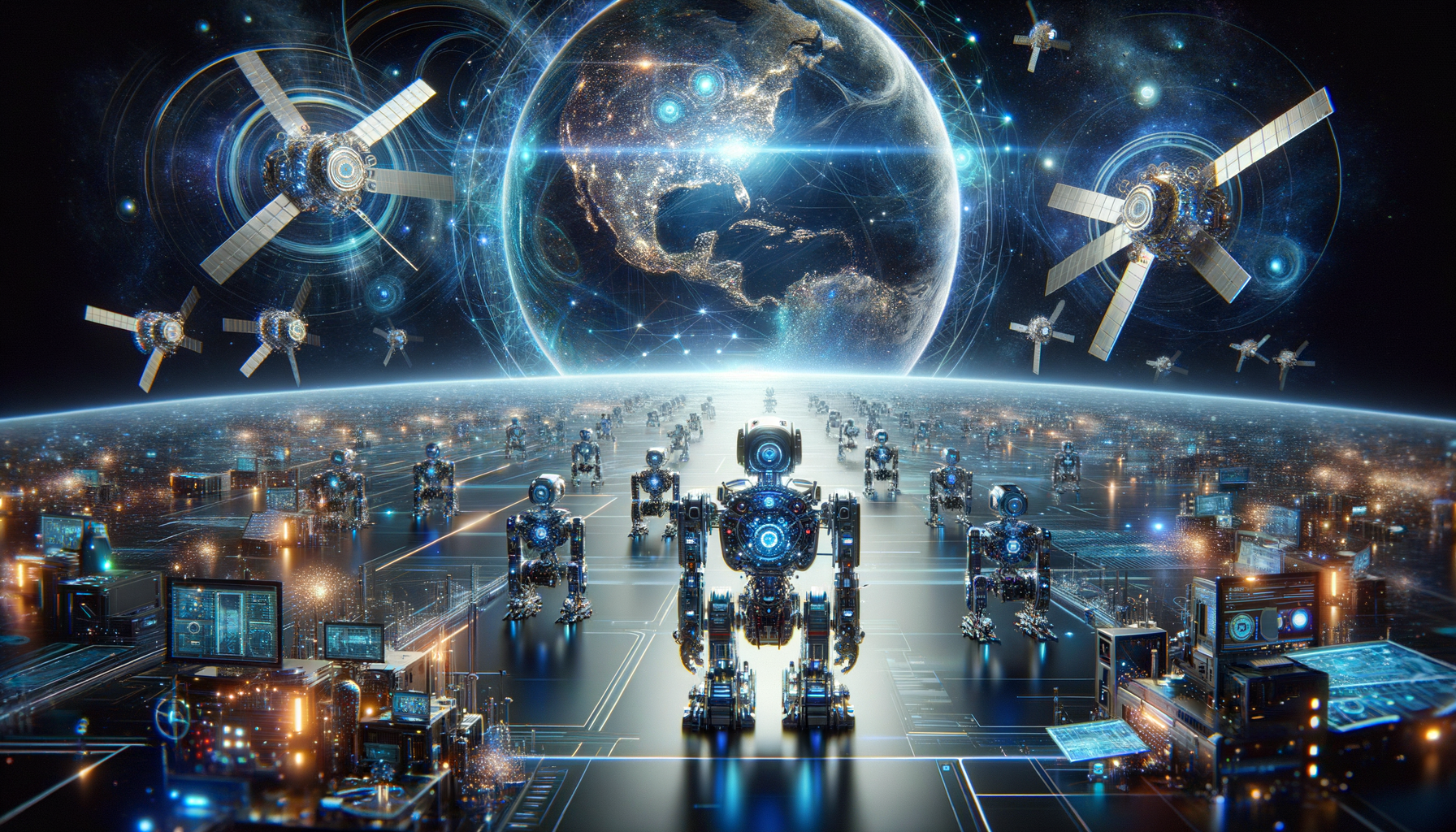
Stellar Safety: Protocols & Concerns in Space Exploration Robotics
As the Indian robotics market continues to make significant strides in space exploration, safety has become a predominant concern. With the advent of Mars rovers, space station robots, underwater exploration bots, and robotics for hazardous environment operations, there’s a need to understand the safety protocols and concerns associated with these innovations. In this blog, we delve deep into the nuances of safety in space exploration robotics, offering practical tips and insights for robotics enthusiasts.
Introduction
Space is the final frontier, and robotics is our key to unlocking its mysteries. However, as with any technological advancement, there are safety concerns and protocols that need to be addressed. This elucidation becomes even more critical when we consider the extreme and often unpredictable environments these robots operate in.
Understanding Space Exploration Robotics
What are Space Exploration Robots?
Space exploration robots are sophisticated machines designed to explore the cosmos. They are typically autonomous or semi-autonomous and can withstand severe space conditions. Notable examples include the Mars rovers, like India’s Mars Orbiter Mission, and space station robots such as the Robonaut developed by NASA.
Safety Concerns in Space Exploration Robotics
Environmental Challenges
Robots in space must contend with extreme temperatures, radiation, and low-gravity conditions. These factors can affect the robot’s performance and longevity. For example, the lunar night’s frigid temperatures led to the loss of India’s Vikram Lander in 2019.
Communication Delays
Space is vast, and communication signals take time to travel across these vast distances. This delay can pose significant safety risks, particularly for autonomous robots, as immediate human intervention becomes impossible. The Mars rovers, for instance, operate with up to 40 minutes of communication delay.
Hardware and Software Failures
Due to the harsh conditions, the risk of hardware and software failures is high. Such malfunctions can lead to mission failure. India’s first lunar mission, the Chandrayaan-1, was terminated due to a malfunction in the star sensors.
Safety Protocols in Space Exploration Robotics
Robust Design
To counter environmental challenges, space exploration robots need to have a robust design. They should be built to withstand extreme conditions, such as the Curiosity Rover, which was designed to endure the harsh Martian climate.
Autonomous Operation
Given the communication delays, robots must have a high degree of autonomy. They should be able to make decisions and execute tasks without human intervention. The Indian Space Research Organisation’s (ISRO) Mars Orbiter Mission, for example, was programmed to handle any anomalies autonomously.
Redundancy
Redundancy is a critical safety protocol in space robotics. It ensures that backup systems can take over if the primary systems fail. For example, the Mars rovers are equipped with backup computers that take over if the main computer fails.
Tips for Robotics Enthusiasts
- Stay updated with the latest advancements and safety protocols in space robotics.
- Understand the extreme conditions space robots operate in and design your robots accordingly.
- Focus on developing autonomous systems and ensure redundancy in your designs.
Conclusion
Space exploration robotics is a fascinating field, pushing the boundaries of what’s possible. However, the inherent risks and extreme environments necessitate stringent safety protocols. By understanding these concerns and protocols, robotics enthusiasts can contribute to safer and more effective space exploration. The future of space exploration is exciting, and robotics will undoubtedly play a significant role in it.