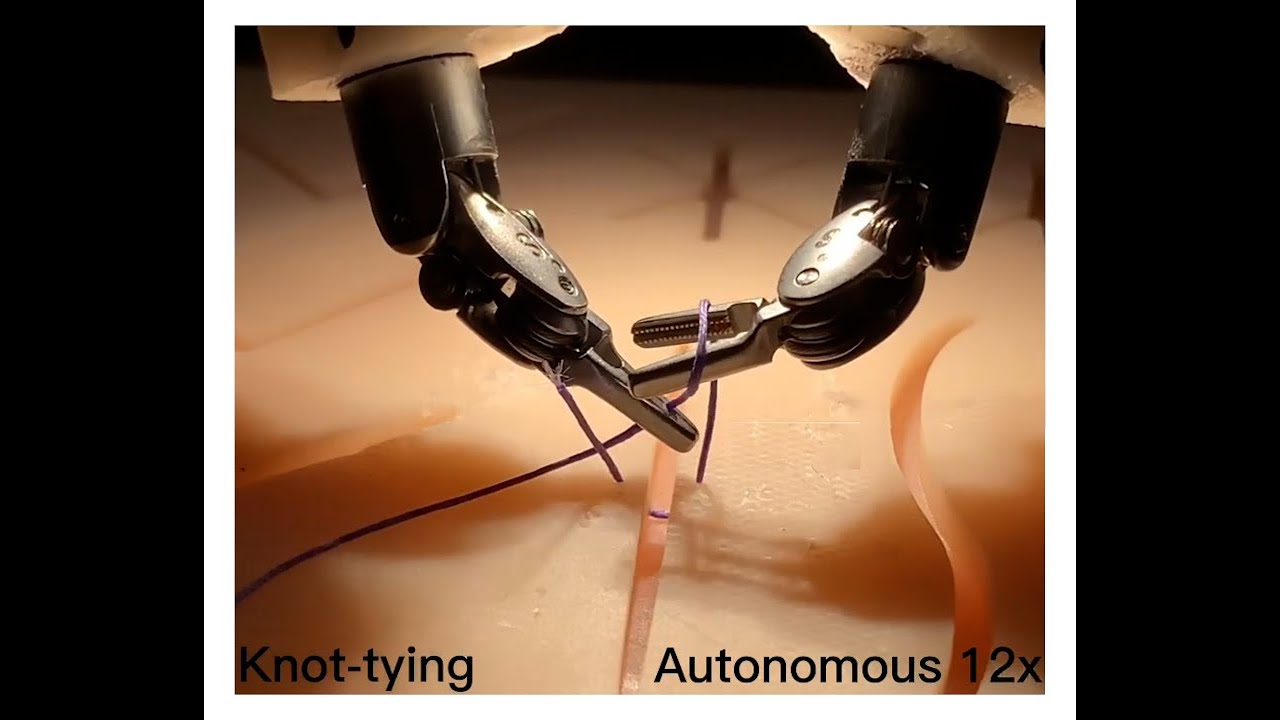
The operating room of tomorrow is here, and it’s got robotic arms steadier than any human hand. In a jaw-dropping experiment, scientists have trained a surgical robot to wield tiny, tweezer-like grabbers, performing intricate procedures on pork loins and chicken thighs with the finesse of a seasoned surgeon. What’s truly mind-blowing? This robot didn’t spend years in medical school—it learned its craft by watching a few hundred video clips of human experts. Powered by AI akin to the tech behind ChatGPT, this robotic surgeon is rewriting the rules of medicine and proving the future is now.
A Surgical Revolution Unfolds
Imagine a robot peering at a pork loin, its tweezer-like arms delicately slicing and stitching with precision that would make even the best surgeons jealous. That’s exactly what researchers have achieved in this groundbreaking study. By feeding the robot’s AI system video footage of real surgical procedures, they enabled it to analyze and replicate complex movements, adapting to new scenarios with ease. The result? A robot that can operate on meat with the skill of a pro, all without a single lecture or textbook.
Postdoctoral researcher Ji Woong Kim, part of the team behind this marvel, was floored by the results. “All we need is image input, and then this AI system finds the right action,” Kim explained. “We find that even with a few hundred demos, the model is able to learn the procedure and generalize to new environments it hasn’t encountered.” This isn’t just about cutting pork—it’s a glimpse into a future where robots could perform life-saving surgeries with unmatched accuracy, learning from videos faster than any human could.
The Power of AI-Driven Surgery
The secret sauce behind this robotic surgeon is its AI, which mirrors the learning algorithms of large language models like ChatGPT. Instead of processing words, it decodes visual data, translating surgical techniques from videos into precise movements. With just a few hundred demonstrations, the robot mastered tasks that would take human surgeons years to perfect. Its ability to adapt to new “patients” (or in this case, cuts of meat) showcases its potential to handle the unpredictable nature of real-world surgery.
This technology could revolutionize healthcare. Picture robotic surgeons assisting in operating rooms, performing everything from routine procedures to complex operations in remote areas where specialists are scarce. Their precision could reduce errors, minimize recovery times, and save countless lives. And the best part? They don’t need coffee breaks or decades of training—just a few good videos and some AI magic.
A Taste of What’s to Come
While pork loins and chicken thighs are a far cry from human patients, this experiment is a tantalizing preview of what’s possible. The researchers’ success proves that AI-driven robots can learn complex skills quickly, paving the way for a new era of medicine. From rural clinics to high-tech hospitals, these robotic surgeons could democratize access to top-tier care, making precision surgery as common as a smartphone.
This isn’t just a cool lab trick—it’s a bold step into a future where robots and humans collaborate to redefine healthcare. The next time you hear about a robot slicing pork with surgical precision, don’t just smile—marvel at the dawn of a medical revolution that’s already cutting its way into reality.