
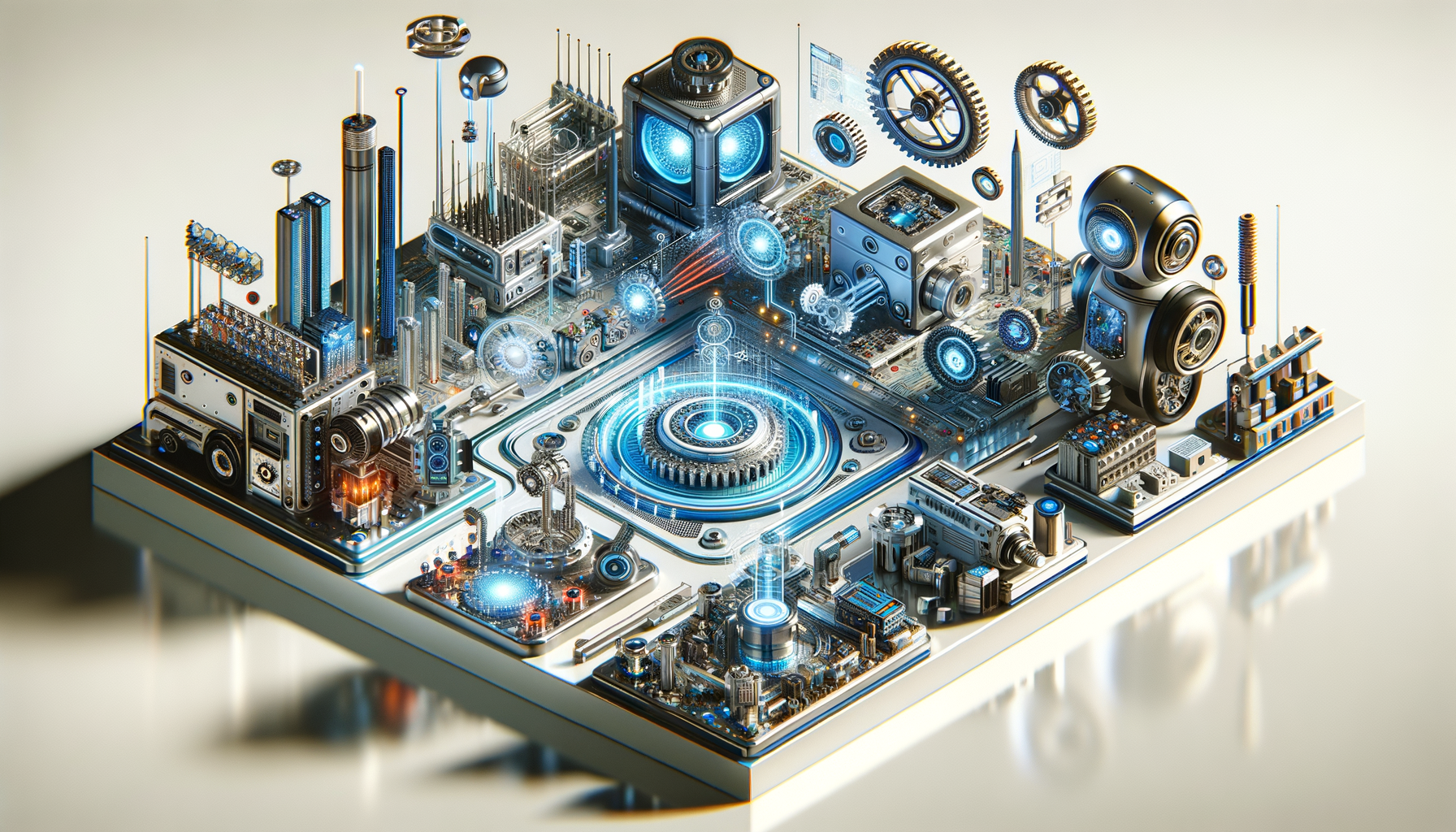
Unraveling Robotics: A Deep Dive into Essential Hardware Components
Robotics, an amalgamation of science, engineering, and technology, has established its importance in various sectors across the globe. The Indian robotics market, in particular, has been witnessing a remarkable growth, driven by industries like healthcare, defense, and manufacturing. Understanding the fundamental hardware components of robots is essential to appreciate their capabilities and complexities. In this blog post, we delve into the essential hardware components that bring life to robots, from motors and sensors to processors and batteries.
Actuators: The Movers and Shakers
Actuators, often referred to as the ‘muscles’ of a robot, are devices that convert energy into motion. They enable robots to lift, push, pull, rotate, and perform a variety of other physical tasks. Depending on the requirements, different types of actuators such as electric motors, pneumatic actuators, hydraulic actuators, or piezoelectric actuators are used.
Practical Application: Industrial Robots
In the Indian automobile industry, hydraulic actuators are commonly used in industrial robots for heavy-duty applications like car assembly, owing to their high force capability and robustness.
Sensors: The Robot’s Senses
Sensors are the eyes and ears of a robot, allowing it to perceive and interact with its environment. From distance sensors, light sensors, temperature sensors, to pressure sensors, these components provide essential data to the robot’s controller, enabling it to make informed decisions.
Practical Application: Healthcare Robots
In the Indian healthcare sector, robots equipped with temperature sensors and other medical sensors have been deployed for patient monitoring during the COVID-19 pandemic, minimizing the risk of infection transmission to healthcare workers.
Microcontrollers: The Brain Behind the Operation
Microcontrollers act as the brain of the robot, processing input from sensors and directing the actuators. They are programmable devices that can be customized to control the actions of the robot. Microcontrollers like Arduino and Raspberry Pi are popular among robotics enthusiasts due to their affordability and ease of use.
Practical Application: Educational Robots
In Indian educational institutions, Arduino-based robots are widely used to teach robotics and programming concepts to students in a hands-on manner.
3D Printing for Robotics: A Game-Changer
3D printing has revolutionized the field of robotics, making it easier and cost-effective to design and produce custom robotic parts. It allows for rapid prototyping, enabling developers to test and refine their designs more efficiently.
Practical Application: Personal Robotics
Indian robotics enthusiasts are leveraging 3D printing to build personal robots and robotic components at home, fostering innovation and creativity.
Power Sources: Keeping Robots Alive
Power sources, such as batteries and solar panels, provide energy to the robot’s components. The choice of power source depends on the robot’s intended use, with rechargeable batteries being a common choice for mobile robots due to their portability and high energy density.
Practical Application: Agricultural Robots
In the Indian agricultural sector, solar-powered robots are being used for tasks like crop monitoring and weed control, promoting sustainable farming practices.
Actionable Advice for Robotics Enthusiasts
- Understand the basics: Start by getting a firm grasp of basic electronics and programming.
- Hands-on experience: Invest in a simple robotics kit to gain practical experience.
- Stay updated: Keep abreast of the latest advancements in robotics technology.
Conclusion
Understanding the fundamental hardware components that make a robot function is the first step towards exploring the fascinating world of robotics. With the growth of the robotics market in India, there’s never been a better time to delve into this exciting field. So, get started, keep learning, and who knows? You might just build the next big thing in robotics!