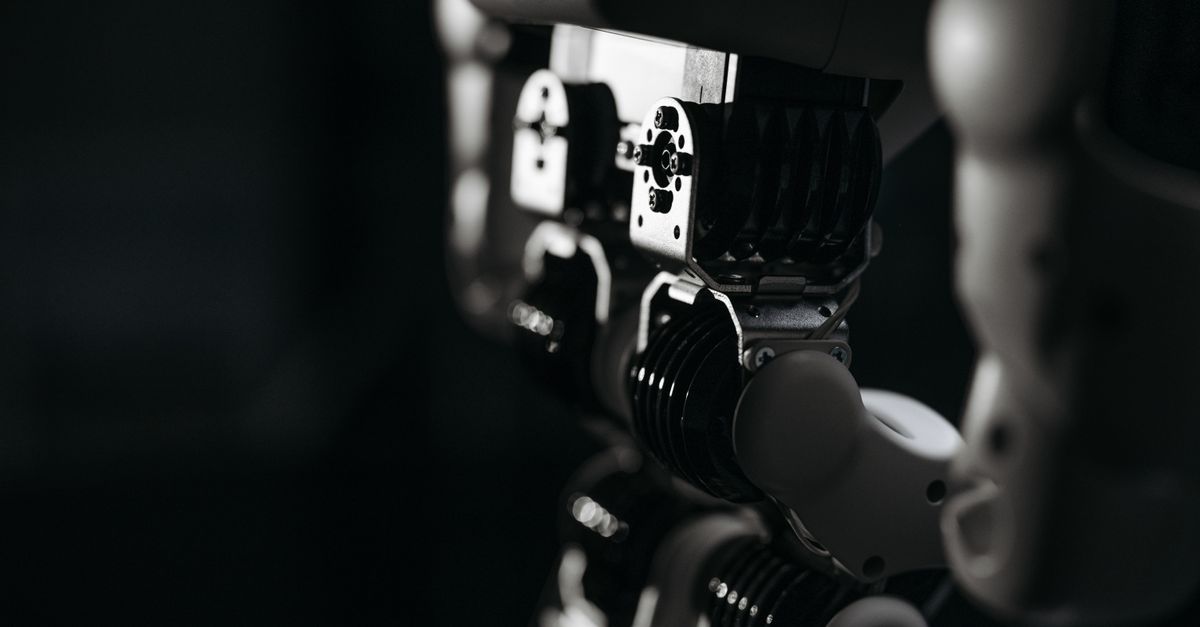
Boston Dynamics Under Hyundai: A Status Report on Spot, Atlas, and Market Viability

Ownership Shift: From Research Lab to Industrial Asset
Boston Dynamics, founded in 1992 at the Massachusetts Institute of Technology, has undergone a significant transformation since its acquisition by Hyundai Motor Group in January 2021 for approximately $1.1 billion. Prior to this transition, the company operated under Google and SoftBank, where research often outpaced commercial viability. Under Hyundai's ownership, the strategic focus has shifted decisively from algorithmic demonstrations to deployable hardware and enterprise integration.
The acquisition was explicitly intended to leverage Boston Dynamics' mobility expertise to enhance Hyundai's mobility ecosystem, including construction, logistics, and agriculture. This restructuring has led to a more rigorous grading of claims, where shipping hardware takes precedence over announcements. While the public often recalls the hydraulic agility of the original Atlas, the current operational reality is defined by the Spot quadruped and the emerging electric Atlas platform.
For the Indian market, this shift carries specific implications. The move toward commercialization suggests a willingness to standardize pricing and support infrastructure, yet the high capital expenditure required for these systems remains a barrier to entry outside of large industrial enterprises.
Spot: The Commercial Workhorse
Spot remains the most commercially viable product in the Boston Dynamics portfolio. It is a four-legged robot designed for inspection and data collection in hazardous or difficult-to-access environments. Unlike the research-focused prototypes of the past, the Spot Gen3 and subsequent iterations are built for rugged industrial utility.
Technical Specifications and Capabilities
The Spot robot weighs approximately 41 kilograms and stands 76 centimeters tall at the hip. It is equipped with a customizable payload capacity of up to 14 kilograms. The battery life typically ranges from 90 minutes to two hours, depending on the payload and environmental conditions. The unit includes a 3D vision system, LiDAR, and an onboard computing unit capable of autonomous navigation or teleoperation.
Spot is sold in two primary configurations: the standard Spot and Spot with a manipulator arm. The arm variant allows for manual interaction with the environment, such as opening doors or manipulating valves, which is critical for utility inspection tasks. The robot is designed to navigate stairs, uneven terrain, and confined spaces that are unsafe for human personnel.
Commercial Availability and Pricing
Boston Dynamics sells Spot directly to enterprise customers. The hardware cost is approximately $75,000 USD to $80,000 USD for the base unit. When including the manipulator arm and software subscriptions, the landed cost can exceed $100,000 USD. In India, this translates to an approximate cost of ₹66 lakhs to ₹80 lakhs INR, excluding import duties, GST, and logistics charges, which could push the landed cost closer to ₹90 lakhs.
Spot is currently available in India through specialized system integrators rather than direct retail. Major deployments have been reported in the infrastructure and energy sectors, where safety compliance is paramount. However, widespread adoption is limited by the high entry cost and the need for specialized training for operators.
Atlas: The Electric Humanoid Transition
Atlas represents the pinnacle of Boston Dynamics' engineering but has faced significant volatility regarding its release. The original hydraulic Atlas was discontinued in favor of an electric version, known as the Electric Atlas or Alpha. This transition was driven by the need for increased efficiency, lower maintenance costs, and improved safety in human-adjacent environments.
Alpha and Delta: The Current Lineup
The Electric Atlas Alpha is a fully electric humanoid robot. It features 30+ degrees of freedom and is designed to perform physical tasks requiring dexterity and balance. The Alpha is currently being shipped to select enterprise customers for pilot deployments in controlled environments. Unlike the hydraulic predecessor, the Alpha is quieter and less prone to mechanical failure under continuous load.
Boston Dynamics has also introduced the Delta, a smaller, more agile variant designed for faster deployment. While both Alpha and Delta are in the shipping phase, they are not yet mass-market products. The Alpha is priced significantly higher than Spot, with estimates ranging from $300,000 to $400,000 USD per unit for early enterprise adopters.
Shipping Status and Deployment
As of late 2023 and early 2024, Boston Dynamics has confirmed that the Electric Atlas is shipping to enterprise partners. However, the volume of units remains low compared to traditional industrial robots. The focus is on pilot programs that validate the robot's ability to perform complex physical tasks, such as moving objects in a warehouse or inspecting infrastructure.
For the Indian manufacturing sector, the Atlas Alpha offers potential for automation in high-risk areas. However, the cost per unit makes it a niche product for only the largest conglomerates. The reliance on proprietary software and hardware integration further complicates the Total Cost of Ownership (TCO) for Indian buyers.
Stretch: Logistics and Warehouse Automation
Stretch is Boston Dynamics' entry into the warehouse logistics sector. Unlike Spot and Atlas, which are general-purpose mobility platforms, Stretch is specialized for pallet handling. It is designed to pick and place standard shipping pallets from conveyor belts and load them into trucks or onto racks.
Operational Reality
Stretch is fully autonomous and does not require a safety cage, a significant advantage over traditional industrial arms. It uses a combination of vision and force control to handle loads weighing up to 700 pounds. The robot is currently deployed in major retail and logistics facilities globally, including distribution centers for large US retailers.
In the context of the Indian market, the Stretch system faces competition from established warehouse automation providers. While the technology is proven, the capital investment required for a full Stretch deployment is high. It is suitable for large-scale e-commerce fulfillment centers but less viable for small and medium enterprises (SMEs).
Market Barriers in India
The deployment of Boston Dynamics robots in India is subject to unique regulatory and economic constraints. The high capital cost is the primary barrier. At ₹90 lakhs for Spot and significantly higher for Atlas, these robots are only accessible to large public sector undertakings (PSUs) or top-tier private conglomerates.
Regulatory and Safety Compliance
India lacks a comprehensive regulatory framework for autonomous mobile robots operating outside confined spaces. While the Ministry of Electronics and Information Technology (MeitY) has issued guidelines for AI, specific safety norms for field robots are still evolving. This creates uncertainty for insurance and liability in the event of an accident.
Import Duties and Localization
Current import duties on robotic hardware in India can range from 10% to 20%, depending on the classification. This further inflates the landed cost. Furthermore, the lack of local manufacturing facilities for Boston Dynamics robots means that spare parts and maintenance rely on international supply chains, increasing downtime risks.
Availability Summary
Spot is available via partners. Atlas Alpha is in limited pilot phases globally, with India availability pending partner interest. Stretch is available but faces intense competition. Pricing estimates for India include import duties and GST, totaling approximately 10-15% above the US landed cost.
Conclusion
Boston Dynamics has successfully transitioned from a research laboratory to a commercial hardware provider under Hyundai Motor Group ownership. The focus on electric actuation for Atlas and the rugged utility of Spot demonstrates a commitment to shipping hardware over concept videos.
For the Indian market, the technology is proven but the economics remain challenging. The high cost of ownership and regulatory gray areas limit immediate widespread adoption. However, for enterprises prioritizing safety and automation in high-risk zones, Boston Dynamics offers a technically mature solution. As Hyundai continues to integrate these technologies into its broader mobility ecosystem, the long-term outlook for commercial availability in India remains cautiously optimistic.
References
- Boston Dynamics Spot Product Page: Details on specifications and payload capabilities. https://www.bostondynamics.com/spot/
- Hyundai Motor Group Press Release: Announcement of the acquisition of Boston Dynamics. https://www.hyundai.com/
- Boston Dynamics Electric Atlas: Information regarding the Alpha model and shipping status. https://www.bostondynamics.com/atlas/
- Independent Reporting on Robotics Costs: Analysis of pricing and deployment barriers. https://www.bostondynamics.com/
✓ Key takeaways
- •Hands-on view of Boston Dynamics Under Hyundai: A Status Report on Spot, Atlas, and Market Viability inside our Boston Dynamics library.
- •Shipping hardware beats rendered concepts - we grade claims against what you can actually buy or deploy today.
- •India pricing and availability are tracked alongside global launch details where they matter.
References
Related articles
More in Boston Dynamics →