Navigating the Skies: The Reality of Agricultural Drones in India
The Shift from Manual to Aerial in Indian Agriculture
India’s agricultural sector employs over 45% of the workforce, yet it faces a chronic labor shortage, rising input costs, and the need for precision in chemical application. The introduction of agricultural drones, or Agri-drones, represents a significant technological inflection point. However, the narrative surrounding this technology often conflates potential with proven reality. For RobotWale.com, the distinction between a shipped unit and a concept video is critical. While the promise of reduced labor costs and optimized pesticide usage is clear, the economic viability depends on hardware maturity, regulatory compliance, and subsidy structures.
Currently, the market is dominated by two distinct categories: established international manufacturers offering high-specification hardware and domestic startups leveraging the Production Linked Incentive (PLI) scheme to build localized supply chains. This analysis grades these claims based on shipping hardware first, pilot deployments second, and announcements last.
DJI Agras: The Market Benchmark
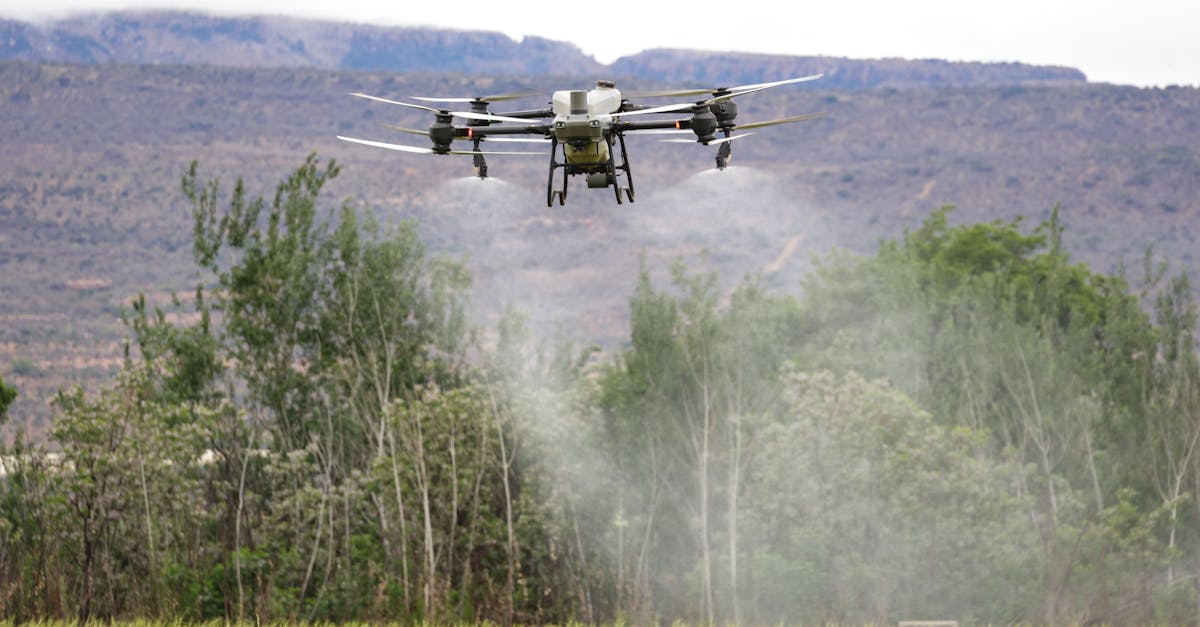
DJI’s Agras series remains the baseline for comparison due to its market penetration and available after-sales service network in India. The T30 and T40 models are the primary units currently operational in the field.
Technical Specifications and Payload
The DJI Agras T30 features a 30-liter spray tank and a maximum payload of 40 kilograms. Its flight time is approximately 10 minutes under typical load conditions, allowing for a throughput of roughly 10 hectares per hour. The T40, the successor, increases the payload to 50 kilograms and includes a radar system for obstacle avoidance, which is critical for low-altitude spraying near trees.
Unlike early concepts that relied on manual remote control, these units utilize the DJI Pilot 2 App with pre-mapped mission planning. The battery system is modular, allowing for rapid swaps between flights. In terms of hardware reliability, DJI has reported thousands of operational hours across Southeast Asia and India, validating the durability claims against dust and heat.
Operational Costs in INR
For the Indian farmer or service provider, the capital expenditure (CAPEX) is the primary hurdle. The DJI Agras T30 is estimated to cost between ₹12 lakh and ₹15 lakh (INR) before taxes. The T40 pushes this closer to ₹18 lakh to ₹22 lakh. While these figures appear high, they are often offset by service provider models where drone operators charge per acre.
Service rates typically range from ₹300 to ₹500 per acre for spraying, compared to manual labor costs of ₹800 to ₹1,200 per acre for the same area. This efficiency gap drives adoption. However, the drone operator must absorb battery replacement costs and maintenance, which adds to the operational expenditure (OPEX).
Indian Manufacturers and the PLI Scheme
While DJI dominates the high-end hardware space, Indian startups are attempting to capture the mid-range market. Garuda Aerospace stands out as a verified entity with a manufacturing base in Bengaluru. Unlike many competitors who merely assemble or sell third-party hardware, Garuda focuses on indigenous payload integration and software development.
Garuda Aerospace and Domestic Production
Garuda Aerospace operates under the Drone Shakti initiative. Their hardware specifications aim to match DJI’s performance at a lower price point. They have deployed their drones in multiple states, including Haryana and Uttar Pradesh. Their claims of 50% cost reduction compared to imported drones are grounded in the absence of import duties on fully built units, provided they meet local manufacturing standards.
Other players, such as TCM Drones and IdeaForge (primarily defense-focused but pivoting to agri), operate in the ecosystem. However, for the purpose of agricultural spraying, the focus remains on payload capacity and spray drift control, where Indian startups are still catching up on software calibration for uneven terrain.
Startups vs. Hardware Reality
A critical rule at RobotWale.com is to grade claims by shipping hardware. Many Indian agri-drone startups announce partnerships with state governments. While these announcements are positive, the deployment of hardware is the true test. Garuda’s track record includes actual spraying operations in the 2023-24 season. Other entities may still be in the pilot phase. Service providers must verify that a startup has a functional service center for battery repairs and sensor calibration.
Regulatory Framework and DGCA Compliance
The regulatory environment is the single biggest variable in Indian agriculture. The Directorate General of Civil Aviation (DGCA) enforces the Remotely Piloted Aircraft (RPA) Rules, 2021. Under these rules, agricultural spraying is classified as a high-risk category requiring specific permissions.
Remote Pilot Certification
To operate a drone legally, the operator must possess a Remote Pilot Certificate for the specific class of drone. This requires training and testing. Additionally, the drone must be registered in the Drone Air Traffic Management System (DARTS). The National Common Mobility Card (NCMC) is also being integrated for drone identification.
Furthermore, state governments have their own regulations. For example, the Government of Maharashtra has a dedicated Agri-Drone Policy. Operators must comply with no-fly zones (NFZs) around airports, military installations, and sensitive infrastructure. Violation of these rules can result in severe penalties, making compliance a non-negotiable cost of doing business.
Subsidies and Incentives
The Central Government has introduced a subsidy under the 'Pradhan Mantri Krishi Sinchai Yojana' (PMKSY) and the 'National Horticulture Mission'. Farmers can receive a subsidy of up to 50% for purchasing drones, while service providers can receive up to 80% under the Sub-Mission on Agricultural Mechanization (SMAM).
These figures are crucial for the business case. A drone costing ₹15 lakh effectively costs ₹7.5 lakh to a farmer after subsidy. This reduces the payback period significantly. However, the subsidy is often disbursed post-purchase, requiring upfront liquidity. This remains a barrier for smallholder farmers who cannot afford the initial capital outlay.
Economic Viability and ROI
The economic argument for agricultural drones rests on three pillars: labor scarcity, chemical efficiency, and health safety.
Labor Scarcity and Efficiency
Traditional manual spraying requires 10 to 15 workers per hectare. Drones reduce this to one operator, effectively lowering labor costs by 90%. In the context of India’s rural wage inflation, this efficiency is measurable. A drone can cover 2 hectares in 30 minutes, a task that would take manual laborists a full day.
Chemical Efficiency
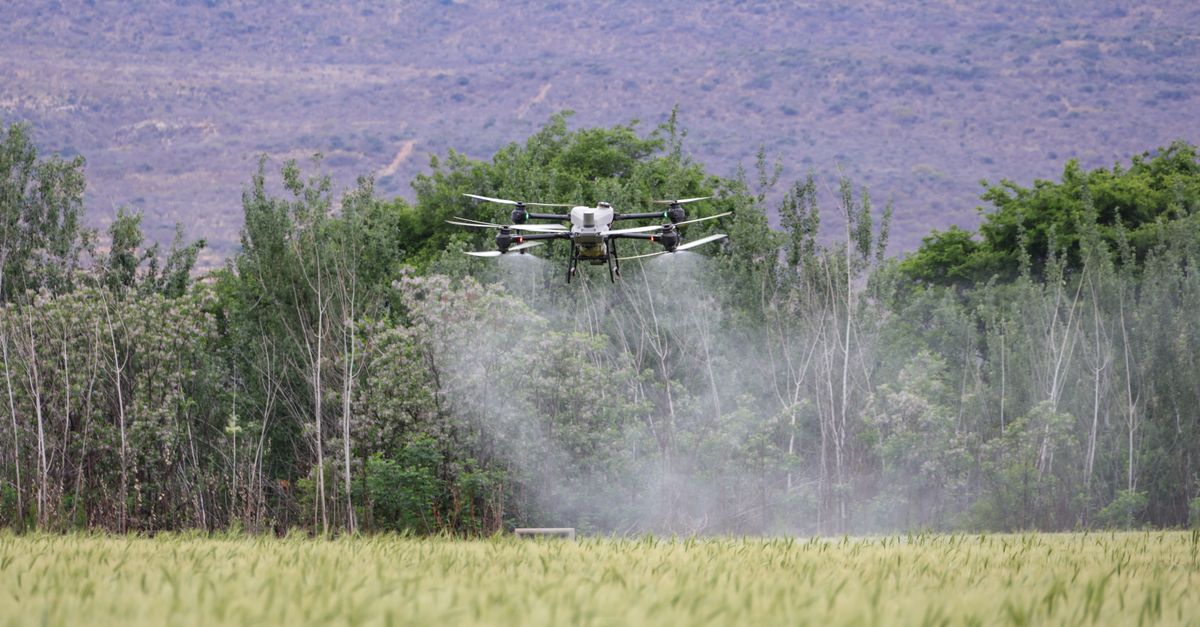
Manual spraying often results in over-application or uneven distribution. Drones utilize centrifugal nozzles that atomize the liquid into fine droplets. This allows for a reduction in chemical usage by 30% to 40%. For crops like cotton, paddy, and sugarcane, this reduction in input cost directly improves net yield margins.
Health and Safety
Pesticide exposure is a significant health risk for farm laborers. Drones remove the operator from direct contact with the chemicals. While the drone operator is still exposed to drift, the overall risk profile is lower. This is a critical, often overlooked, benefit that aligns with long-term sustainability goals.
The Road Ahead: Reality vs. Hype
The agricultural drone sector in India is moving past the proof-of-concept stage. DJI has proven the hardware durability in harsh conditions. Indian startups are proving the business model viability through service provider networks. However, the hardware ecosystem is not yet fully mature.
Limitations to Consider
- Battery Technology: Flight times remain short. Cold spraying requires frequent battery swaps.
- Infrastructure: Charging infrastructure in remote rural areas is non-existent. Operators must rely on generators or portable power packs.
- Drift Issues: In high wind conditions (above 20 km/h), drones cannot operate safely. This limits the operational window in peak seasons.
Conclusion
For Indian agriculture, drones are not a silver bullet, but they are a scalable tool. The combination of DJI’s robust hardware and Indian service provider models, supported by government subsidies, creates a viable economic case. The focus must shift from hardware announcements to deployment data. As the regulatory framework stabilizes and battery technology improves, the adoption rate will likely accelerate. Until then, buyers must prioritize verified service providers over speculative manufacturers.
References
DJI Agriculture: Official specifications for Agras T30 and T40.
https://www.dji.com/agriculture
Garuda Aerospace: Manufacturer profile and drone solutions.
https://www.garudaaerospace.com/
DGCA: Remotely Piloted Aircraft Rules, 2021.
https://dgca.gov.in/
Ministry of Agriculture: Sub-Mission on Agricultural Mechanization (SMAM).
https://agriculture.gov.in/
✓ Key takeaways
- •Hands-on view of Navigating the Skies: The Reality of Agricultural Drones in India inside our Agricultural Drones library.
- •Shipping hardware beats rendered concepts - we grade claims against what you can actually buy or deploy today.
- •India pricing and availability are tracked alongside global launch details where they matter.
References
Related articles
More in Agricultural Drones →