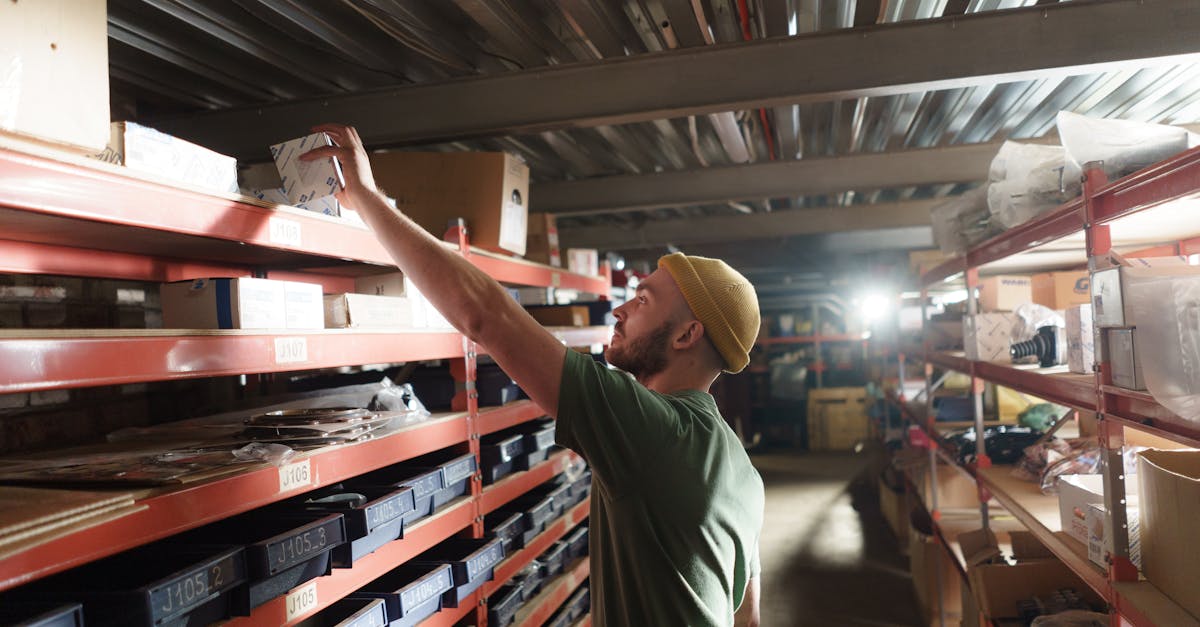
Case & Piece Picking: Shipping Hardware vs. Hype in Warehouse Automation
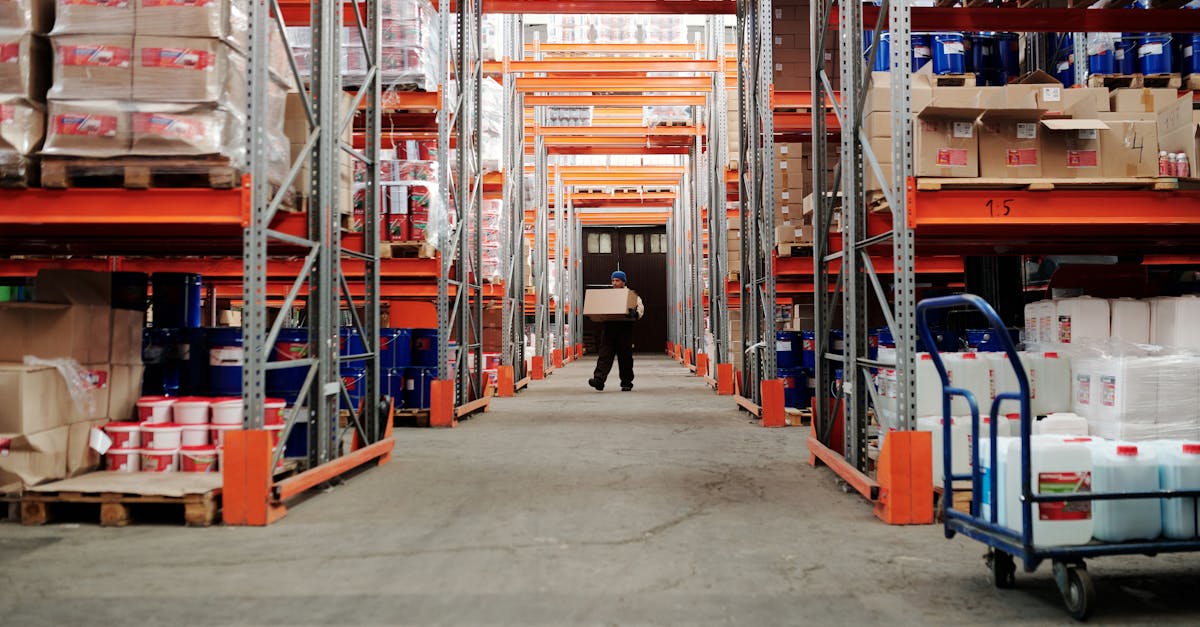
The Current State of Case & Piece Picking
Case and piece picking remains one of the most labor-intensive tasks in modern supply chains. Traditionally, this has relied on human operators walking warehouse aisles or, increasingly, on conveyor systems and automated guided vehicles (AGVs). However, the last five years have seen a shift toward autonomous mobile manipulators and high-density storage systems that claim to handle both loose items (piece) and pallets (case) with minimal intervention. For RobotWale, the distinction between marketing announcements and physical deployment is critical. We grade these technologies not by press releases, but by the presence of shipping hardware, pilot deployments, and verified operational data.
The ecosystem divides into three main tiers. First, the high-density Automated Storage and Retrieval Systems (ASRS) that manage case picking through robotic arms integrated into storage racks. Second, the cloud-connected general-purpose arms that handle piece picking using artificial intelligence to generalize across SKU variations. Third, the traditional pick-and-place arms that operate within fixed cells. While all three claim to reduce labor costs, the reality of adoption varies significantly by region and capital availability.
In India, the warehouse automation landscape is maturing, but the adoption of advanced case-picking robots remains nascent. Most deployed systems are still conveyor-based or involve simple collaborative robots (cobots) rather than autonomous mobile manipulators. The cost of entry, infrastructure requirements, and the complexity of Indian SKU variability create barriers that global leaders like Symbotic and Covariant must overcome to scale.
Symbotic: High-Density ASRS at Scale
Symbotic has emerged as a dominant player in the ASRS space, particularly for high-volume retail distribution centers. Unlike traditional robotic arms that move to a stationary item, Symbotic’s system uses autonomous mobile robots to move inventory to stationary workstations or move the entire rack. Their technology is designed for piece picking, where robots retrieve individual items from bins, as well as case picking for palletized goods.
As of late 2023 and early 2024, Symbotic has shipped hardware to major clients. Walmart’s distribution centers in the United States serve as the primary evidence of this deployment. Reports indicate that Symbotic systems are operational in several facilities, handling the picking of goods for replenishment. However, the company has faced significant regulatory and financial headwinds. The U.S. Securities and Exchange Commission (SEC) filed charges related to accounting practices and revenue recognition, which has impacted investor confidence and the speed of new deployments.
Despite these challenges, the hardware exists. Symbotic’s systems are not conceptual; they are installed in active distribution centers. The robots operate within a defined grid, communicating with a central control system to optimize pick paths. For a warehouse operator, this means increased density and reduced labor costs compared to traditional manual picking. However, the capital expenditure is substantial. Symbotic contracts are typically multi-million dollar arrangements covering hardware, software licensing, and installation.
For the Indian market, Symbotic’s availability remains limited. There are no public records of large-scale Symbotic deployments in India as of mid-2024. The infrastructure required to support their high-density storage systems—precise floor leveling, robust power supply, and specialized racking—is not universally available across Indian logistics parks. Pricing is opaque, but similar ASRS systems in the West often range from $5 million to $20 million for a full deployment. Converted to INR, this places the landed cost between ₹40 crore and ₹160 crore, excluding installation and maintenance.
Covariant: General-Purpose AI for Manipulation
Covariant differs from Symbotic by focusing on the intelligence of the manipulation rather than the storage architecture. Their technology is built around cloud-connected robotic arms that use AI models to identify and grasp objects. This approach targets the piece-picking problem where SKU variability is high. A Covariant system can be trained to pick a box of cereal one day and a fragile bottle the next, without reprogramming the robot for every change.
Covariant has progressed from research to pilot deployments. They have partnered with major manufacturers to integrate their software stack onto hardware from partners like ABB and standard robotic arms. The key metric here is the ability to ship hardware that performs reliably in unstructured environments. Pilot programs have been conducted with leading retailers and manufacturing facilities in the United States. These pilots demonstrate the ability to handle repetitive picking tasks with a significant reduction in error rates compared to traditional vision systems.
However, Covariant’s roadmap involves scaling from pilots to full production lines. This transition requires rigorous validation. Unlike Symbotic, which integrates storage and retrieval, Covariant focuses on the end-of-line or order fulfillment station. This makes them complementary to other automation rather than a full replacement of the warehouse floor.
For India, the availability of Covariant’s full-stack solution is currently in the early evaluation phase. There are no confirmed large-scale deployments in Indian warehouses. The cost structure involves a software license fee plus the cost of the robotic arm hardware. A typical deployment might cost between $200,000 and $1 million per cell, depending on throughput requirements. In INR, this translates to ₹1.6 crore to ₹8 crore per cell. This is prohibitive for small and medium enterprises (SMEs) in India, limiting adoption to large logistics providers like Flipkart or Amazon India, though even their interest remains in the pilot stage.
The Pick-and-Place Ecosystem
Beyond the high-tech AI and ASRS leaders, the broader pick-and-place category includes traditional industrial robots and cobots. Companies like Zebra Technologies (acquiring Fetch Robotics) and standard manufacturers like Fanuc or KUKA offer arms designed for case and piece handling. These systems are generally more mature in India.
Traditional pick-and-place robots are often mounted on fixed bases. They excel in high-speed, repetitive tasks where the environment is controlled. For example, placing a product from a conveyor onto a pallet is a classic use case. While less flexible than Covariant’s AI, these systems offer lower upfront costs and easier maintenance.
In the Indian context, this segment is the most visible. Many 3PL (Third-Party Logistics) providers in Pune, Mumbai, and Delhi are integrating cobots for case handling. These robots often come with pre-defined paths and fixed vision systems. The cost is significantly lower than the AI-driven solutions, often ranging from $20,000 to $100,000 per unit. This makes them accessible to mid-sized manufacturers.
The limitation lies in flexibility. If the SKU changes, the robot often requires reprogramming or sensor adjustment. For warehouses dealing with thousands of SKUs, this creates a bottleneck. However, for stable product lines, these systems provide a reliable return on investment without the complexity of cloud robotics.
India Availability and Economic Reality
The availability of advanced case-picking robots in India is currently constrained by three factors: cost, infrastructure, and labor economics. While the technology is proven in the United States and Europe, the Indian market presents unique challenges.
First, the capital expenditure (CapEx) is high. As noted, Symbotic and Covariant solutions require multi-million dollar investments. Indian logistics providers often operate on thin margins, making the ROI timeline a critical decision point. A system that takes three years to pay for itself may be less attractive than a labor solution that costs significantly less upfront.
Second, infrastructure readiness varies. ASRS systems require precise flooring and structural support. Many existing warehouses in India are not built to these specifications. Retrofitting these spaces adds to the cost and complexity. For Covariant’s mobile manipulators, navigation reliability depends on consistent lighting and floor conditions, which can be variable in Indian warehouses.
Third, the labor economics are shifting. While labor costs in India are rising, they are still competitive compared to the West. Automating 90% of a warehouse might save costs in the US, but in India, the savings must be substantial to justify the CapEx. This means that while large players may invest in pilots, widespread adoption will remain limited to high-value segments.
Approximate pricing for a mid-sized automated picking cell in India, including a standard robotic arm and integration, ranges from ₹50 lakh to ₹2 crore. This excludes the high-end AI software licensing. For Symbotic-level ASRS, the cost is likely above ₵10 crore. These figures are estimates based on landed costs of similar systems globally, adjusted for Indian duties and installation.
Conclusion
Case and piece picking automation is moving beyond the hype phase, but the shipping hardware reality is uneven. Symbotic has deployed systems in major distribution centers, proving the ASRS model works at scale, though financial headwinds persist. Covariant has shipped pilots, showing AI-driven manipulation is viable, but widespread deployment is still emerging.
For India, the message is one of cautious optimism. The technology exists, but it is not yet standard. Pilots are the current benchmark for verification. Operators should look for hardware that is installed and running, not just announced. The pick-and-place ecosystem offers a more immediate path to automation for Indian warehouses, while the high-density ASRS and AI-driven systems will likely take longer to penetrate the market.
As the supply chain stabilizes and labor costs evolve, the adoption curve will shift. Until then, RobotWale recommends prioritizing proven deployments over conceptual announcements. The future of warehouse automation lies in verified hardware and measurable ROI, not in renderings or press releases.
✓ Key takeaways
- •Hands-on view of Case & Piece Picking: Shipping Hardware vs. Hype in Warehouse Automation inside our Case & Piece Picking library.
- •Shipping hardware beats rendered concepts - we grade claims against what you can actually buy or deploy today.
- •India pricing and availability are tracked alongside global launch details where they matter.
References
Related articles
More in Case & Piece Picking →