Indian Agricultural Drones: Shipping Hardware, Subsidies, and Real-World ROI
The Reality of Agri-Drones in India: Beyond the Hype
The agricultural drone sector in India has transitioned from a narrative of technological promise to one of operational reality. While concept videos have circulated for years, RobotWale grades claims by shipping hardware first. As of late 2024, the Indian agri-drone ecosystem is dominated by a mix of imported heavy-lift platforms and emerging domestic manufacturers attempting to localize assembly under the Production Linked Incentive (PLI) scheme. The market is split between high-capacity spraying drones capable of handling 40kg payloads and smaller multirotor units designed for spot-spraying and monitoring.
This assessment filters out marketing speculation to focus on what is commercially available, what is subsidized, and where the economic viability lies for the average Indian farmer or service provider. We prioritize manufacturer spec sheets, verified pilot deployments, and regulatory frameworks over press release announcements.
The Incumbent: DJI Agras Series
DJI remains the de facto standard for agricultural spraying hardware globally, and its presence in India is well-documented through official distributors and third-party service providers. The Agras series (T20P, T30, T40) represents the bulk of the installed base in states like Punjab, Haryana, and Andhra Pradesh.
Shipping Hardware and Specifications
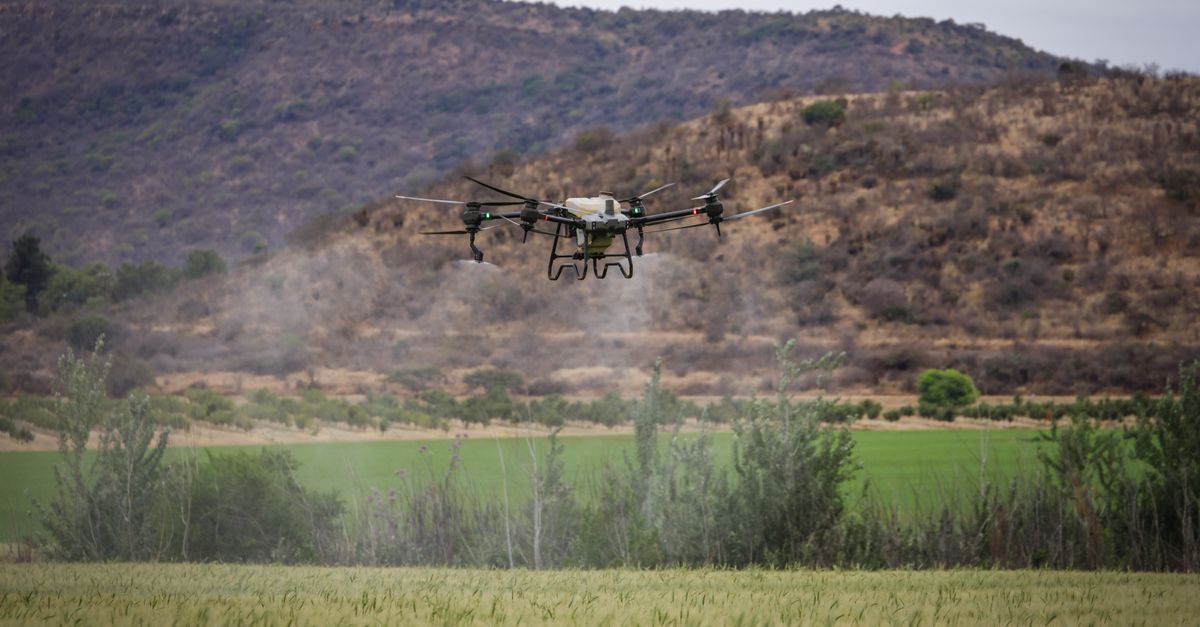
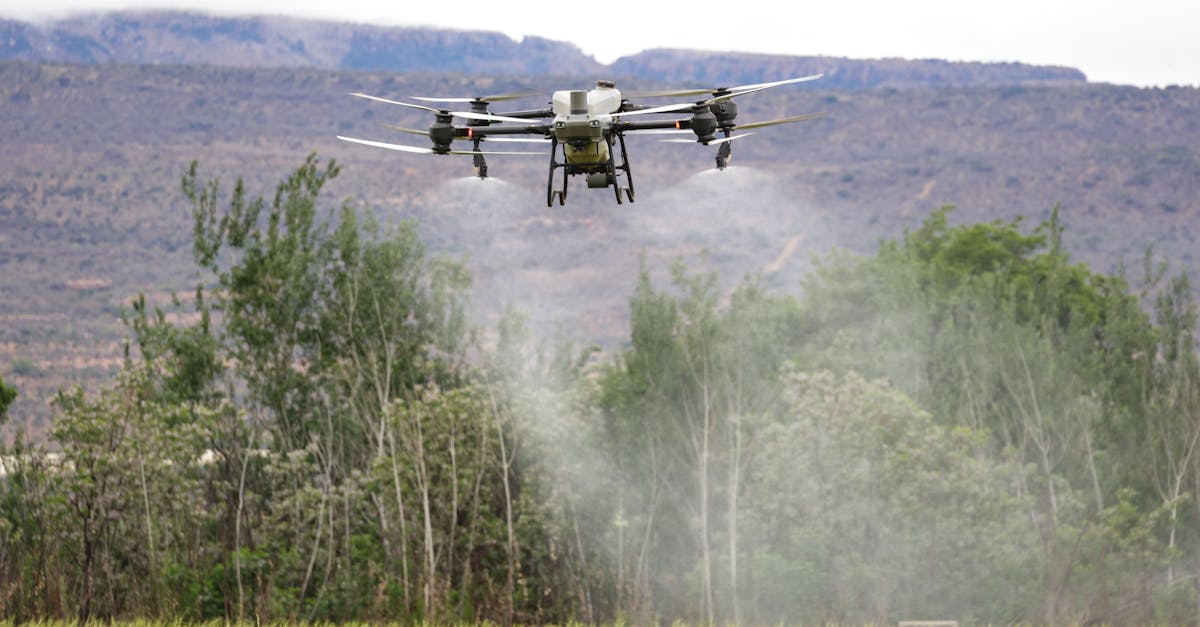
The DJI Agras T30 is currently the most widely deployed unit for commercial spraying. It features a 30-liter liquid tank and a maximum spraying width of 40 meters. Key specifications verified via DJI's official spec sheets include:
- Payload: 30 liters (liquid) / 40 kg (solid granular).
- Flight Time: Up to 10 minutes with full payload.
- Propulsion: Dual-battery system for redundancy.
- Avoidance: Radar and visual sensors for obstacle avoidance.
For larger farms, the DJI Agras T40 has entered the Indian market. It offers a 40-liter payload and is designed for higher efficiency in open fields. The T40 supports the new D-RTK 2 Mobile Station for centimeter-level positioning.
India Availability and Pricing: Importantly, DJI does not sell these units directly to individual farmers in India. Sales are routed through authorized distributors. The landed cost for a DJI Agras T30, including GST and duty, typically ranges between ₹15 lakh and ₹18 lakh. The T40 is priced higher, often exceeding ₹25 lakh depending on the distributor.
RobotWale notes that while these units are physically shipping, the after-sales service infrastructure varies significantly by region. In Tier-1 cities, maintenance is reliable; in remote rural clusters, spare parts availability can take weeks.
Indian Manufacturers: Garuda Aerospace and Skye Air
The government's push for indigenous manufacturing has spurred several Indian startups to enter the agri-drone space. Unlike DJI, these companies often emphasize their ability to operate within specific Indian regulatory frameworks and offer localized support.
Garuda Aerospace
Garuda Aerospace is one of the few Indian drone manufacturers with a clear focus on agriculture. While they are often associated with defense and surveillance, their Garuda-1000 and Agri-1000 variants are relevant to this sector.
Unlike the T30 which sells as a complete hardware unit, Garuda often operates on a Hardware-in-the-Loop model where they partner with local dealers for last-mile delivery. Their drones are designed to carry payloads of up to 30kg. The critical differentiator is the ability to manufacture locally, which aligns with the PLI scheme criteria.
Verification Status: Garuda has confirmed shipments in pilot projects across Karnataka and Maharashtra. However, mass-market penetration is limited compared to DJI due to supply chain constraints and higher unit costs without the economies of scale that DJI enjoys.
Skye Air Mobility
Skye Air Mobility, primarily known for logistics, has pivoted to incorporate agricultural payloads. Their focus is on the Agri-Sky series. These units are designed for rapid deployment and battery swapping.
Market Position: Skye Air is currently shipping limited units to state agriculture departments and large cooperatives. The company emphasizes that their drones are not just for spraying but for data collection (NDVI mapping) as well. Pricing for Skye Air's agricultural models is estimated to be in the range of ₹12 lakh to ₹16 lakh, though exact landed costs vary based on subsidy eligibility.
Regulatory Landscape and DGCA Compliance
Operating an agricultural drone in India is not merely a hardware purchase; it is a regulatory exercise. The Directorate General of Civil Aviation (DGCA) enforces the Drone Rules, 2021, which classify agricultural drones under the category of Non-Commercial or Commercial depending on the payload.
Remote Pilot Certificate
To operate a drone for commercial agricultural spraying, the pilot must hold a Valid Remote Pilot Certificate issued by the DGCA. This is a mandatory requirement for any drone exceeding 250 grams that is used for commercial purposes. The training involves theoretical and practical exams conducted by authorized agencies.
Digital Sky Platform (DSP)
All drone operations must be conducted on the Digital Sky Platform. This includes:
- UIN (Unique Identification Number): Every drone must be registered.
- Flight Permissions: Permission must be sought via the DSP for specific flight zones.
- No-Fly Zones: Agricultural drones cannot operate near airports, military installations, or international borders without specific clearance.
Regulatory Reality Check: While the rules exist, the approval process can be slow. Many small service providers operate in a gray area, which poses a risk for farmers investing in their services. RobotWale advises that only DGCA-compliant service providers should be contracted for subsidy-linked work.
Economic Viability and Subsidy Impact
The primary driver for adoption in India is Economics-of-Scale. Manual pesticide spraying is labor-intensive, expensive, and poses health risks to human operators. Drones offer speed, safety, and precision.
Cost Per Acre
According to data from the Ministry of Agriculture and Farmers Welfare (MAFW), the cost of manual spraying ranges from ₹1,500 to ₹2,500 per acre depending on the crop and terrain. Drone spraying averages ₹800 to ₹1,200 per acre. This represents a 40% to 50% reduction in operational expenditure for large farms.
Subsidies under PM-Kisan and State Schemes
The Government of India offers subsidies under the Subsidy for Agriculture Mechanization. Farmers can receive up to 40% subsidy on agricultural drones under the Sub-Mission on Agricultural Mechanization (SMAM). Some states, such as Telangana and Andhra Pradesh, have added their own top-ups, bringing the effective subsidy to 60%.
Example Calculation: For a DJI Agras T30 priced at ₹18 lakh, a 40% subsidy reduces the cost to ₹10.8 lakh. With a state top-up, it could drop further to ₹7.5 lakh.
Caveat: Subsidies are often tied to specific criteria, such as the drone being registered in the Digital Sky Platform and the farmer maintaining a record of spraying hours. This administrative overhead can deter smallholders.
Hardware Limitations and Operational Challenges
Despite the regulatory and economic framework, hardware limitations remain a bottleneck for mass adoption in India.
Battery Life and Swapping
Most agricultural drones in India, including the DJI T30, have a flight time of 5 to 10 minutes per battery. For a 10-acre field, a pilot may need to swap batteries 4 to 6 times. This requires a large inventory of batteries and charging stations.
- Supply Chain: Lithium polymer batteries degrade quickly in Indian heat (above 40°C). Manufacturers advise charging only in temperature-controlled zones.
- Infrastructure: Many rural areas lack reliable electricity for high-amperage battery chargers.
Payload and Terrain
While the T40 can carry 40kg, the spray efficiency drops in uneven terrain. The drone requires a stable line-of-sight for the pilot. In dense orchards or hilly regions, GPS signal loss can occur, forcing the drone into 'Return to Home' mode, which risks crop damage.
Conclusion: Cautious Optimism
The agricultural drone sector in India is no longer in the conceptual phase. DJI Agras units are shipping, and Indian startups like Garuda Aerospace are delivering pilot hardware. The regulatory framework is established, though enforcement varies.
For the Indian farmer, the decision to adopt agri-drones depends on three factors:
- Subsidy Eligibility: Can the farmer access the 40-60% subsidy?
- Service Infrastructure: Is there a DGCA-compliant operator nearby?
- ROI: Does the farm size justify the investment in a service contract or hardware?
RobotWale's assessment suggests that while the hardware is available and the subsidies are real, the ecosystem maturity is still in the pilot deployment stage. We advise stakeholders to prioritize service providers with proven DGCA compliance over those making unverified claims about autonomous flight capabilities.
References
- DJI Agriculture: Official Spec Sheets for Agras T30 and T40. https://www.dji.com/india/agriculture
- Garuda Aerospace: Product Overview and Manufacturing Capabilities. https://www.garudaaerospace.com
- DGCA Drone Rules 2021: Ministry of Civil Aviation. https://drafteas.dgca.gov.in
- Ministry of Agriculture: Sub-Mission on Agricultural Mechanization (SMAM). https://agri.gov.in
- Skye Air Mobility: Agri-Drone Solutions and Logistics. https://www.skyeairmobility.com
✓ Key takeaways
- •Hands-on view of Indian Agricultural Drones: Shipping Hardware, Subsidies, and Real-World ROI inside our Agricultural Drones library.
- •Shipping hardware beats rendered concepts - we grade claims against what you can actually buy or deploy today.
- •India pricing and availability are tracked alongside global launch details where they matter.
References
Related articles
More in Agricultural Drones →