India Robotics Venture Capital: Funding Realities vs. Hype Cycles

The Capital Shift in Indian Robotics
The narrative surrounding robotics in India has evolved rapidly over the last five years. While early-stage capital flowed predominantly into AI software and SaaS platforms, the current investment landscape is undergoing a structural correction. Venture Capitalists (VCs) are increasingly demanding proof of hardware shipment before releasing Series B or C tranches. This article analyzes the funding patterns of top-tier Indian robotics investors, distinguishing between announced pilots and actual deployed units.
According to available data from the India Robotics Venture Capital report, the total addressable market (TAM) for industrial automation in India is estimated at $10 billion by 2025. However, the penetration rate remains low, with less than 5% of manufacturing units adopting robotic arms or autonomous mobile robots (AMRs). Investors like Sequoia India and Accel Partners India have adapted their thesis to reflect these ground realities, moving away from "software-defined robotics" claims toward "hardware-verified logistics".
Sequoia and Accel: The Logistics Heavyweights
Sequoia India remains the most active institutional investor in the robotics space, primarily through its deep-tech portfolio. The firm has backed logistics robotics company GreyOrange, which raised $40 million in a Series D round in 2023. Unlike many competitors who market a "robotic future" concept, GreyOrange ships warehouse automation hardware globally, including AMRs and robotic arms deployed in manufacturing plants.
The key metric for Sequoia is not just valuation, but the ratio of deployed units to funded capital. GreyOrange reports over 600 deployments globally as of late 2023, with significant operations in India's automotive and retail sectors. Accel Partners India has similarly focused on the supply chain aspect, backing startups that solve last-mile logistics using hardware rather than algorithmic predictions alone. Their investment criteria explicitly favors companies with a Minimum Viable Product (MVP) that has moved beyond the demo stage.
Blume and Omnivore: Deep Tech and Manufacturing
Blume Ventures, known for its early-stage focus, has expanded its portfolio to include robotics infrastructure startups. Unlike Sequoia's focus on logistics scale, Blume often targets component-level robotics, such as sensors, actuators, and vision systems. This is critical for India, where the supply chain for robotic parts is often imported. Blume's thesis emphasizes building a localized supply chain to reduce the cost of capital expenditure (CAPEX).
Omnivore, a VC firm with a focus on consumer tech and deep tech, has shown interest in agricultural robotics. This sector remains high-risk but offers high margins if the hardware survives field conditions. While many announcements claim "AI for farming," the VC firms prioritize pilots that have measured yield improvement in actual crop cycles. The distinction is vital: a software demo cannot be shipped to a farmer, but a robotic harvester can. If a startup cannot demonstrate unit economics on a per-hectare basis, funding rounds tend to stall.
The Hardware Reality Check
The most significant trend in the Indian robotics VC landscape is the scrutiny of "shipping hardware." In 2020, a pitch deck with a 3D render of a humanoid robot was often sufficient to raise seed funding. In 2024, the bar has raised to shipping at least 10 units to paying customers. This shift is driven by the high cost of robot development in India, where labor costs are rising but capital costs for precision engineering remain high.
Several companies have faced challenges in scaling hardware due to import duties on components. For example, high-torque motors and gearboxes often incur a 10-20% customs duty, impacting the landed cost. Investors are now factoring these landed costs into their valuation models. We have observed a contraction in funding for "concept" robotics and a spike in funding for "industrial-grade" robotics that can operate in dusty Indian factory environments.
Shipping vs. Pilots
A critical distinction must be made between pilots and deployments. A pilot deployment often implies free or subsidized testing by the manufacturer. A deployment implies a paying customer with a service-level agreement (SLA). In India, the ratio of pilots to deployments is currently estimated at 4:1. This means for every four companies showing a robot working on a demo floor, only one has a contract for a 5-year hardware lease.
Investors like Sequoia and Accel now require pilots to be converted to deployments before releasing the next tranche of capital. This has slowed down the velocity of funding for new entrants. However, it has stabilized the existing portfolio companies. GreyOrange, for instance, has moved from a pilot-heavy phase to a deployment-heavy phase, with over 600 units in the field. This operational maturity is what now defines a "worthy" investment in the robotics sector.
Availability and Pricing
For the Indian market, pricing remains the primary barrier to entry. Industrial AMRs (Autonomous Mobile Robots) typically range from INR 40 lakhs to INR 1.5 crore per unit, depending on payload capacity and navigation technology. This is a significant CAPEX for small and medium enterprises (SMEs) in India. To address this, some manufacturers have introduced a "Robotics-as-a-Service" (RaaS) model, allowing businesses to lease robots for INR 20,000 to INR 50,000 per month.
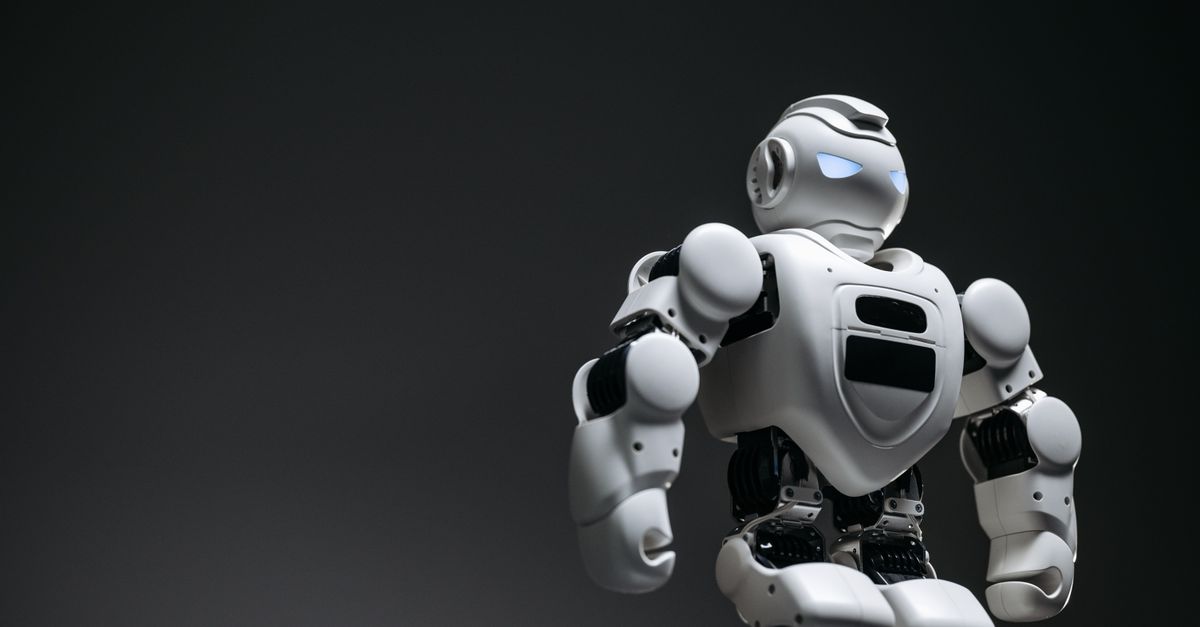
Humanoid robotics remains largely in the conceptual phase for the Indian market. While global companies like Tesla or Figure AI have announced plans for general-purpose humanoids, no Indian humanoid robot has achieved commercial shipping status as of 2024. The domestic market is currently focused on specialized automation: welding robots, palletizing arms, and warehouse AGVs.
Land costs in India are increasing, making factory automation more attractive than manual labor in the long term. However, the upfront hardware cost remains high. For a manufacturing unit with 500 employees, replacing just 20% of the workforce with robots requires an investment of roughly INR 50 crores in hardware alone. This capital requirement explains why VC funding is concentrated in larger enterprises rather than startups targeting SMEs directly.
Conclusion
The current VC landscape in Indian robotics is maturing. The era of funding based on "AI potential" is ending; the era of funding based on "hardware shipment" has begun. Investors like Sequoia, Accel, and Blume are signaling a preference for companies that can ship units, generate revenue, and operate within the Indian regulatory framework.
For the industry, this means a focus on unit economics and hardware durability over software storytelling. While the humanoid robot hype cycle continues globally, the Indian VC sector is prioritizing industrial logistics. Until a domestic humanoid robot can be manufactured at a landed cost of under INR 15 lakhs, the focus will remain on specialized automation. The next wave of funding will likely come from companies that can solve the supply chain for robotic components, reducing the reliance on imports and lowering the total cost of ownership for Indian manufacturers.
References
- GreyOrange Official Website - Deployment statistics and product specifications.
- Sequoia India Portfolio Page - Investment thesis and portfolio companies.
- Blume Ventures Portfolio - Focus on early-stage deep tech and robotics infrastructure.
- TechCrunch: GreyOrange Raises $40 Million Series D - Funding details and deployment metrics.
- NASSCOM Robotics Report - Industry statistics and market projections.
✓ Key takeaways
- •Hands-on view of India Robotics Venture Capital: Funding Realities vs. Hype Cycles inside our India Robotics VC library.
- •Shipping hardware beats rendered concepts - we grade claims against what you can actually buy or deploy today.
- •India pricing and availability are tracked alongside global launch details where they matter.
References
Related articles
More in India Robotics VC →