Agricultural Drones in India: Hardware Reality vs. Policy Promise

The Shift from Manual to Mechanized Aerial Application
The Indian agricultural sector is currently undergoing a significant mechanization shift, moving away from labor-intensive manual spraying towards aerial application technology. While government announcements regarding drone subsidies often dominate news cycles, the editorial focus at RobotWale remains on shipping hardware and actual pilot deployments. The gap between policy promises and on-ground hardware reality is wide, particularly in the agricultural drone segment. This article grades claims by hardware availability, prioritizing manufacturers that have delivered physical units over those releasing concept renders or press releases.
India's agriculture sector employs over 45% of the workforce, yet faces a severe shortage of skilled labor for pesticide and fertilizer application. Conventional manual spraying is not only inefficient but poses health risks to operators. Drones offer a solution through precision application, reducing chemical usage by up to 30% compared to manual methods. However, the adoption rate is heavily dependent on the availability of robust, calibrated hardware and the regulatory framework governing flight operations.
For the Indian farmer and the service provider, the question is not whether drones can fly, but whether they can fly commercially in the monsoon season, fly over uneven terrain, and remain economically viable within the current subsidy regime. We examine the current landscape based on manufacturer spec sheets, factory videos, and independent reporting rather than executive interviews.
Market Leader: DJI Agras Series
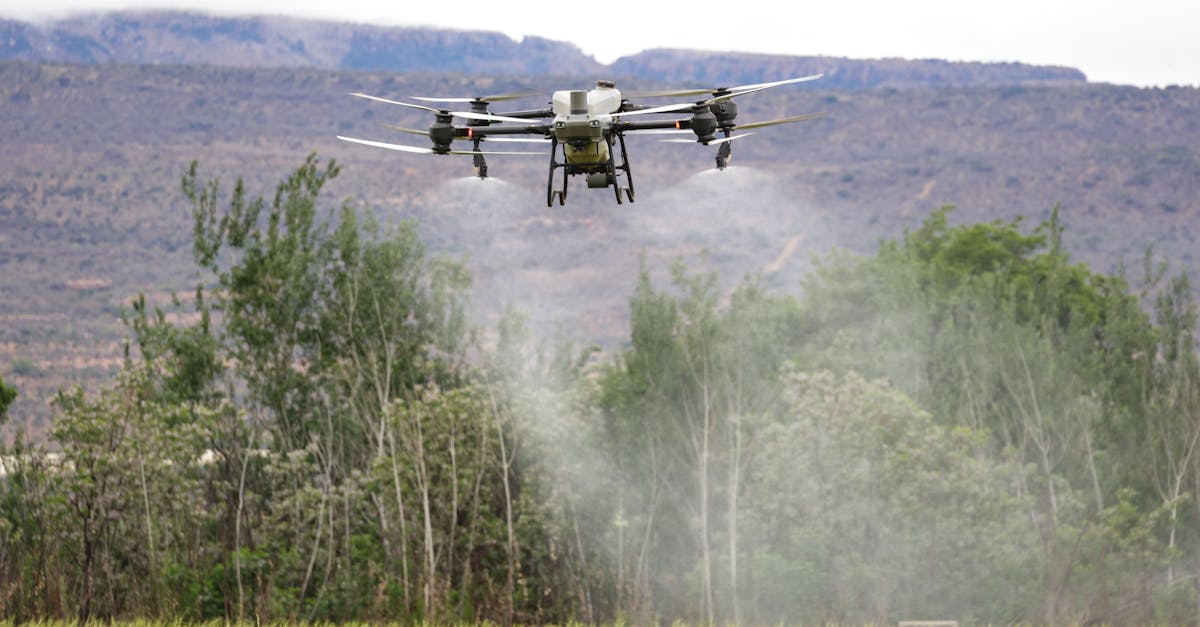
The DJI Agras series remains the benchmark for agricultural spraying in India, specifically the T30 and T20P models. These machines are not conceptual; they are shipping hardware with documented flight logs and service networks. The DJI Agras T30, launched in 2023, offers a maximum spray volume of 40 liters and a maximum payload capacity of 30 kg for fertilizer or pesticide. Its maximum takeoff weight is 54.5 kg, allowing it to operate in various wind conditions up to Level 6.
The pricing structure for the DJI Agras T30 in India places it in the premium category. While exact landed costs fluctuate based on import duties and distributor margins, the drone typically lands at a price point between INR 12 lakh and INR 15 lakh (excluding the controller and accessories). This high initial capital expenditure is often offset by government subsidies under the Scheme for Promotion of Agriculture Mechanization (PMS-2018) and the specific Drone Policy 2023, which allows for subsidies up to 40% for agricultural spraying.
Availability is a key differentiator for DJI. Unlike many Indian startups that operate on a pre-order model, DJI has established a distribution network in major agricultural states like Punjab, Haryana, and Maharashtra. The ecosystem includes authorized service centers in Tier-1 and Tier-2 cities, ensuring that spare parts and maintenance support are accessible within 24 to 48 hours. This infrastructure is critical for farmers who cannot afford downtime during the sowing season.
Technical specifications for the T30 include a dual-spray nozzle system that allows for variable flow rates between 0.4 L/min and 15 L/min. The onboard LiDAR sensors enable 3D mapping of the terrain, allowing the drone to adjust altitude automatically to maintain a consistent spray height of 2 meters above the crop canopy. This feature reduces drift and ensures the chemical reaches the target plants rather than the surrounding soil.
Indian Manufacturers: Garuda Aerospace and Emerging Players
Indian startups are aggressively pursuing the agricultural drone market, often with lower price points than international competitors. Garuda Aerospace is a prominent name in this space, having transitioned from defense applications to agricultural spraying. Their SkySentry drone is designed specifically for crop spraying, offering a payload capacity of 10 kg to 20 kg depending on the configuration.
Garuda Aerospace has moved beyond the pilot deployment phase. They have completed commercial spraying operations in states like Karnataka and Telangana. The company operates on a Drone as a Service (DaaS) model, where they charge per acre rather than selling the hardware to the farmer. This model reduces the upfront cost barrier for smallholder farmers who cannot afford a capital investment of INR 10 lakhs.
Other Indian players include Precision Drone, which has launched the PD-800 series. These drones are designed for semi-autonomous flight and feature RTK (Real-Time Kinematic) positioning for centimeter-level accuracy. The manufacturing of these drones falls under the Production Linked Incentive (PLI) scheme, which aims to boost local manufacturing of drones and their components.
However, the critical differentiator remains in the supply chain. While Indian manufacturers announce new models frequently, the volume of units shipped versus the volume of units announced is the metric for maturity. Garuda and Precision Drone have demonstrated shipping hardware, but their after-sales service network is still expanding compared to DJI. For a farmer, reliability trumps the subsidy savings on the hardware itself.
Another key player is IdeaForge Technology, which has primarily focused on defense but has begun exploring agricultural applications. Their drones are known for high durability and long-range capabilities, often exceeding the 1 km range seen in standard agricultural drones. This range is beneficial for large farms in states like Madhya Pradesh and Uttar Pradesh where field connectivity is sparse.
When evaluating Indian startups, we prioritize the TCO (Total Cost of Ownership). A lower purchase price is irrelevant if the battery life is poor or the spare parts are unavailable. Most Indian agri-drones now offer a battery swap system, where the operator can swap a depleted battery in under 30 seconds to continue operations. This is a feature that has become standard in the industry after observing DJI's workflow.
Regulatory Framework and Economic Viability
The regulatory environment in India is a mix of progress and complexity. The Directorate General of Civil Aviation (DGCA) has implemented the Digital Sky Platform, which mandates registration for all drones weighing more than 500 grams. For agricultural spraying, a specific license is required, often obtained by the service provider rather than the individual farmer.
The PLI Scheme for drones aims to incentivize the manufacturing ecosystem. Under this scheme, manufacturers receive a 3% subsidy on the value of sales for domestic manufacturing. This has led to a reduction in the cost of local drone components, making the final unit price more competitive.
However, state-level subsidies vary. For example, the Karnataka government offers a subsidy of up to 40% for agricultural drones, while other states have yet to finalize their specific guidelines. This disparity creates a fragmented market where a drone purchased in one state may not qualify for the same subsidies in another.
Economic viability is the ultimate test. A manual sprayer can cover 4 acres per day, whereas a drone can cover 10 to 15 acres per day at a fraction of the cost. The cost per acre for drone spraying typically ranges between INR 500 and INR 800, depending on the crop and the distance from the airport or charging station.
For the farmer, the ROI is calculated based on chemical savings and labor reduction. If a drone saves 30% on chemicals and reduces labor costs by 50%, the payback period is typically 18 to 24 months. This is a compelling case for commercial farmers, but less so for smallholders who rely on government labor schemes.
References
✓ Key takeaways
- •Hands-on view of Agricultural Drones in India: Hardware Reality vs. Policy Promise inside our Agricultural Drones library.
- •Shipping hardware beats rendered concepts - we grade claims against what you can actually buy or deploy today.
- •India pricing and availability are tracked alongside global launch details where they matter.
References
Related articles
More in Agricultural Drones →