
Grounded in Hardware: An Analysis of India's Leading Drone Startups
The Shift in India's Drone Manufacturing
The Indian drone sector has transitioned from a novelty of technology to a structured manufacturing ecosystem. Driven by the Production Linked Incentive (PLI) scheme announced in 2021, the focus has shifted from assembly to deep integration of components. While early market narratives focused on import substitution, the current landscape demands verification of shipping hardware, pilot deployments, and actual revenue realization. This report evaluates three key players—ideaForge, Garuda Aerospace, and ePlane—based on their tangible assets rather than press releases.
The PLI scheme allocated ₹378 crore to incentivize drone manufacturing, requiring companies to demonstrate a minimum manufacturing capability. However, the Digital Sky Platform (DSP) mandated by the Directorate General of Civil Aviation (DGCA) has introduced stricter compliance regarding geo-fencing and no-fly zones. This regulatory framework has filtered out non-compliant entities, leaving a smaller cohort of manufacturers capable of delivering commercial-grade hardware.
Hardware availability remains the primary metric for success. While many firms announced prototypes in 2019-2020, only a fraction have moved past the proof-of-concept stage into serial production. The following analysis grades these companies based on their ability to deliver units against specification sheets.
ideaForge: Defense-Grade Hardware in Commercial Hands
ideaForge Technology Ltd. has established itself as a dominant player in the defense sector before expanding into commercial applications. Their flagship product, the SURJ series, is designed for high-altitude and long-endurance operations. Unlike generic multi-rotor drones available in the open market, the SURJ series utilizes heavy-duty batteries and reinforced frames to withstand wind speeds exceeding 80 km/h.
The SURJ-100, for instance, offers a flight time of approximately 40 minutes with a payload capacity of up to 3 kg. This capability is critical for border surveillance and large-scale infrastructure inspection. The drone is equipped with a 30x optical zoom camera and thermal imaging, making it suitable for defense applications. The pricing for the SURJ series typically ranges between ₹15 lakhs and ₹45 lakhs depending on the payload and sensor configuration.
Availability is confirmed through direct sales channels and government tenders. ideaForge has reported delivering over 1,500 drones to the Indian military and police forces as of 2023. This volume indicates a robust supply chain rather than a pilot project. Their manufacturing facility in Bangalore is designed to produce up to 5,000 units annually, with plans to scale further.
However, the company faces challenges in the civilian market. The high cost of entry limits adoption to large enterprises and government bodies. For smaller commercial users, the return on investment (ROI) depends heavily on the frequency of operation. Despite this, ideaForge remains a benchmark for hardware reliability in the Indian ecosystem.
Garuda Aerospace: Scaling Civil to Defense Operations
Garuda Aerospace has carved a niche by blending civil aviation requirements with defense-grade durability. Their product line includes the Kite series and the Agni series. The Kite series is primarily focused on surveying and mapping, offering high-resolution cameras and LiDAR integration. The Agni series targets the defense and security sectors with enhanced payload capabilities.
Garuda has moved beyond the prototype phase into active deployment. They have deployed drones for disaster management and border monitoring. The hardware specifications include a maximum takeoff weight (MTOW) of 25 kg for the larger variants, compliant with DGCA regulations for Beyond Visual Line of Sight (BVLOS) operations in specific zones.
Pricing for Garuda's civil drones starts at approximately ₹8 lakhs, rising to ₹25 lakhs for specialized configurations. This pricing structure positions them competitively against imported alternatives like DJI, though with the advantage of local support and data sovereignty. Garuda has also partnered with logistics firms to test last-mile delivery, although this remains in the pilot deployment stage rather than full commercial rollout.
Their manufacturing setup emphasizes modularity. This allows for faster repair cycles and easier customization for specific client requirements. However, the company faces supply chain constraints regarding high-grade lithium polymer batteries, which remain largely imported despite the PLI push for local component manufacturing.
ePlane: Commercial Agriculture and Spray Technology
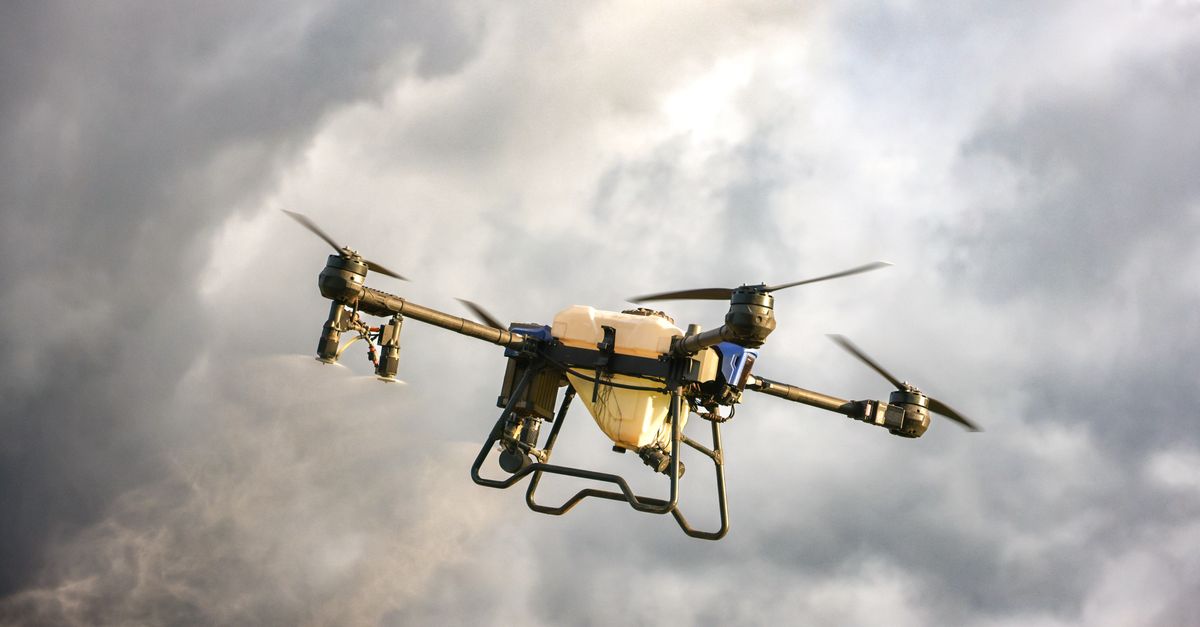
ePlane Innovations has focused on the agricultural sector, a market segment with high volume potential but lower margin per unit. Their flagship product is the agricultural spraying drone, designed to dispense pesticides and fertilizers over large tracts of farmland. This addresses a critical labor shortage in rural India.
The ePlane drones feature a tank capacity of 10 liters to 20 liters, capable of covering up to 2 hectares per hour. The control system allows for automated flight paths, reducing the need for highly skilled pilots. This democratization of technology is crucial for adoption in smaller farming communities.
Pricing for ePlane's agricultural drones ranges from ₹3 lakhs to ₹8 lakhs. This lower price point makes them accessible to large cooperative farms and government schemes like the Sub-Mission on Agricultural Mechanization (SMAM). However, the operational cost includes the replacement of batteries and motors, which adds to the total cost of ownership.
ePlane has reported over 100 units in operation across states like Punjab and Haryana. While this is a significant number compared to the national total, the rate of adoption is slower than projected due to regulatory hurdles regarding spraying over public roads and residential areas. The company relies on partnerships with state agricultural departments to expand its footprint.
Regulatory Compliance and the Digital Sky Platform
The DGCA's Digital Sky Platform has become the primary gatekeeper for drone operations. All drones must be registered, and operators must obtain specific licenses for BVLOS flights. This compliance adds to the operational cost for startups.
Manufacturers must ensure that their drones are equipped with Geofencing systems that prevent entry into no-fly zones near airports and sensitive installations. ideaForge and Garuda have integrated these systems into their firmware, but third-party software failures can still occur. This risk highlights the need for rigorous testing before commercial release.
The PLI scheme requires manufacturers to maintain a minimum domestic value addition of 50%. This has led to a push for local battery manufacturing, though high-energy-density cells remain dependent on global supply chains. The government has proposed incentives for establishing cell manufacturing plants, which could reduce costs in the next 3-5 years.
Pricing Analysis and Total Cost of Ownership
When evaluating drone hardware, the initial purchase price is only one component of the cost. A comprehensive analysis must include maintenance, insurance, and operator training.
- Initial Hardware Cost: Ranges from ₹3 lakhs (agricultural) to ₹50 lakhs (defense).
- Maintenance: Annual servicing costs typically amount to 10-15% of the purchase price.
- Insurance: Third-party liability insurance adds approximately 1-2% of the hardware value annually.
- Training: Certified pilot training courses cost between ₹15,000 and ₹50,000 depending on the complexity of the drone.
For the Indian market, the landed cost often exceeds the base price by 20% due to GST and import duties on certain components. This makes local manufacturing a significant advantage for pricing competitiveness against imports.
Conclusion
The Indian drone manufacturing sector is maturing, but hardware delivery remains the only true validator of success. While announcements and funding rounds generate noise, the ability to ship units that meet DGCA standards and perform in varied operational environments defines market leaders. ideaForge, Garuda Aerospace, and ePlane have demonstrated this capability through shipments and pilot deployments.
Future growth will depend on the resolution of supply chain bottlenecks for batteries and sensors, as well as the relaxation of regulatory constraints for BVLOS operations. Until then, the sector remains a high-barrier environment where only companies with robust engineering and operational experience will sustain profitability.
✓ Key takeaways
- •Hands-on view of Grounded in Hardware: An Analysis of India's Leading Drone Startups inside our Indian Drone Startups library.
- •Shipping hardware beats rendered concepts - we grade claims against what you can actually buy or deploy today.
- •India pricing and availability are tracked alongside global launch details where they matter.
References
Related articles
More in Indian Drone Startups →

