Tesla Optimus Programme: Inside Tesla's Humanoid Bet

The Optimus Ambition
Elon Musk's vision for Tesla extends beyond electric vehicles and energy storage. The company has publicly committed resources to General Purpose Humanoid Robots, codenamed Optimus. Unlike many robotics startups that rely on external venture capital and promise futuristic capabilities without immediate delivery, Tesla's approach is rooted in its existing manufacturing ecosystem. However, the gap between the showroom demo and a shipped unit remains significant. As of early 2024, Tesla has not released a commercially available Optimus robot for third-party purchase or general deployment. The programme remains in the prototype and pilot phase.
The core claim is that Optimus will eventually solve the labor shortage in dangerous or repetitive tasks. Musk has stated the goal is to create a unit capable of performing human tasks, from carrying boxes to assisting in manufacturing lines. The timeline for mass production has been aggressive, with earlier targets suggesting 2025. However, in robotics, timelines are notoriously fluid. We must distinguish between the announcement of a prototype and the shipping of a unit with verified reliability. Currently, the Optimus Gen 2 is the most advanced iteration, revealed in December 2023, demonstrating improvements in speed and dexterity over the Gen 1.
For the Indian market, this programme represents a long-term bet on automation rather than an immediate solution for industrial labor. While the hype cycle surrounding humanoid robots is global, the infrastructure required to support such machines is not yet ubiquitous in India. Understanding the hardware reality and the manufacturing pathway is essential before considering the economic viability.
Hardware Reality Check
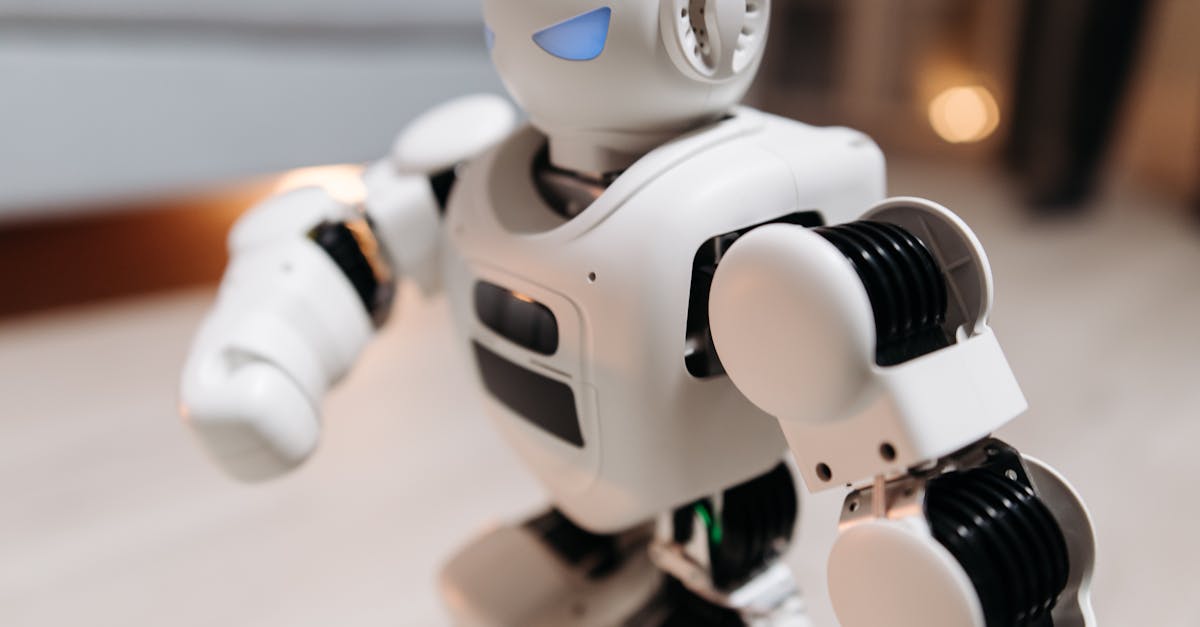
To evaluate Optimus, we must look at the specifications provided by Tesla rather than the conceptual renders often seen online. The Gen 2 prototype features a significant reduction in size and weight compared to the initial Gen 1, aiming for a smaller footprint that fits better in existing factory environments. The key differentiator is the actuation system. Tesla has moved away from off-the-shelf actuators to develop custom electric motors and transmission systems.
Actuator and Dexterity
Tesla claims the robot has 40 to 50 actuators, allowing for complex movements. The hands are designed to be dexterous, capable of manipulating delicate objects, which was a pain point in earlier prototypes. The Gen 2 demo showed the robot bending over to pick up objects and placing them back with precision. This is not merely hydraulic motion; it is electrical actuation with torque control. The energy efficiency is a critical metric, with Tesla stating the robot should draw power comparable to a low-end appliance when idle.
However, the reliability of these actuators under high-load conditions is unproven at scale. Independent testing of early prototypes is limited. There is no public data regarding Mean Time Between Failures (MTBF) for the Gen 2 actuators. For a deployment to be viable, the hardware must withstand industrial cycles. Tesla is leveraging its automotive experience to apply reliability standards to these robotic limbs, but the application differs significantly from vehicle suspension or powertrain systems.
Perception and AI
Optimus relies on a vision-first approach, eschewing LiDAR in favor of deep neural networks trained on camera data. This aligns with Tesla's Autopilot strategy for vehicles. The robot uses an internal compute unit to process visual data and make navigation decisions. This reduces hardware costs but increases the demand on the software stack. The AI training happens on Tesla's Dojo supercomputer infrastructure.
The software stack allows for "telepresence" capabilities, where a human operator can remotely guide the robot through a task. This is a fallback mechanism for when the autonomous system encounters an edge case it cannot resolve. For industrial deployment, this capability is a double-edged sword; it allows for flexibility but raises questions about latency and safety protocols. Without a fully autonomous decision-making capability in hazardous environments, the robot cannot yet replace human labor entirely.
Manufacturing at Scale
The promise of Optimus is not just the robot itself, but the ability to manufacture it at scale. Tesla plans to produce Optimus units at its Gigafactory in Austin, Texas. This strategy aims to leverage existing supply chains for components such as batteries, aluminum, and steel. Vertical integration is the key to the projected cost target.
Elon Musk has repeatedly stated the target cost for Optimus is under $20,000 USD. This figure is a long-term goal, not a current price. For context, industrial arms from established manufacturers like Universal Robots or Fanuc often cost between $20,000 and $50,000 USD. If Optimus can match this price point while offering greater dexterity and mobility, the value proposition becomes compelling. However, achieving this price requires the volume of production to be high.
Tesla's manufacturing process for the robot involves in-house production of the actuators and batteries. This contrasts with competitors who may outsource these components. The risk here is that the supply chain bottlenecks affecting automotive production could also impact the robot supply. If the factory cannot ramp up production to meet demand, the unit cost will remain high due to low economies of scale. As of now, the Austin facility is primarily focused on the Cybertruck and Model Y, with Optimus production lines still in the planning stages.
Deployment Timeline
Tesla intends to use Optimus robots within its own factories first. This "dogfooding" strategy allows the company to refine the hardware in a controlled environment before releasing it to external customers. This suggests that general availability for third-party companies will likely follow internal deployment by at least 12 to 24 months. There is no confirmed date for commercial shipping as of early 2024. The roadmap suggests pilot testing in 2024, followed by limited internal deployment in 2025.
For investors and industry observers, this timeline is critical. It moves the narrative from "concept" to "pilot" to "shipping." Until a unit leaves the factory floor for a customer, the claim of commercial viability remains theoretical. Tesla's internal production target is to begin mass production in 2025, but this is contingent on the resolution of hardware durability issues and software autonomy levels.
The India Market Context
For India, the Optimus programme presents specific challenges and opportunities. The Indian manufacturing sector is labor-intensive, with a high reliance on low-cost human labor. The economic case for a humanoid robot depends on the total cost of ownership versus the cost of labor. While the $20,000 target is attractive, the landed cost in India will be significantly higher.
Import and Regulatory Barriers
India does not currently have a regulatory framework specifically governing humanoid robots. Safety standards for industrial machinery exist, but they are designed for traditional automation. A humanoid robot operating alongside humans requires new safety protocols, particularly regarding collision avoidance and emergency stop mechanisms. The Bureau of Indian Standards (BIS) has not yet published specific certification requirements for autonomous humanoid systems.
Import duties on high-value robotics equipment are another factor. India's customs duties on finished goods can range from 10% to 20% or more, depending on the classification. If Optimus is imported as a general-purpose machine, tariffs could apply. Furthermore, the cost of logistics for a 120kg unit is non-trivial. The lack of local manufacturing for Optimus in India means the device would be an import, increasing the price and complicating maintenance.
Pricing Estimates
While Tesla targets $20,000 USD, the Indian landed cost will differ. Assuming an exchange rate of roughly ₹83 to $1 USD, the base price translates to approximately ₹16.6 Lakhs. With import duties, shipping, and local taxes (GST at 18%), the landed cost could exceed ₹22 Lakhs. This is a significant investment for Indian SMEs. Even for large enterprises, the ROI calculation requires proof of deployment that currently does not exist.
Tesla has not announced any official availability for India. Unlike traditional automotive brands that have local dealerships, Tesla India currently operates primarily through direct sales for vehicles. For robotics, a service network would need to be established to handle repairs and software updates. Without a local service presence, the risk of downtime increases, which can negate cost savings. Until Tesla establishes a physical presence for servicing, the Optimus programme remains a speculative entry for the Indian market.
Conclusion: The Long Game
The Tesla Optimus programme is a high-stakes bet on the future of general-purpose robotics. It leverages Tesla's strengths in battery technology, AI, and manufacturing to attempt a market entry that other robotics firms find prohibitively expensive. The hardware has evolved from a concept to a functional prototype, but the mass production timeline remains fluid. The claim of $20,000 pricing is a target, not a guarantee.
For India, the Optimus robot is not an immediate solution. The regulatory landscape, import costs, and lack of local service infrastructure create barriers to entry. The focus should be on the long-term viability of the technology rather than short-term adoption. As the programme moves from prototype to pilot, we will see whether the hardware can withstand the rigors of real-world deployment. Until then, the Optimus remains a compelling vision that requires rigorous evidence before it can be classified as a shipping product.
RobotWale continues to monitor the programme, prioritizing verified shipping data over press releases. The success of Optimus depends on its ability to deliver value in actual industrial environments, not just at demo events.
References
- Tesla AI Day 2023 - Optimus Update: https://www.tesla.com/ai-day
- Tesla Official Blog - Optimus Hardware: https://www.tesla.com/blog/optimus
- Reuters - Tesla Optimus Production Plans: https://www.reuters.com/technology/tesla-optimus-robotics
- Bloomberg - Elon Musk on Optimus Timeline: https://www.bloomberg.com/news/articles/tesla-optimus-humanoid-robot
- Indian Bureau of Standards - Industrial Safety: https://www.bis.gov.in/
✓ Key takeaways
- •Hands-on view of Tesla Optimus Programme: Inside Tesla's Humanoid Bet inside our Tesla Optimus Programme library.
- •Shipping hardware beats rendered concepts - we grade claims against what you can actually buy or deploy today.
- •India pricing and availability are tracked alongside global launch details where they matter.
References
Related articles
More in Tesla Optimus Programme →