Unitree Robotics: Hardware Shipping Record and Indian Market Viability
Executive Overview: Hardware-First Approach
Unitree Robotics, headquartered in Hangzhou, China, has positioned itself as a high-volume manufacturer rather than a concept-only startup. Unlike many peers in the broader robotics sector that rely on venture capital narratives, Unitree emphasizes supply chain verticality and rapid iteration cycles. The company’s trajectory follows a clear pattern: consumer drones, followed by quadruped robots, and finally, high-performance humanoids. For the Indian market and global industry observers, the distinction between a video demo and a shipped unit remains the primary metric for credibility.
Founded in 2013, Unitree initially gained traction with consumer quadcopters before pivoting to legged locomotion. Today, their product portfolio spans from entry-level research quadrupeds to industrial-grade inspection robots. The company operates on a model that integrates motor manufacturing, control systems, and mechanical design in-house. This vertical integration allows for aggressive pricing strategies that challenge traditional industrial robot manufacturers. However, the speed of iteration does not always correlate with immediate reliability in complex environments.
This analysis grades Unitree’s offerings strictly by shipping status. We prioritize hardware that can be delivered to a client site, followed by pilot deployments in controlled environments, and finally, announcements regarding future roadmaps. The following sections break down the current hardware lineup, focusing on technical specifications and market availability.
Quadruped Lineup: Shipping Hardware and Capabilities
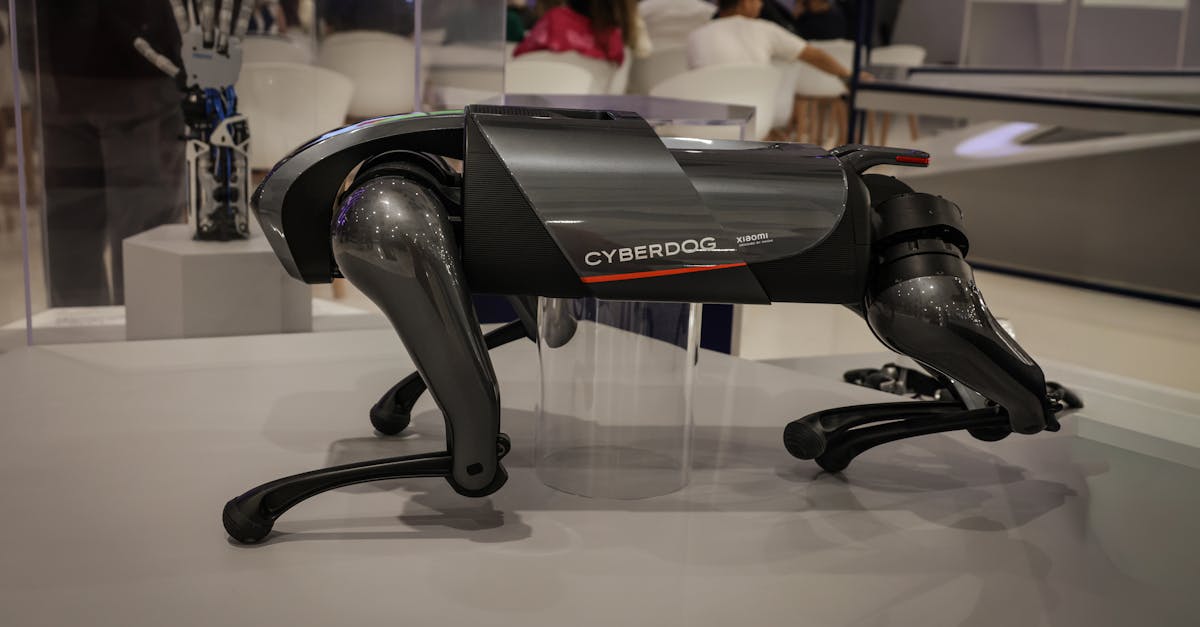
Unitree’s quadruped division remains its most commercially robust segment. The lineup includes the Go1, B1, B2, and the newer G1 model. Each serves a distinct tier of the market, from hobbyists to industrial inspectors.
Unitree G1
The G1 is the most accessible entry point into the company’s ecosystem. Marketed as an affordable development platform for researchers and developers, the G1 features a lightweight carbon fiber chassis. Key specifications include a maximum speed of 4.5 meters per second in trotting gaits. The robot is equipped with a 14-degree-of-freedom (DoF) configuration, allowing for complex locomotion patterns.
The payload capacity is rated for lightweight payloads suitable for sensor integration. Battery life typically ranges between 2 to 4 hours depending on the active load and gait. In terms of pricing, the G1 is positioned aggressively. While specific dealer pricing varies by region, the base unit is often listed around $1,700 USD. For India, this translates to a significant landed cost once import duties and GST are factored in.
Unitree B2
For industrial applications, the B2 serves as the heavy-duty option. Designed for outdoor inspection and logistics, the B2 offers a payload capacity of up to 250kg. The chassis is reinforced to withstand rough terrain, and the actuation system is rated for high-torque output at low speeds. This model is critical for mining or construction site inspections where durability outweighs agility.
Unlike the G1, the B2 is not primarily a research toy but a tool. Deployment requires specialized training for operators. The B2 is available for purchase in select regions, though lead times can vary due to the complexity of the actuation systems involved.
Unitree B1
The B1 acts as a bridge between the consumer and industrial sectors. It offers a balance of speed and payload, typically rated for speeds up to 6m/s. This model is often used in educational settings where performance metrics are required for academic testing. The B1 is widely available in the Chinese market and has seen sporadic distribution in Europe and North America.
Technical Specifications Summary
- G1: ~14 DoF, ~4.5 m/s max speed, ~$1,700 USD base.
- B2: Heavy-duty, ~250kg payload, industrial actuation.
- B1: High-speed trotting, ~6 m/s max speed, research grade.
Humanoid Robotics: The H1 and H1E
The most significant shift in Unitree’s portfolio is the introduction of the H1 humanoid. Announced in July 2023, the H1 was demonstrated running at high speeds without a tether, a feat that garnered significant global attention. However, the distinction between a demo and a commercial product must be maintained.
Unitree H1 Humanoid
The H1 stands at approximately 1.8 meters tall. It features a full-body actuation system designed for dynamic locomotion. The robot is capable of running at speeds up to 6 meters per second, according to the company’s demonstration videos. This performance metric places it in the top tier of bipedal robots regarding speed, though agility in unstructured environments remains the critical variable.
The H1 utilizes a combination of series elastic actuators (SEA) and direct drive motors. This architecture aims to balance energy efficiency with the ability to absorb impact during high-speed locomotion. The robot’s control system manages balance and ground contact forces in real-time. While the H1 has been shown to perform backflips and rapid directional changes in controlled testing environments, long-term reliability in real-world tasks is still under observation.
Regarding availability, Unitree has stated that the H1 is available for pre-order. However, the unit price is substantial. Estimates place the cost near $90,000 USD for the base configuration. This places the robot out of reach for most individual consumers and targets institutional buyers such as universities or large research labs. For India, the landed cost including customs duties could exceed $110,000 USD.
Unitree H1E
Following the initial H1 release, Unitree introduced the H1E. The ‘E’ designation typically implies an ‘Economy’ or ‘Enhanced’ version, depending on the context. In this case, the H1E focuses on cost reduction while maintaining core performance metrics. The H1E is designed to be more accessible to a broader range of customers while retaining the dynamic capabilities of the original H1.
The H1E is currently in the pilot deployment phase. While the hardware is present, mass production for general sale is ongoing. For Indian enterprises looking to integrate humanoid labor, the H1E represents a viable pipeline, provided the budget aligns with the high capital expenditure required.
Manufacturing and Supply Chain
Unitree’s competitive advantage lies in its manufacturing ecosystem. The company produces its own motors, reducers, and sensors. This vertical integration reduces the dependency on third-party suppliers, allowing for faster iteration cycles. In the robotics industry, supply chain bottlenecks often delay production. Unitree mitigates this risk by controlling the core components of its actuation systems.
The manufacturing facility in Hangzhou supports high-volume production. The company has scaled from producing thousands of quadrupeds to managing complex assembly lines for humanoid robots. This transition requires strict quality control to ensure safety standards are met, particularly for human-adjacent robots like the H1.
India Market Context and Availability
The Indian robotics market is characterized by a mix of imported hardware and localized integration. For Unitree, the path to India involves navigating import duties and regulatory clearances.
Import and Pricing Estimates
Importing robotic hardware into India attracts customs duties and GST. For a Unitree G1 priced at ~$1,700 USD, the landed cost could rise to approximately ₹1.8 to ₹2.2 lakhs depending on the classification of the device (e.g., as a drone, a robot, or a computing device).
For the H1, the cost structure is more complex. At an estimated $90,000 USD, the landed cost could exceed ₹80 lakhs. This pricing structure limits the buyer pool to large research institutions, defense contractors, or high-capital industrial firms. There is currently no evidence of mass-market retail availability for the H1 in Indian consumer channels.
Distribution Channels
Unitree’s presence in India is facilitated through authorized distributors and research partnerships. Unlike direct-to-consumer models in the West, the Indian market relies on B2B channels. Prospective buyers should contact Unitree India partners for current stock levels. The company has a dedicated page for the Indian market, indicating a commitment to the region, though the volume of units available for immediate delivery is likely limited.
Regulatory Considerations
Importing autonomous robots involves scrutiny from Indian customs and potentially the Ministry of Electronics and Information Technology (MeitY). For the H1, the presence of advanced AI and autonomous navigation systems may trigger additional regulatory reviews. Buyers must ensure compliance with local laws regarding autonomous mobility.
Conclusion
Unitree Robotics has established itself as a hardware-first company in the global robotics sector. Its quadruped lineup is commercially available and widely used for research and inspection. The H1 humanoid demonstrates significant technical capability in dynamic locomotion, though the commercial scale of deployment remains in the early stages.
For India, the opportunity lies in the G1 and B2 quadrupeds for industrial inspection and research. The H1 humanoid is a high-value proposition for institutions with significant capital. As the company moves from demo to deployment, the focus must remain on verified shipping records rather than promotional video content.
While the technology is promising, the financial risk for Indian buyers remains high due to import duties and the nascent state of the humanoid robotics supply chain. Prospective clients should prioritize pilot testing and vendor support contracts before committing to full-scale procurement.
References
✓ Key takeaways
- •Hands-on view of Unitree Robotics: Hardware Shipping Record and Indian Market Viability inside our Unitree Robotics library.
- •Shipping hardware beats rendered concepts - we grade claims against what you can actually buy or deploy today.
- •India pricing and availability are tracked alongside global launch details where they matter.
References
Related articles
More in Unitree Robotics →