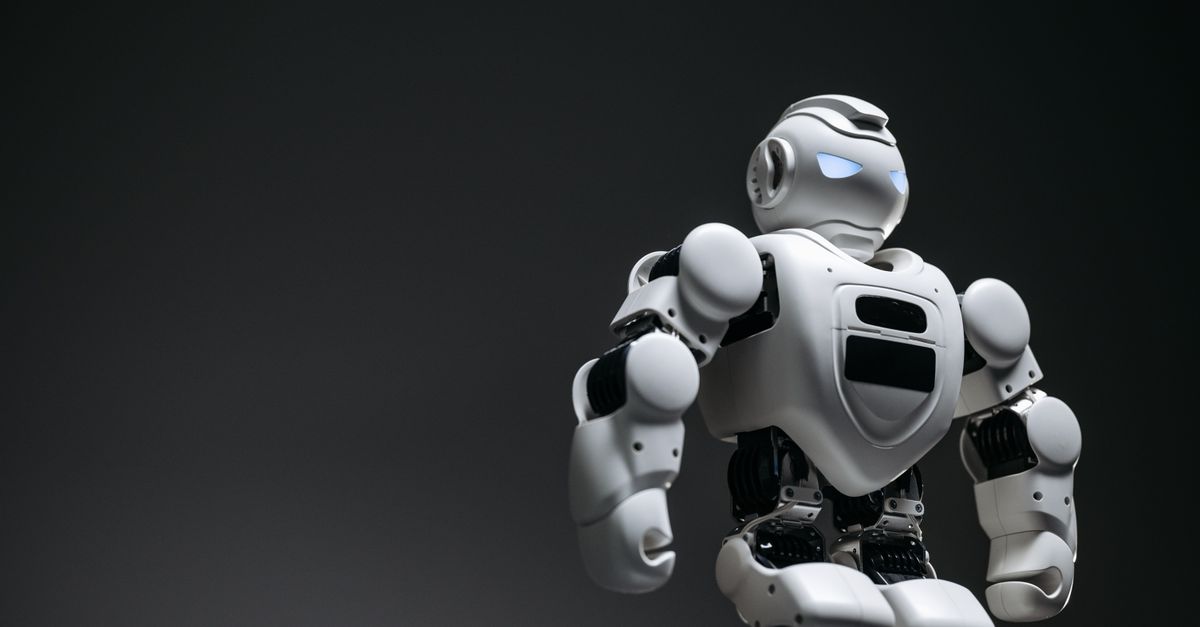
Agility Robotics and Digit: Grading Hardware, Pilots, and Logistics Deployments
Grading the Claims: Hardware, Pilots, and Announcements
Agility Robotics has positioned Digit as a purpose-built bipedal humanoid for logistics and warehousing. To evaluate the company's trajectory, claims must be graded by verifiable milestones: shipped hardware first, pilot deployments second, and corporate announcements last. This hierarchy prevents speculation from overshadowing operational reality and aligns with RobotWale's editorial standards for humanoid robotics reporting.
Shipping Hardware First
Agility Robotics began scaling Digit production at its Renton, Washington facility in 2023. The company transitioned from prototype builds to a dedicated manufacturing line, emphasizing repeatability, safety certification, and field serviceability. Digit's physical architecture includes a 26-degree-of-freedom (DOF) actuation system, a lightweight carbon-fiber and aluminum chassis, and a fingerless hand design optimized for pallet handling rather than fine manipulation. The robot stands approximately 6 feet 1 inch tall, weighs roughly 150 pounds, and carries a 100-pound payload. These specifications are documented in Agility Robotics' official technical briefings and align with the company's stated design philosophy: bipedal locomotion for existing warehouse infrastructure without racking modifications.
Shipped units have been delivered primarily to Amazon under a multi-year partnership. Agility Robotics has confirmed that production rates are increasing to meet deployment targets, though exact unit counts remain commercial details. The hardware grade is clear: Digit is no longer a research prototype. It is a manufactured system with standardized batteries, modular actuators, and factory-calibrated vision pipelines. The company's shift to a Renton production facility underscores a commitment to volume manufacturing rather than one-off integrations.
Pilot Deployments Second
Amazon's initial Digit deployments occurred in U.S. fulfillment centers, beginning with controlled trials in 2023 and expanding to additional sites in 2024. The primary use case is palletizing and depalletizing, tasks that require repetitive lifting, walking, and stacking. Amazon's operational reports and Agility Robotics' joint updates indicate that Digit operates alongside human workers using shared aisles, with safety systems including LiDAR, stereo vision, and proximity sensors. The robot's navigation relies on real-time environmental mapping rather than pre-installed beacons, allowing it to adapt to dynamic warehouse layouts.
Pilot performance metrics, as reported by independent coverage and company updates, show task completion rates improving as software iterates. Early deployments required remote intervention for edge cases, such as misaligned pallets or unexpected obstacles. Subsequent firmware updates reduced intervention frequency, though full autonomy remains a phased target. Digit's battery life supports approximately four to six hours of continuous operation before requiring a swap or recharge, a constraint that shapes shift planning in deployed facilities. The grading of pilot data confirms that Digit is operationally viable for specific logistics tasks, but it is not yet a drop-in replacement for forklifts or automated guided vehicles (AGVs). It complements existing automation by handling tasks that require bipedal mobility and human-like reach.
Announcements and Roadmaps Last
Agility Robotics and Amazon have issued numerous announcements regarding future scaling, software updates, and expanded task sets. These include plans to increase robot density in fulfillment centers, integrate Digit with warehouse management systems, and explore additional applications such as inventory counting and case handling. While these announcements outline strategic direction, they must be graded lower than shipped hardware and pilot data until independently verified. The company's roadmap emphasizes iterative improvement rather than immediate paradigm shifts. Humanoid logistics remains a long-term integration challenge, and Agility Robotics' announcements should be read as targets, not guarantees.
Technical Specifications and Operational Constraints
Digit's design prioritizes durability and safety over anthropomorphic aesthetics. The robot's actuation system uses high-torque motors with harmonic drives, enabling stable walking on concrete and epoxy floors. Its fingerless hands consist of a palm and three compliant fingers that conform to standard pallet edges, reducing slippage during lifts. The computer vision pipeline processes depth data from stereo cameras mounted on the torso and head, feeding a perception stack that identifies pallets, obstacles, and human workers. Agility Robotics has emphasized that Digit operates at pedestrian speeds, typically 1.5 to 2 miles per hour, to maintain stability and safety.
Operational constraints are well-documented. Digit cannot navigate stairs, steep ramps, or unstructured terrain outside warehouse environments. Its payload capacity limits it to standard cartons and pallets, excluding heavy machinery or oversized loads. Battery management requires coordinated charging infrastructure, and wet or oily floors can reduce traction. These constraints are not design failures but engineering trade-offs that define Digit's operational envelope. The robot excels in structured logistics environments where bipedal mobility provides an advantage over wheeled platforms, particularly in facilities originally built for human workers.
India Market Availability and Pricing
As of the latest verified reporting, Agility Robotics has not announced official distribution, service partnerships, or commercial sales channels for Digit in India. Humanoid robots remain a niche category in the Indian market, with most deployments limited to pilot programs by research institutions and a few advanced manufacturing facilities. Digit is not listed in India's official robotics import catalogs, and no authorized distributors have been registered with the company.
For organizations considering import, landed cost estimates are available but must be treated as preliminary. Based on industry benchmarks for early commercial humanoids, Digit's unit cost is estimated between $50,000 and $70,000 USD. Converting to INR at current exchange rates and adding standard customs duties, GST, freight, and insurance, the landed cost for a single unit in India would approximate ₹45 lakh to ₹55 lakh. This estimate excludes installation, safety certification, training, and ongoing maintenance. Service infrastructure for bipedal logistics robots in India remains underdeveloped, requiring specialized technicians and proprietary spare parts. Organizations exploring Digit should anticipate a multi-year procurement cycle, including regulatory approvals, facility modifications, and vendor negotiations.
References
- Agility Robotics. Official Company Website
- Agility Robotics. Agility Robotics Announces Production of Digit at New Renton Facility
- Amazon. Amazon and Agility Robotics Partner to Deploy Digit Humanoid Robots
- Reuters. Amazon Rolls Out Digit Humanoid Robot in Warehouses
- Agility Robotics. Digit Technical Specifications
✓ Key takeaways
- •Hands-on view of Agility Robotics and Digit: Grading Hardware, Pilots, and Logistics Deployments inside our Agility Robotics library.
- •Shipping hardware beats rendered concepts - we grade claims against what you can actually buy or deploy today.
- •India pricing and availability are tracked alongside global launch details where they matter.
Related articles
More in Agility Robotics →