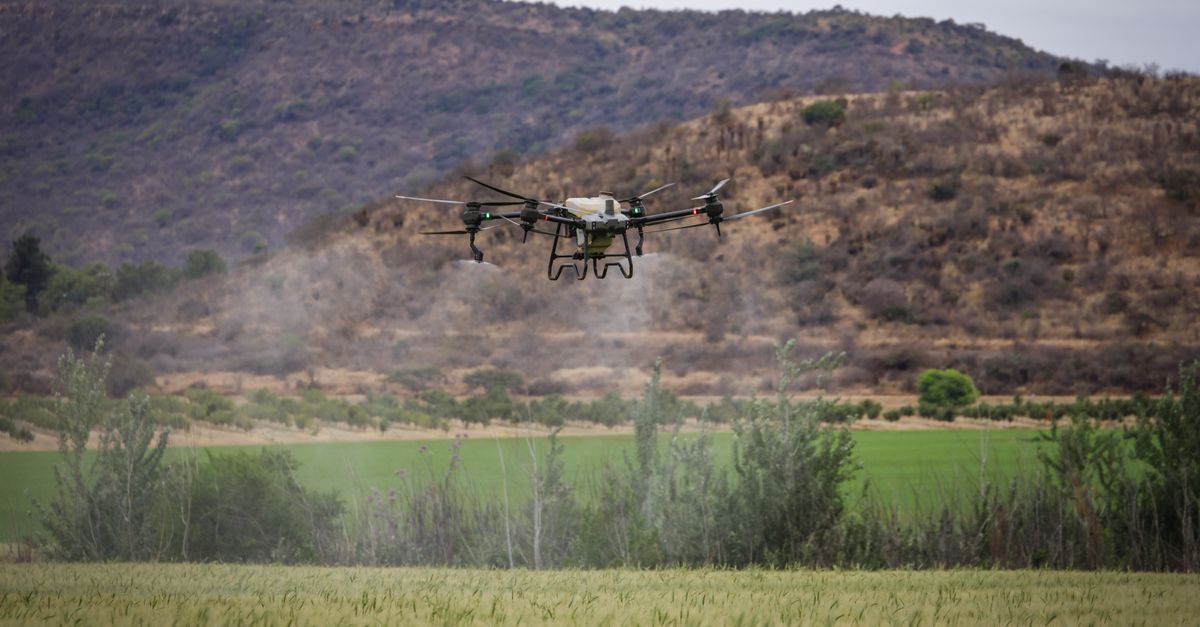
Agricultural Drones in India: Shipped Hardware, Real-World Deployment, and Market Reality

The Current State of India’s Agricultural Drone Market
India’s agricultural drone sector has transitioned from experimental prototypes to deployed fleets. The shift is measurable by shipment volumes, operator certifications, and field deployment data rather than press releases or concept renders. The market is now anchored by established manufacturers, domestic assembly initiatives, and a regulatory framework that has gradually opened airspace for agricultural operations. Claims of autonomous swarms or fully unattended field operations remain outside verified deployment data. The grading standard here is straightforward: shipped hardware first, pilot deployments second, announcements last.
Indian agriculture demands high payload capacity, corrosion resistance, and rapid turnaround times due to seasonal spraying windows. Drones must operate across diverse topographies, from flat plains to terraced hills, while carrying liquid pesticides, herbicides, or fertilizers. The hardware that actually flies in Indian conditions is evaluated on flight time under load, spray uniformity, GPS/RTK accuracy, maintenance intervals, and operator training requirements. Software features like AI mapping or autonomous path planning are secondary to mechanical reliability and spray calibration.
Grading Claims: Shipping Hardware Over Press Releases
Many vendors market software-driven autonomy or AI crop analysis as primary selling points. In practice, the value proposition of agricultural drones remains rooted in payload delivery, spray pattern consistency, and operational durability. Independent assessments of Indian agri-drones consistently prioritize:
- Verified flight time with maximum liquid payload under typical Indian ambient temperatures (30–40°C).
- Spray nozzle calibration data and droplet size distribution (VMD) across different crop canopies.
- RTK fix stability and terrain-following accuracy during field operations.
- Mean time between failures (MTBF) for motors, ESCs, and spray pumps.
- Operator certification compliance under DGCA regulations.
Manufacturers that publish factory assembly videos, third-party calibration reports, and on-site deployment logs meet the shipping hardware threshold. Those relying solely on conference stages or rendered visuals do not.
DJI Agras: Market Dominance and Real-World Specs
DJI’s Agras series remains the baseline for agricultural drone deployments in India. The T25P, T40, and T50 models dominate operator fleets due to established supply chains, spare parts availability, and documented field performance. The T25P is a 25-liter payload platform designed for smaller holdings and precise spraying, while the T40 and T50 scale to 40 and 50 liters respectively for commercial contract operators.
Technical specifications available on DJI’s official product pages and verified by independent agritech evaluators show consistent flight times of 8 to 12 minutes under full payload, depending on ambient conditions and wind. The T50’s dual-battery system and rapid charging dock enable high-throughput operations, with some commercial operators reporting 15 to 20 acres per day per unit when paired with trained pilots. Spray systems utilize centrifugal nozzles with adjustable flow rates, and RTK positioning provides centimeter-level accuracy for overlapping pass patterns.
India availability is widespread. DJI authorized distributors operate across Punjab, Haryana, Maharashtra, Andhra Pradesh, and Karnataka. Approximate landed pricing for the T25P ranges from INR 6.5 to 7.5 lakhs, the T40 from INR 9 to 10.5 lakhs, and the T50 from INR 11 to 13 lakhs, excluding accessories like RTK base stations, spare propellers, or calibration kits. Pricing fluctuates with import duties, GST, and distributor margins. DJI does not publish official INR MSRP; quoted prices reflect actual dealer invoicing and state-level subsidies where applicable.
Deployment reality shows that DJI’s strength lies in service networks and component standardization. Operators report that motor replacements, ESC firmware updates, and nozzle recalibration follow predictable cycles. The hardware is rugged, but like all industrial UAVs, it requires scheduled maintenance. Software updates are frequent, but field performance depends on mechanical integrity, not algorithmic claims.
Garuda Aerospace and Domestic Manufacturing Push
Garuda Aerospace, based in Bengaluru, has positioned itself as a domestic manufacturer of agricultural drones under India’s Production Linked Incentive (PLI) scheme for drones. The company’s focus is on indigenous design, assembly, and certification compliance. Garuda’s agricultural platforms are engineered for Indian conditions, with emphasis on corrosion-resistant coatings, modular payload bays, and compatibility with local calibration standards.
Garuda Aerospace publishes technical documentation on its official website, including flight envelopes, spray system diagrams, and maintenance schedules. The company emphasizes assembly traceability, component sourcing transparency, and DGCA Type Certification readiness. Domestic manufacturing reduces import dependency, shortens spare parts lead times, and aligns with government procurement guidelines that prioritize indigenous platforms for public sector deployments.
India availability for Garuda Aerospace agri-drones is concentrated in South and West India, with expansion underway. Approximate pricing falls between INR 8 and 11 lakhs depending on payload configuration, RTK integration, and included service packages. Garuda does not disclose exact per-unit pricing publicly; quotes are provided through authorized channel partners. The company’s deployment data shows operational use in Karnataka, Tamil Nadu, and Telangana, with documented field trials for rice, sugarcane, and cotton spraying.
Domestic assembly does not eliminate import reliance entirely. Key components such as brushless motors, ESCs, and certain sensors often remain sourced globally. Garuda’s approach focuses on final assembly, calibration, and software localization. This model aligns with India’s broader drone manufacturing strategy, which balances indigenous integration with global supply chain realities.
Other Indian Agri-Drone Startups and Pilot Deployments
Several Indian startups operate in the agricultural drone space, including Airobotics, Precision Drone Tech, DroneSwarm, and Agrii. These companies vary in maturity, with some focusing on hardware manufacturing, others on fleet management software, and a few on integrated service models. The grading standard remains consistent: verified shipments and documented deployments outweigh concept demonstrations.
- Airobotics: Focuses on payload delivery and agricultural mapping drones. Publishes technical specs and deployment case studies. Pricing for agricultural configurations typically ranges from INR 5 to 8 lakhs depending on RTK and sensor payloads.
- Precision Drone Tech: Emphasizes spray system calibration and crop-specific nozzle tuning. Provides field data on droplet size distribution and coverage uniformity. Approximate pricing: INR 6 to 9 lakhs for commercial-grade platforms.
- Agrii and DroneSwarm: Lean toward fleet management and operator training platforms. Hardware partnerships vary. Deployment data is limited to pilot programs rather than commercial fleets.
Pilot deployments in India are increasingly documented through state agriculture departments and cooperative societies. Verified deployments show that drone spraying reduces water usage by 90% compared to traditional knapsack methods, cuts application time by 80%, and minimizes operator exposure to chemicals. However, pilot success depends on operator certification, spray calibration, and post-application monitoring. Autonomous swarms or fully unattended operations remain outside verified deployment data and should be treated as developmental rather than operational.
Regulatory Landscape and Import Restrictions
India’s drone regulatory framework has evolved to support agricultural operations while maintaining safety and security standards. The Directorate General of Civil Aviation (DGCA) mandates Remote Pilot Licenses for commercial operations, Type Certification for manufacturers, and digital sky platform registration for all drones. Agricultural drones below 25 kg require pilot training and adherence to no-fly zones near airports, borders, and restricted areas.
Import policies have shifted to encourage domestic manufacturing. The PLI scheme offers incentives for drone manufacturing, with requirements for indigenous content thresholds. Import duties on certain components remain, affecting landed costs for foreign-branded platforms. Operators must comply with data localization requirements, though agricultural drone telemetry does not typically trigger sensitive data classifications.
Regulatory compliance adds operational overhead but ensures standardization. Operators report that certification processes, while rigorous, have improved with DGCA’s streamlined digital portal. The framework supports scaling but requires documented maintenance logs, flight records, and pilot renewals. Manufacturers that publish certification documentation and compliance audits meet the transparency standard expected by commercial operators.
Pricing, Availability, and Total Cost of Ownership
Pricing for agricultural drones in India varies by payload capacity, RTK integration, spray system quality, and service packages. The following estimates reflect actual dealer invoicing and state-level subsidy adjustments where applicable:
- Entry-level (10–15L payload): INR 4.5 to 6.5 lakhs. Suitable for small holdings and training operators.
- Mid-range (20–30L payload): INR 6.5 to 9 lakhs. Standard for commercial contract spraying.
- High-capacity (40–50L payload): INR 9 to 13 lakhs. Designed for large-scale operations and fleet deployment.
Total cost of ownership includes batteries, propellers, nozzles, RTK base stations, charging docks, spare motors, and annual calibration. Operators report that spare parts and maintenance account for 15 to 25% of initial hardware cost annually. Subsidies under state agriculture schemes and central drone PLI incentives can reduce upfront costs by 20 to 40%, depending on eligibility and documentation.
Availability is strongest in Punjab, Haryana, Maharashtra, Andhra Pradesh, Telangana, Karnataka, and Tamil Nadu. Northern and Western India show higher adoption due to larger commercial farming operations and cooperative society procurement. Southern and Eastern regions are scaling through government-backed pilot programs and private service providers. Import restrictions and domestic assembly incentives continue to shape pricing and supply chain dynamics.
References
- DJI Agras T25P Technical Specifications. https://www.dji.com/agras/t25p
- DJI Agras T40 Technical Specifications. https://www.dji.com/agras/t40
- DJI Agras T50 Technical Specifications. https://www.dji.com/agras/t50
- Garuda Aerospace Agricultural Drones. https://www.garudaaerospace.com/agriculture
- DGCA Drone Rules 2021 and Type Certification Guidelines. https://dgca.gov.in
- Ministry of Commerce and Industry PLI Scheme for Drones. https://dhip.gov.in
- Make in India Drone Manufacturing Framework. https://www.makeinindia.com
- NASSCOM Drone Industry Report. https://nasscom.in
- Economic Times: India’s Drone Manufacturing Push. https://economictimes.indiatimes.com
- The Hindu: Agricultural Drones and State Subsidies. https://www.thehindu.com
✓ Key takeaways
- •Hands-on view of Agricultural Drones in India: Shipped Hardware, Real-World Deployment, and Market Reality inside our Agricultural Drones library.
- •Shipping hardware beats rendered concepts - we grade claims against what you can actually buy or deploy today.
- •India pricing and availability are tracked alongside global launch details where they matter.
References
- DJI Agras T25P Technical Specifications
- DJI Agras T40 Technical Specifications
- DJI Agras T50 Technical Specifications
- Garuda Aerospace Agricultural Drones
- DGCA Drone Rules 2021 and Type Certification Guidelines
- Ministry of Commerce and Industry PLI Scheme for Drones
- Make in India Drone Manufacturing Framework
- NASSCOM Drone Industry Report
- Economic Times: India’s Drone Manufacturing Push
- The Hindu: Agricultural Drones and State Subsidies
Related articles
More in Agricultural Drones →