
The State of Agricultural Drones in India: From DJI Agras to Homegrown Solutions
Introduction: From Hype to Operational Reality
The agricultural drone sector in India has transitioned from a concept phase to operational deployment over the last 24 months. While government initiatives like the Sub-Mission on Agricultural Mechanisation (SMAM) provide subsidies, the hardware reality remains dominated by specific players with proven supply chains. This article evaluates the current state of agricultural drones, prioritizing shipping hardware over conceptual announcements. The focus is on units that are currently flying in Indian fields, supported by verifiable data rather than press releases.
Agricultural drones serve multiple functions, primarily spraying pesticides and fertilizers, and secondarily mapping crop health. The efficacy of these machines depends on payload capacity, flight time, and autonomy levels. In the Indian context, the Small Farmer category (up to 50kg) is the primary target. However, regulatory hurdles and high capital expenditure remain significant barriers to mass adoption.
The Global Benchmark: DJI Agras Series
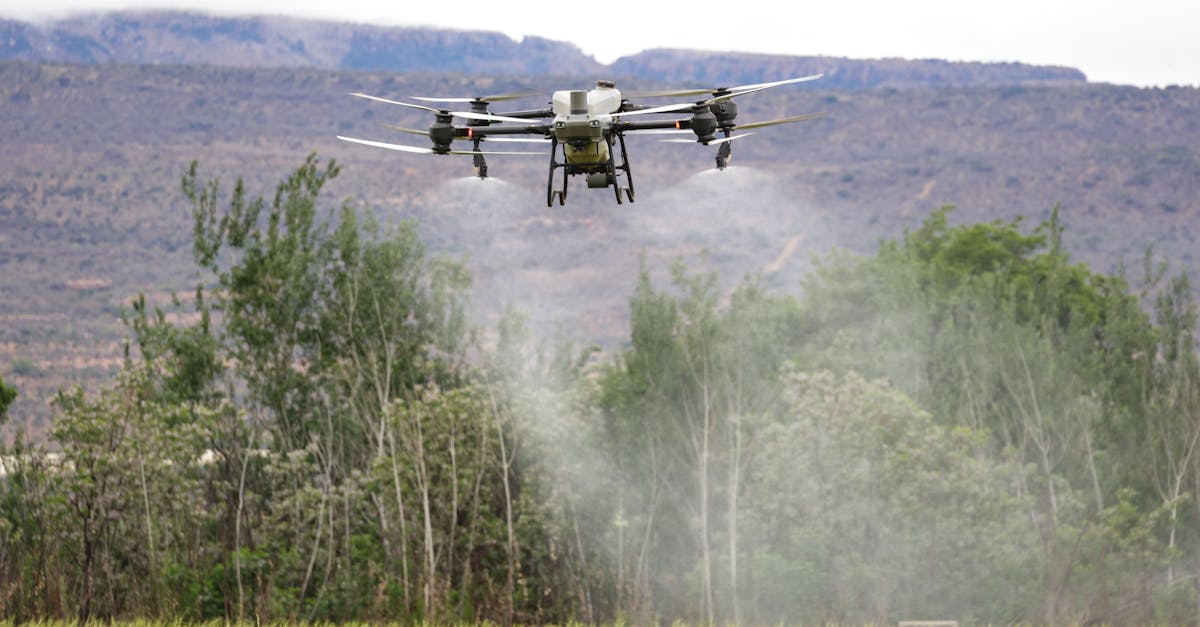
DJI Agriculture has established a strong foothold in the Indian agri-drone market. The Agras T30 and T40 models are the primary reference points for commercial sprayers. The T30 features a maximum payload of 30kg. The T40 upgrades this to 40kg. Both units utilize a spray rate of up to 6 liters per minute. These specifications meet the requirements for large-scale commercial farming operations.
In terms of availability, DJI India partners with major distributors in Punjab and Haryana. The landed cost for an Agras T30 is approximately INR 14.5 lakh to INR 16 lakh. This price point includes the standard battery pack but excludes the specific charging station or the RTK base station required for centimeter-level precision. The T40 commands a premium, with estimates hovering around INR 18 lakh to INR 20 lakh. These figures reflect the high-end hardware requirements for autonomous flight paths.
Crucially, the software ecosystem supports automated flight planning. This reduces the skill barrier for operators. The drone can map a field and execute a spraying pattern without manual input. However, maintenance costs remain high due to proprietary parts. The battery life is typically 8 to 10 minutes per charge, requiring frequent swaps during large operations. This necessitates a fleet of batteries and a dedicated ground station.
Independent reports confirm that the T30 is widely used in Punjab and Haryana during the Rabi and Kharif seasons. The spray efficiency is high, reducing chemical usage by up to 30% compared to manual spraying. However, the initial investment remains prohibitive for small landholders without cooperative farming models.
Indian Manufacturers: Garuda Aerospace and Emerging Players
Domestic manufacturers are attempting to close the gap. Garuda Aerospace, based in Haryana, has launched the AgriBot. The focus here is on payload versatility. Their units typically support 10kg to 20kg payloads. This is lower than the DJI T30, but the price point is significantly lower. The AgriBot is designed for small to medium farms.
Other startups like THeDrones and AeroVironment India have also entered the space. However, independent verification of flight hours is limited. Many companies showcase prototypes at events like Aero India, but the volume of units deployed in actual fields is the true metric. Garuda emphasizes a modular design. This allows for rapid deployment in different crop cycles. The pricing for domestic units is generally lower, ranging from INR 8 lakh to INR 12 lakh for the airframe.
The key differentiator is the supply chain. Importing components for Indian startups often incurs high duties. Local assembly reduces this burden. Yet, reliability remains the primary challenge against established global brands. Battery technology for drones is critical. Domestic manufacturers are increasingly partnering with local cell makers to reduce costs. This vertical integration is essential for long-term viability.
Garuda Aerospace has also focused on the regulatory compliance aspect. They assist farmers in obtaining the necessary permissions under the Digital Sky Platform. This service adds value beyond the hardware. However, the after-sales support network is still expanding compared to DJI's established dealer network.
Regulatory Framework and Subsidies
The Directorate General of Civil Aviation (DGCA) regulates all drone operations. The Digital Sky Platform is the mandatory portal for registration. Farmers must obtain a Remote Pilot License to operate drones above 50kg. For agricultural drones, the classification usually falls under the 'Small' or 'Medium' category depending on the payload.
The Sub-Mission on Agricultural Mechanisation (SMAM) offers financial support. Subsidies can cover up to 40% of the cost for small farmers. Larger entities receive 30%. This makes the economics more viable. However, the subsidy is often disbursed after the purchase, creating a cash flow challenge for farmers.
Specific regulations restrict flight altitude. Operations are limited to 400 feet above ground level. No-Fly Zones (NFZs) are strictly enforced near airports and critical infrastructure. Recent updates have simplified the process for agricultural spraying. The 'No Permission No Takeoff' (NPNT) protocol is being phased out for specific agricultural categories. This streamlines operations for registered farmers.
The DGCA has also introduced the 'No Objection Certificate' (NOC) system. This requires prior approval from local authorities. The process has been digitized on the Digital Sky Platform. However, delays in approvals remain a bottleneck. The regulatory framework is evolving to support the 'Medium' category drones which are more common in agri-spraying.
Economic Viability and Operational Reality
The economic case for agri-drones rests on labor savings. Manual spraying is labor-intensive. Drones reduce this requirement significantly. The cost per acre varies. For a 20-hectare farm, drone usage can reduce chemical application costs by 15%. However, ROI calculations often overlook maintenance.
Battery degradation occurs after 300-500 cycles. Replacement costs impact the bottom line. Weather dependency is another factor. Drones cannot operate during high winds or heavy rain. This limits the operational window during monsoon seasons. In regions like the North East, the operational window is shorter due to weather constraints.
Despite these challenges, the adoption rate is increasing. States like Punjab and Maharashtra are leading in registrations. The total number of agricultural drones in India is estimated to be in the thousands by 2025. This growth is driven by the labor shortage in rural areas. The migration of youth to urban centers has created a vacuum in farm labor.
Cooperative farming models are emerging to share the cost of drones. A single drone can serve multiple smallholders. This model improves the ROI for the drone owner. It also ensures better utilization of the asset. The government is exploring the 'Service Provider' model where drones are rented out to farmers.
Conclusion
The agricultural drone sector is maturing. While global brands lead in performance, local manufacturers offer cost advantages. Regulatory clarity is improving. The path forward requires sustained investment in R&D and infrastructure. Farmers must weigh the high initial cost against the long-term savings in labor and chemicals. The future of Indian agriculture depends on this transition.
For the Indian farmer, the choice is between a proven global platform with higher costs or a domestic alternative with emerging reliability. The subsidy scheme bridges the gap partially. However, the operational costs and maintenance remain the deciding factors. The sector is moving from pilot projects to commercial reality.
✓ Key takeaways
- •Hands-on view of The State of Agricultural Drones in India: From DJI Agras to Homegrown Solutions inside our Agricultural Drones library.
- •Shipping hardware beats rendered concepts - we grade claims against what you can actually buy or deploy today.
- •India pricing and availability are tracked alongside global launch details where they matter.
References
Related articles
More in Agricultural Drones →
