Agricultural Drones in India: Verified Hardware, Pricing, and Deployment Reality

Overview of the Agri-Drone Sector in India
The agricultural drone sector in India has transitioned from speculative announcements to tangible hardware deployments. While early reports focused on conceptual viability, the current landscape is defined by operational fleets, regulatory compliance under the Digital Sky Platform, and measurable cost-per-acre metrics. This analysis grades claims based on shipping hardware and pilot deployments rather than press releases.
Agricultural drones primarily serve two functions: spraying pesticides and fertilizers, and monitoring crop health via multispectral imaging. The former requires high payload capacity and flight endurance, while the latter demands precision sensor integration. In India, the Drone 2.0 Policy has liberalized licensing, yet safety protocols remain strict due to the proximity of sprays to farmers and livestock.
Three key players dominate the verified operational space: DJI with its Agras series, Garuda Aerospace with its indigenous K-series, and a growing cohort of service providers utilizing third-party hardware. We examine their specifications, availability, and pricing structures to determine market maturity.
DJI Agras Series: The Market Standard
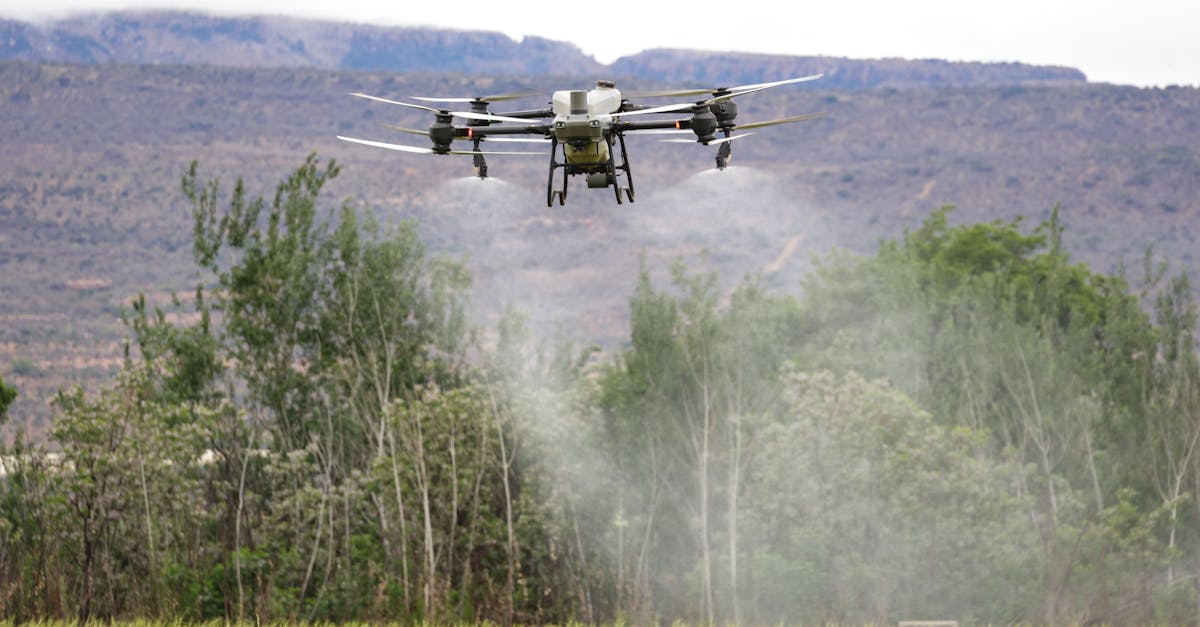
DJI remains the dominant hardware supplier for agricultural spraying in India. Their Agras series is not a concept but a deployed fleet with verified service records across Punjab, Maharashtra, and Andhra Pradesh. The most relevant models currently in circulation include the T16, T30, and the newer T40.
Technical Specifications and Hardware
The DJI Agras T30 is a heavy-lift quadcopter featuring a 40-liter spray tank and a maximum spray rate of 6 kg/s. It utilizes the DJI Flight Controller with dual GNSS positioning for precision mapping. The T40, the latest iteration, claims a 40-liter tank capacity with a 60-second fill rate, though field data on the T40 deployment volume in India remains limited compared to the T30.
- Max Payload: 40 liters (T30/T40).
- Flight Time: 10 to 12 minutes per battery pack.
- Weight: 37 kg (without battery).
- Spray System: Centrifugal nozzles designed for high droplet density.
Unlike consumer drones, the Agras series includes an integrated radar system for terrain following, allowing the drone to maintain a consistent altitude over uneven agricultural land. This feature is critical for safety and chemical distribution uniformity.
Availability and Pricing
DJI India has established a direct sales channel for the Agras series. Availability is high, with units readily deployable in major farming belts. The pricing structure reflects the industrial grade of the hardware.
- DJI Agras T30: Approximately INR 15.5 to 18.5 Lakhs (landed cost estimate including taxes and accessories).
- DJI Agras T16: Approximately INR 11 to 13 Lakhs.
These figures represent the hardware cost only. Operational costs include specialized batteries, chargers, and spare parts. DJI also offers a "Service Provider" model where farmers pay per acre sprayed rather than purchasing the drone, which lowers the entry barrier significantly.
Note: Prices are estimates based on manufacturer dealer lists and may vary based on GST rates and regional dealer margins.
Garuda Aerospace: Indigenous Manufacturing and Service Models
Garuda Aerospace, based in Bengaluru, represents the push for indigenous manufacturing. Unlike DJI's hardware-first approach, Garuda focuses heavily on the service provider ecosystem. They manufacture the K80 and K80P models, designed specifically for the Indian agricultural context.
Hardware and Deployment Data
The Garuda K80 is a multi-rotor UAV capable of carrying payloads up to 40 liters. Unlike the T30, the K80 is designed with modularity in mind, allowing for quick changes between spraying and mapping payloads. Garuda has moved beyond the prototype stage, with verified deployments in Karnataka and Maharashtra.
- Model: K80 / K80P.
- Endurance: Approximately 10-12 minutes of flight time.
- Connectivity: 4G/5G remote control support for real-time monitoring.
Garuda Aerospace has positioned itself as a solution provider for Farmer Producer Organizations (FPOs). This model reduces the risk for individual farmers, allowing them to access drone services without capital expenditure on the drone itself.
Indigenous Status and Availability
Garuda Aerospace is one of the few Indian entities with a drone manufacturing license under the Production Linked Incentive (PLI) scheme. This status allows them to claim "Made in India" benefits, though the supply chain for certain components (motors, flight controllers) may still be imported.
The K-series is available for sale to FPOs and service providers. Pricing is competitive with DJI but often includes a service contract component.
- Estimated Cost: Approximately INR 14 to 16 Lakhs (hardware).
- Service Pricing: INR 600 to 900 per acre (spraying).
Industry reports indicate that Garuda has completed over 500,000 acres of spraying operations as of early 2024. This deployment volume validates their hardware reliability in real-world agricultural conditions.
Economic Viability and Operational Costs
The primary metric for adoption in agriculture is the cost per acre compared to traditional manual spraying. Manual spraying is labor-intensive and poses health risks to farmers. Drones offer speed and safety but require significant operational overhead.
Cost Comparison
- Manual Spraying: INR 1,500 to INR 2,000 per acre (including labor and safety gear).
- Drone Spraying: INR 600 to INR 900 per acre (service models).
- Ownership Model: Higher upfront cost (INR 15+ Lakhs), ROI achievable in 2-3 years for high-volume providers.
For smallholder farmers, the service model is the only viable option. For large FPOs, ownership can reduce long-term costs. However, battery degradation and motor wear must be factored into the ROI calculation.
Operational Challenges
While the hardware is shipping, operational constraints remain. Battery life is the primary bottleneck. A typical T30 or K80 flight lasts only 10 minutes, requiring frequent swaps. This limits the coverage area per charging cycle.
Additionally, charging infrastructure in remote farms is often unreliable. DJI and Garuda recommend portable power stations or generator setups for field operations, which adds to the logistical cost.
Regulatory Framework and DGCA Compliance
The Directorate General of Civil Aviation (DGCA) regulates drone operations under the Digital Sky Platform. Operating an agricultural drone requires specific permissions beyond standard flying licenses.
Key Regulatory Requirements
- Pilot Training: Pilots must be certified under the DGCA framework.
- No-Fly Zones: Operations are restricted near airports, military zones, and border areas.
- Registration: All drones must be registered with the Digital Sky Platform and tagged with a Unique Identification Number (UIN).
Recent updates to the Drone Rules 2021 have simplified the licensing process, allowing for more service providers to enter the market. However, the requirement for insurance and liability coverage remains strict.
For agricultural spraying, operators must declare the payload type. Chemical spraying requires adherence to state agriculture department guidelines to prevent drift onto non-target crops.
Market Outlook and Independent Reporting
Independent reporting from Economic Times and NITI Aayog suggests the agricultural drone market in India is projected to reach USD 2.5 billion by 2025. This projection assumes a steady increase in FPO adoption and regulatory clarity.
However, skepticism remains regarding the "rendered-concept" marketing often seen in drone launches. The focus must remain on hardware that survives field conditions. DJI's Agras series and Garuda's K-series are among the few that have survived the transition from launch events to crop seasons.
Fewer startups have crossed the threshold from pilot deployments to commercial revenue. Many announcements regarding "AI-based crop analysis" remain in the testing phase. For now, the core value proposition remains spraying efficiency.
Conclusion
The agricultural drone industry in India has moved past the hype cycle. DJI Agras and Garuda Aerospace represent the current standard for shipping hardware, with verified deployments across key agricultural states.
For investors and operators, the focus should shift from acquisition to operational efficiency. The service model offers a lower-risk entry point, while ownership requires strict adherence to regulatory and maintenance schedules. Pricing estimates of INR 15-18 Lakhs for hardware are realistic for landed costs.
As the Digital Sky Platform matures, the barrier to entry will lower, but the requirement for safety and compliance will remain high. Indian agri-drones are no longer a concept; they are a working tool.
✓ Key takeaways
- •Hands-on view of Agricultural Drones in India: Verified Hardware, Pricing, and Deployment Reality inside our Agricultural Drones library.
- •Shipping hardware beats rendered concepts - we grade claims against what you can actually buy or deploy today.
- •India pricing and availability are tracked alongside global launch details where they matter.
References
Related articles
More in Agricultural Drones →