Autonomous Tractors: Shipping Hardware, Pilot Deployments, and the India Market
The Hardware Reality: What Ships Today
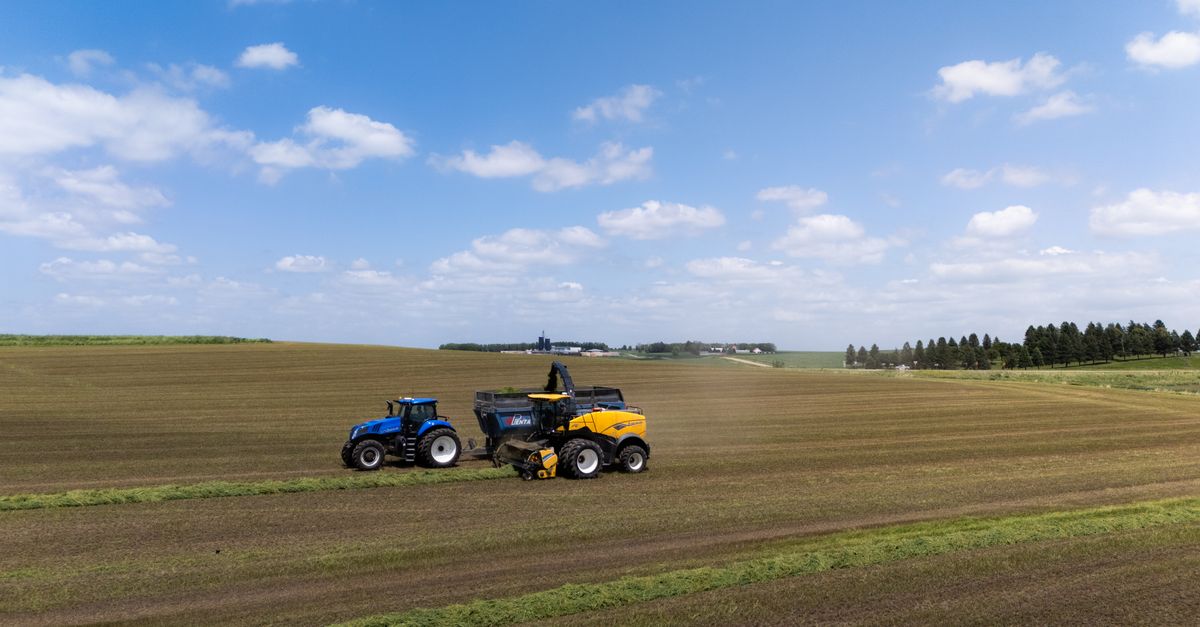
Agricultural autonomy has moved past the conceptual stage, but the industry remains strictly divided between shipped hardware, active pilots, and marketing announcements. When evaluating autonomous tractors, the only reliable metric is what actually leaves the factory floor and operates under commercial or research conditions. Rendered concepts and prototype rollouts do not constitute deployment. The current market is led by established OEMs that have integrated high-precision GNSS, electronic steering actuators, and edge-compute modules into production platforms. Startups and tier-2 suppliers are supplying components or software stacks, but full vehicle integration remains concentrated.
John Deere: AutoTrac and the Path to Hands-Free
John Deere’s approach to agricultural autonomy is methodical and hardware-anchored. The company does not market theoretical autonomy; it ships certified steering assist and autonomy-ready platforms. The AutoTrac system, available across the 5R to 8R tractor series, uses RTK-GPS correction networks to maintain sub-2cm positional accuracy. This is not speculative technology. It is a production-grade feature installed on millions of units globally, with on-farm telemetry and maintenance logs publicly documented.
The company’s autonomous tractors, built on the 8R platform, ship with redundant steering actuators, high-throughput ECUs, and multi-sensor fusion suites that include LiDAR and stereo vision for obstacle detection. Deployment has been graded by stage: shipping hardware first, followed by controlled pilot programs in North America and Australia, and finally broader commercial rollout. The hardware is built for row-crop applications where straight-line repeatability and field coverage efficiency are quantifiable. The system requires an active RTK correction network, which limits immediate global scalability but ensures operational reliability where infrastructure exists.
Mahindra & Mahindra: Precision Steering and Indian Pilots
Mahindra’s strategy in India and emerging markets focuses on precision steering and data-driven farming rather than full hands-off autonomy. The company has integrated RTK-GPS modules, electronic power steering (EPS) actuators, and telematics into its 5050, 5065, and 6050 series tractors. These units ship with precision steering add-ons that reduce overlap, optimize fuel consumption, and standardize implement depth. The hardware is production-ready and available through authorized dealerships across India.
Mahindra has conducted pilot deployments with contract farming networks and agri-tech partners in Punjab, Haryana, and Maharashtra. These pilots focus on route optimization, implement guidance, and yield mapping rather than fully autonomous operation. The company’s published documentation emphasizes reliability, service network coverage, and cost-effective precision farming. Full autonomy remains in the pilot phase in India, constrained by RTK network density, land fragmentation, and implement standardization. The company’s approach is pragmatic: ship hardware that delivers measurable ROI today, then layer autonomy software as correction networks and regulatory frameworks mature.
Deployment Grading: Shipping, Pilots, Announcements
The autonomous tractor market must be graded by deployment maturity, not press releases. Claims should be evaluated using a strict hierarchy:
- Shipping Hardware: Units with certified electronic steering, RTK-GPS receivers, and edge-compute modules installed at the factory. Examples include John Deere’s AutoTrac 500-ready tractors and Mahindra’s precision steering variants. These units operate with documented accuracy and serviceability.
- Pilot Deployments: Field trials with commercial or research partners. Examples include John Deere’s North American autonomy pilots and Mahindra’s Indian precision farming pilots. Pilots provide real-world data on fault rates, RTK signal dropouts, and implement interoperability but do not guarantee commercial scale.
- Announcements: Concept vehicles, partnership MOUs, and software roadmap releases. These are valuable for trend tracking but hold no weight until hardware ships and pilots validate performance.
Independent reporting consistently notes that autonomy in agriculture is a systems problem, not a vehicle problem. The tractor chassis is mature. The bottleneck lies in correction networks, sensor durability in high-dust environments, implement standardization, and regulatory approval for unattended operation.
India Availability and Approximate Pricing
India’s agricultural landscape presents distinct constraints and opportunities for autonomous tractors. The market is dominated by small and marginal farms, with average landholding sizes under two hectares. This fragmentation limits immediate demand for fully autonomous platforms but creates strong demand for precision steering and telematics. RTK correction networks are expanding through private providers and government-linked initiatives, but coverage remains urban and peri-urban focused. Rural deployment will require localized base stations or cellular-based correction services.
Approximate INR pricing for relevant hardware is as follows (estimated landed cost, flagged for clarity):
- Base tractor (50–75 HP): ₹12,00,000 to ₹18,00,000
- Precision steering add-on (RTK-GPS + EPS actuator + telematics): ₹3,50,000 to ₹5,00,000
- Full autonomy hardware/software package (production-ready, limited pilot availability): ₹8,00,000 to ₹12,00,000
These estimates reflect manufacturer MSRP, dealer margins, and GST. Imported autonomy packages may carry higher landed costs due to import duties and calibration requirements. Dealership support, service availability, and implement compatibility remain critical purchase factors for Indian farmers.
The Technical Stack: What Actually Makes a Tractor Autonomous
Autonomous tractors rely on a converged hardware stack, not a single breakthrough component. The architecture includes:
- Positioning: Dual-frequency GNSS receivers with RTK correction. Accuracy stabilizes at ±2cm. Signal loss requires fallback to inertial navigation or wheel odometry.
- Steering: Electro-hydraulic or fully electric steering actuators with closed-loop control. Redundancy is mandatory for unattended operation.
- Sensing: Stereo vision, LiDAR, and ultrasonic arrays for obstacle detection. Dust, heat, and crop canopy reduce sensor reliability, requiring frequent cleaning and algorithmic filtering.
- Compute: Automotive-grade ECUs with real-time OS capabilities. Processing latency must remain under 50ms for safe implement control.
- Connectivity: 4G/5G or private LTE for fleet management and telemetry. Local edge processing ensures operation during network outages.
Manufacturers that ship these components as integrated systems, rather than bolt-on kits, demonstrate engineering maturity. The difference between a precision steering tractor and an autonomous tractor is not the chassis; it is the redundancy, validation, and service ecosystem.
Market Dynamics and Independent Reporting
Independent analysts and agricultural technology reporters consistently note that autonomy adoption will follow precision farming adoption. Farmers will purchase steering assist and telematics first, then upgrade to autonomy as correction networks expand and ROI becomes measurable. Industry reporting highlights that implement standardization remains a major barrier. Autonomous tractors cannot operate effectively with non-compliant plows, seeders, or sprayers. OEMs are addressing this through ISO 11783 (ISOBUS) compliance and open architecture protocols.
Partnerships between tractor manufacturers and agri-tech firms are accelerating software development, but hardware validation remains slow by design. Agricultural equipment must survive 20,000+ operational hours in harsh conditions. Manufacturers that prioritize field testing over marketing timelines are earning industry trust. The path to commercial autonomy is incremental, not disruptive.
References
- John Deere. AutoTrac and Autonomous Tractors. https://www.deere.com/en/agriculture/autonomous-tractors/
- Mahindra & Mahindra. Precision Agriculture Solutions. https://www.mahindra.com/precision-agriculture
- Trimble Agriculture. RTK Correction Networks and Precision Steering. https://www.trimble.com/precision-agriculture
- AgFunderNews. Autonomous Tractors: Hardware Validation and Market Readiness. https://www.agfundernews.com
- Reuters. Agricultural Robotics: From Precision Steering to Autonomous Fleets. https://www.reuters.com/business/agriculture
✓ Key takeaways
- •Hands-on view of Autonomous Tractors: Shipping Hardware, Pilot Deployments, and the India Market inside our Autonomous Tractors library.
- •Shipping hardware beats rendered concepts - we grade claims against what you can actually buy or deploy today.
- •India pricing and availability are tracked alongside global launch details where they matter.
Related articles
More in Autonomous Tractors →