Agricultural Drones in India: Shipping Hardware, Real Costs, and Deployment Reality
The State of Agricultural Drones in India
The agricultural drone sector in India has moved past the announcement phase and into hardware deployment. The market is now defined by shipping units, field calibration, and subsidy-driven adoption rather than rendered concepts or future roadmaps. When evaluating agricultural drones, claims must be graded by three tiers: shipping hardware first, pilot deployments second, and manufacturer announcements last. This hierarchy reflects the reality of agritech procurement, where flight reliability, spray calibration, spare parts logistics, and RTK network access determine operational viability.
India's agri-drone landscape is dominated by two categories: imported Chinese platforms that have established manufacturing and service networks in the country, and domestic manufacturers building toward scale. Availability spans Punjab, Uttar Pradesh, Maharashtra, Karnataka, and Andhra Pradesh, with deployment concentrated in states that have active drone kiosk infrastructure and state-level subsidy disbursement mechanisms. Pricing varies significantly based on payload capacity, powertrain architecture, and certification status. All INR figures below are approximate landed costs for new hardware, excluding GST unless noted, and are flagged where subsidy-adjusted pricing applies.
DJI Agras: The Shipping Hardware Benchmark
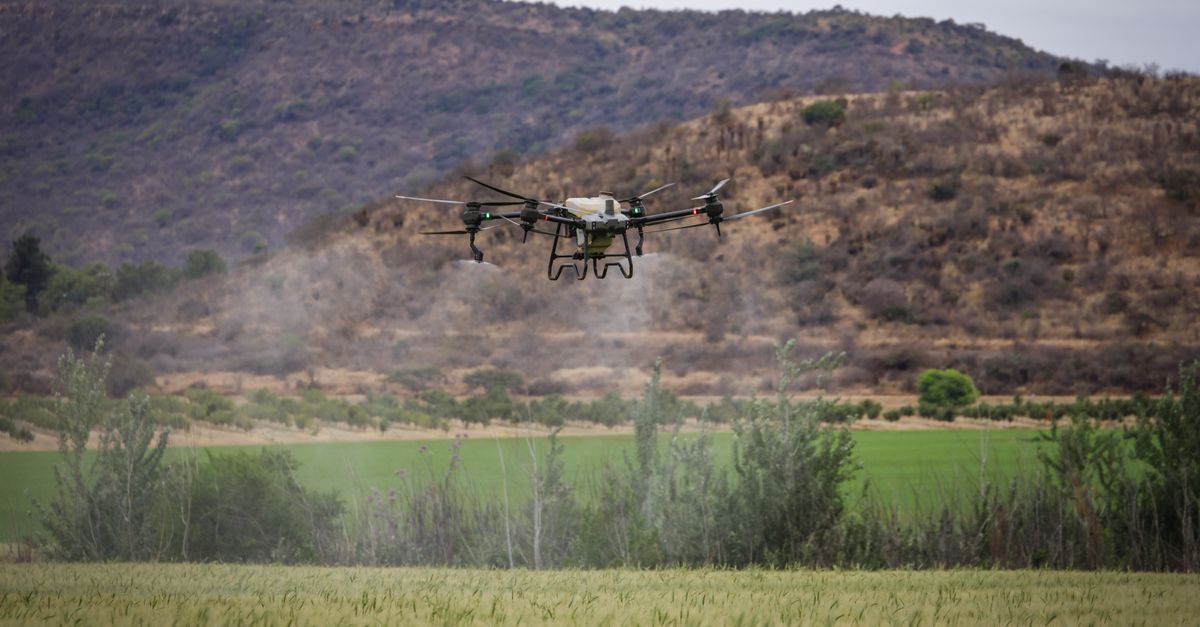
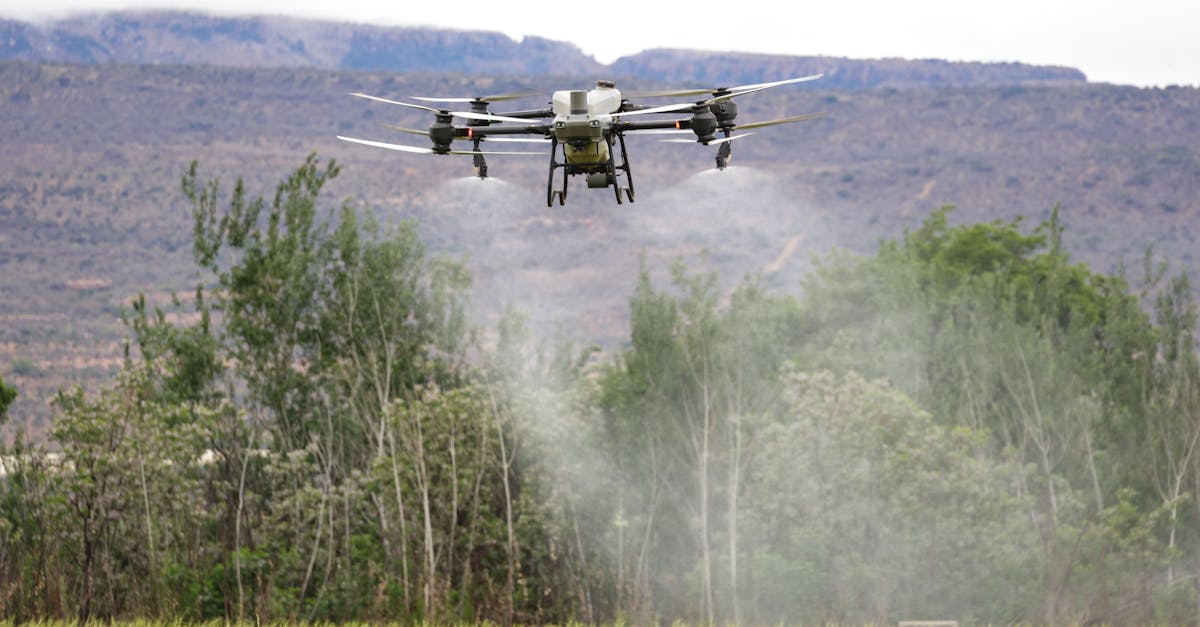
DJI's Agras series remains the baseline for agricultural drone hardware in India. The T50 and T40 models are widely available through authorized dealers and direct enterprise channels, with units actively deployed across major agrarian states. These platforms are not conceptual; they are production-grade spraying and broadcasting systems with documented flight logs, maintenance schedules, and service networks.
Technical Specifications and Field Performance
- Platform: Agras T50 (dual-battery, foldable, IP55 rated)
- Max Payload: 50 kg liquid or 50 kg powder broadcasting
- Flight Time: Up to 14 minutes with full payload; 20+ minutes with light loads
- Powertrain: Dual 6S batteries, 10.2 kW total output
- Spray System: 40 L tank, dual centrifugal nozzles, automatic calibration, anti-collision radar
- Powder System: 50 kg hopper, 20 m wide distribution, adjustable flow rate
- Navigation: Dual RTK modules, omnidirectional radar, 3D terrain mapping
The T50's hardware architecture prioritizes redundancy and spray consistency. The dual-battery system allows hot-swapping during extended operations, while the centrifugal nozzle design ensures droplet size uniformity critical for crop protection applications. Factory videos and independent agritech reviews confirm that the platform operates reliably in temperatures ranging from 5°C to 45°C, with dust ingress protection sufficient for field conditions in North and Central India.
India Availability and Pricing
DJI Agras T50 units are available through authorized distributors in major agricultural hubs. The approximate landed cost for a new T50 is ₹8.5–9.2 lakh (ex-GST). With standard GST, pricing typically reaches ₹10–10.5 lakh. Subsidy eligibility under the PM-Kisan drone scheme can reduce effective cost for registered farmers to near-zero, while entrepreneurs operating as Drone Sawaars face 50–60% subsidy caps depending on state policy. The T40, with a 40 kg payload and similar architecture, is priced approximately ₹6.5–7 lakh (ex-GST).
Garuda Aerospace and the Domestic Push
Garuda Aerospace, headquartered in Bengaluru, represents India's most advanced domestic agri-drone hardware effort. The company's SkySentry (liquid spraying) and SkyLance (powder broadcasting) platforms are manufactured locally and have moved beyond prototype stages into pilot deployments and limited commercial service. Garuda's approach emphasizes indigenous supply chains, DGCA type certification, and integration with Indian farm management software.
Hardware Status and Deployment
SkySentry units have been deployed in pilot programs across Haryana, Madhya Pradesh, and Karnataka. Independent reporting indicates that these units have logged operational hours in wheat, rice, and cotton spraying applications. The platform uses a quadrotor architecture with variable pitch propellers, enabling precise altitude control and spray density adjustment. Manufacturing occurs at Garuda's Bengaluru facility, with assembly lines calibrated for drone kiosk integration and state subsidy compliance.
- Platform: SkySentry (spraying) / SkyLance (powder)
- Max Payload: 40 L liquid / 40 kg powder
- Flight Time: 12–15 minutes operational window
- Powertrain: Lithium-ion packs, modular design
- Navigation: RTK-enabled, GPS/INS fusion, terrain following
- Certification: DGCA type-approved, drone kiosk registered
India Availability and Pricing
Garuda Aerospace units are available for direct purchase and fleet leasing. Approximate pricing for a new SkySentry is ₹12–14 lakh (ex-GST), reflecting higher domestic manufacturing costs and certification overhead. Subsidy adjustments can lower effective costs for eligible operators. Availability is concentrated in South and West India, with service networks expanding through state agricultural departments and cooperative societies.
Indian Agri-Drone Startups: Hardware vs. Announcements
India's agri-drone startup ecosystem includes several companies that have shipped hardware, while others remain in pilot or announcement phases. Grading by hardware delivery reveals a clear divide between operational fleets and marketing timelines.
Companies with Shipping Hardware
- Illumina Drones: Based in Tamil Nadu, ships crop spraying and mapping drones. Units deployed in rice and sugarcane belts. Pricing: ₹7–9 lakh.
- Agriya: Maharashtra-based, manufactures spraying and monitoring platforms. Hardware available through dealer networks. Pricing: ₹6.5–8.5 lakh.
- DroneYantra: Karnataka startup, focuses on agricultural spraying with DGCA certification. Units in pilot and early commercial service. Pricing: ₹8–10 lakh.
Companies in Pilot or Announcement Phase
- SkyZen Systems: Strong in AI mapping and crop analytics, but spraying hardware remains in limited deployment.
- Agromonitoring startups: Several firms announce liquid spraying platforms but lack widespread field logs or service infrastructure.
Buyers must verify hardware delivery before procurement. Announcements of future models, AI integration roadmaps, or government partnership MOUs do not replace flight certification, spare parts availability, or calibrated spray systems. The market rewards operators who prioritize units with logged flight hours, manufacturer warranty terms, and regional service centers.
Regulatory Landscape and Subsidy Economics
India's agricultural drone sector operates under DGCA regulations, requiring type certification, unique identification numbers (UIN), and drone kiosk registration for commercial operations. The subsidy framework is the primary driver of adoption:
- PM-Kisan Drone Scheme: Up to 100% subsidy for farmers owning eligible land; drones registered under drone kiosks.
- State Subsidies: Additional grants in Punjab, Haryana, UP, Maharashtra, and Karnataka range from 50–75% for entrepreneurs and cooperatives.
- Drone Sawaar Training: Subsidized certification programs reduce operational costs for service providers.
Subsidy disbursement timelines vary by state, often requiring drone kiosk verification, UIN issuance, and agricultural department approval. Operators should confirm subsidy eligibility before hardware purchase, as cash flow depends on grant processing speed. All pricing estimates above reflect pre-subsidy hardware costs; actual out-of-pocket expenditure depends on state policy and registration status.
What Buyers Should Verify Before Ordering
Hardware procurement for agricultural drones requires technical due diligence. The following checklist prevents costly mismatches between marketing claims and field performance:
- Flight Certification: Confirm DGCA type approval, UIN registration, and drone kiosk compatibility.
- Spray Calibration: Verify droplet size consistency, nozzle replacement intervals, and flow rate accuracy under variable wind conditions.
- Battery Logistics: Check cycle life, replacement cost, and cold-weather performance. Lithium packs degrade faster in high-temperature fields without thermal management.
- Spare Parts Network: Confirm availability of propellers, pumps, RTK modules, and flight controllers in your region. Downtime costs exceed hardware savings.
- RTK Network Access: Ensure connectivity to local base stations or NTRIP services. Survey-grade positioning requires consistent correction signals.
- Warranty and Service: Verify coverage for motors, ESCs, spray tanks, and control systems. On-site calibration support is essential for crop protection applications.
Operators who prioritize hardware verification over announcement timelines will achieve higher ROI. Agricultural drones are precision tools, not general-purpose platforms. Calibration, maintenance, and subsidy navigation determine operational success more than payload capacity or software features.
Conclusion
The Indian agricultural drone market has transitioned from concept to deployment. DJI Agras units dominate shipping volume, Garuda Aerospace leads domestic manufacturing, and select startups have delivered hardware to field operators. Pricing ranges from ₹6.5 lakh to ₹14 lakh depending on platform, payload, and certification. Subsidy frameworks reduce effective costs for farmers and service providers, but disbursement timelines require planning. Buyers must grade claims by hardware delivery, verify spray calibration and spare parts logistics, and confirm RTK network access before procurement. The market rewards operational reliability over marketing announcements.
References
- DJI Agras T50 Official Specifications: https://www.dji.com/agrass-t50
- Garuda Aerospace SkySentry Product Page: https://garudaaerospace.com/skysentry
- DGCA Drone Kiosk Registration Guidelines: https://dronekiosk.dgca.gov.in
- PM-Kisan Drone Subsidy Scheme Documentation: https://pmkisan.gov.in
- Business Standard: Indian Agri-Drone Market Analysis (2023): https://www.business-standard.com
- The Hindu: State-Level Drone Subsidy Disbursement Reports (2024): https://www.thehindu.com
- Illumina Drones Hardware Deployment Reports: https://illumina-drones.com
- Agriya Crop Monitoring & Spraying Platform Specs: https://agriya.in
✓ Key takeaways
- •Hands-on view of Agricultural Drones in India: Shipping Hardware, Real Costs, and Deployment Reality inside our Agricultural Drones library.
- •Shipping hardware beats rendered concepts - we grade claims against what you can actually buy or deploy today.
- •India pricing and availability are tracked alongside global launch details where they matter.
Related articles
More in Agricultural Drones →