
Autonomous Tractors: Shipping Hardware, Pilots, and the India Market
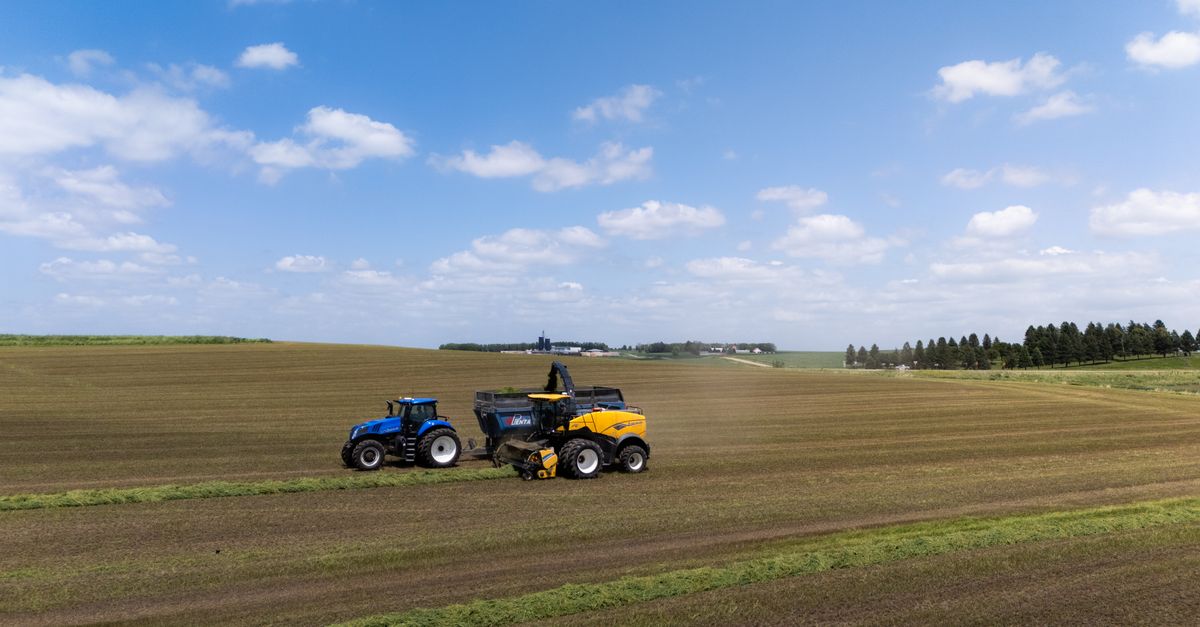
Current Deployment Grade: Shipping Hardware vs Pilots vs Announcements
The autonomous tractor market requires strict deployment grading. Claims must be evaluated in order: shipping hardware first, pilot deployments second, and announcements last. Shipping hardware denotes commercially available units that have passed manufacturer validation, undergone third-party agronomy trials, and are operational in commercial or large-scale agricultural settings. Pilot deployments indicate controlled or semi-controlled field testing with documented performance data. Announcements encompass roadmaps, concept renders, partnership memorandums, and regulatory consultations that lack delivered hardware. This grading prevents rendered-concept worship and separates engineering progress from market reality.
John Deere: Shipped Systems and Proven Deployment
John Deere is the only manufacturer with fully autonomous tractors shipping commercially. The John Deere 8R Autonomous Tractor, launched in 2021, operates without a driver using a multi-sensor fusion architecture. The system integrates LiDAR, stereo cameras, radar, and RTK-GPS to achieve centimeter-level positioning and obstacle detection. It is rated for the 8R 410 and 8R 460 platforms and includes the AutoTrac AutoGuide 22 system, See & Spray Ultimate, and the CommandCenter display. John Deere has documented over 1,000 units shipped globally by early 2023, with deployments across the United States, Canada, Australia, and select European markets. Independent agronomy reports confirm that autonomous operation optimizes pass overlap, reduces operator fatigue, and maintains consistent implement depth, but it does not eliminate diesel consumption. Maintenance requires certified technicians for sensor calibration and software updates. The hardware carries a premium over conventional tractors, and operation depends on continuous RTK correction signals, which limits deployment in areas with poor cellular or satellite coverage.
Mahindra: Field Trials and Domestic Readiness
Mahindra & Mahindra’s autonomous tractor initiatives remain in the pilot and validation phase. The company has demonstrated autonomous-guidance prototypes at agricultural exhibitions and partnered with agritech firms for field trials in Maharashtra, Punjab, and Haryana. Mahindra’s current approach focuses on integrating GPS-based auto-steer, obstacle detection, and implement control into existing platforms such as the Mahindra Arjun and Yuvo series. Unlike John Deere’s fully driverless architecture, Mahindra’s deployments typically retain a safety operator or rely on semi-autonomous guidance with manual override. Independent agronomy reports and manufacturer press releases confirm that Mahindra is testing autonomous ploughing, sowing, and spraying modules. The company has not yet announced a commercial rollout of fully driverless tractors in India. Regulatory approval for unattended agricultural robotics in rural India remains under review, and insurance frameworks for autonomous farm machinery are not yet standardized. Mahindra’s near-term strategy emphasizes retrofit kits and semi-autonomous guidance rather than full autonomy.
Technology Stack and Operational Constraints
Autonomous tractors rely on a convergence of RTK-GPS, LiDAR, stereo vision, and edge computing. RTK-GPS provides centimeter-level positioning but requires a continuous correction signal, which limits deployment in dense tree cover, mountainous terrain, or regions with unreliable base stations. LiDAR and cameras handle obstacle detection, but agricultural environments introduce high dust, mud, crop residue, and variable lighting that degrade sensor performance. Edge computing modules run path-planning algorithms and implement control logic, but thermal management and vibration isolation remain engineering challenges. Powertrain integration varies: diesel-electric hybrids are being tested for precision control, while conventional hydraulic systems require electro-hydraulic valves for autonomous implement actuation. Fuel efficiency gains are real but context-dependent, as autonomous tractors optimize speed and overlap rather than eliminate diesel consumption. Maintenance costs are higher due to sensor calibration, software updates, and proprietary diagnostic tools. Fleet management software adds recurring costs for data storage, connectivity, and remote diagnostics.
India Market Availability and Approximate Pricing
India’s agricultural machinery market is price-sensitive and fragmented. Autonomous tractors are not yet commercially available for smallholder farmers. Pricing reflects the hardware premium, sensor arrays, and software licensing. For reference, John Deere’s autonomous 8R series is priced between USD 250,000 and USD 300,000 landed in major markets, which translates to approximately INR 2.05 crore to INR 2.45 crore per unit. Mahindra’s semi-autonomous guidance kits range from INR 1.5 lakh to INR 3.5 lakh depending on the platform and implement integration. Fully autonomous Mahindra tractors, if commercialized, would likely enter the INR 1.8 crore to INR 2.2 crore range once localization and scale manufacturing reduce sensor costs. Fleet management software subscriptions typically add INR 50,000 to INR 1.2 lakh annually per unit. These figures are landed cost estimates and may vary by region, import duties, and dealer margins.
Regulatory Environment and Adoption Barriers
India’s Ministry of Road Transport and Highways and the Ministry of Agriculture have not yet published dedicated guidelines for unattended autonomous tractors on rural roads or open fields. Current regulations treat agricultural vehicles under existing tractor registration and insurance frameworks, which assume a driver in the cab. Insurance providers require risk assessment models for autonomous systems, which are not yet standardized. Land fragmentation averages 1.08 hectares per farm in India, making large autonomous platforms economically unviable for most smallholders. Adoption will likely begin with contract farming operators, agri-cooperatives, and large plantation estates. Government subsidies under the Mechanization Scheme and PM-KISAN may eventually cover semi-autonomous guidance kits, but full autonomy subsidies remain unannounced. Import duties on LiDAR and GNSS modules also impact landed pricing, though domestic sensor assembly may reduce costs over time.
References
- John Deere - 8R Autonomous Tractor: https://www.deere.com/en/agriculture/autonomous-tractor/
- John Deere - AutoTrac AutoGuide 22 Specifications: https://www.deere.com/en/agriculture/precision-ag/auto-trac/
- Mahindra & Mahindra - Agricultural Solutions: https://www.mahindra.com/agriculture/
- FAO - The State of Food and Agriculture 2023: https://www.fao.org/3/cc9166en/CC9166EN.pdf
- Ministry of Agriculture & Farmers Welfare, India - Mechanization Schemes: https://agriwelfare.gov.in/
✓ Key takeaways
- •Hands-on view of Autonomous Tractors: Shipping Hardware, Pilots, and the India Market inside our Autonomous Tractors library.
- •Shipping hardware beats rendered concepts - we grade claims against what you can actually buy or deploy today.
- •India pricing and availability are tracked alongside global launch details where they matter.
References
Related articles
More in Autonomous Tractors →

