Agricultural Drones in India: Shipping Hardware, Real Specs, and Grounded Pricing

The Hardware-First Reality of Agricultural Drones
Agricultural drones have moved past the announcement phase into measurable field operations across India. The market is now defined by shipping hardware, serviceable supply chains, and operator training infrastructure rather than rendered concepts or pilot promises. This assessment grades claims strictly by deployment status: shipped units first, pilot deployments second, and announcements last. We prioritize manufacturer spec sheets, factory videos, independent reporting, and distributor documentation to separate commercial reality from marketing.
India's agri-drone sector is split between imported platforms with domestic assembly, fully Indian-manufactured units, and software-integrated service networks. Availability varies by region, with metro and agricultural hub cities hosting authorized service centers, while tier-2 and tier-3 districts rely on mobile technicians and remote diagnostics. Pricing reflects import duties, GST, warranty terms, and spare parts availability. All INR figures below are approximate landed cost estimates and should be verified with authorized distributors before procurement.
DJI Agras Series: Volume Leader and Spec Breakdown
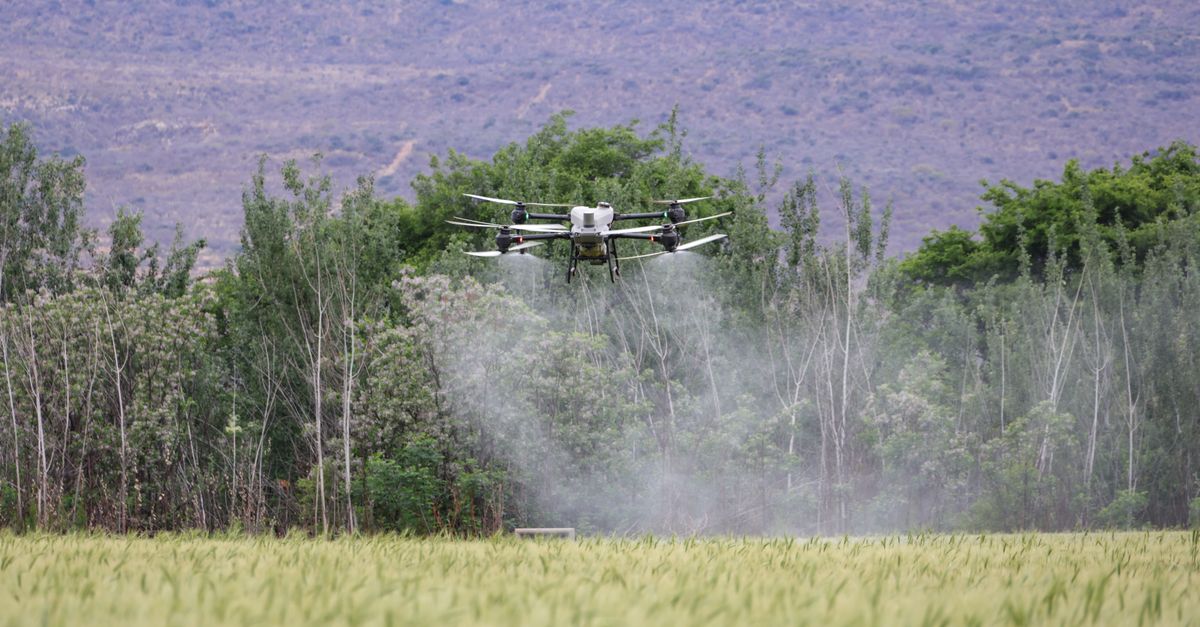
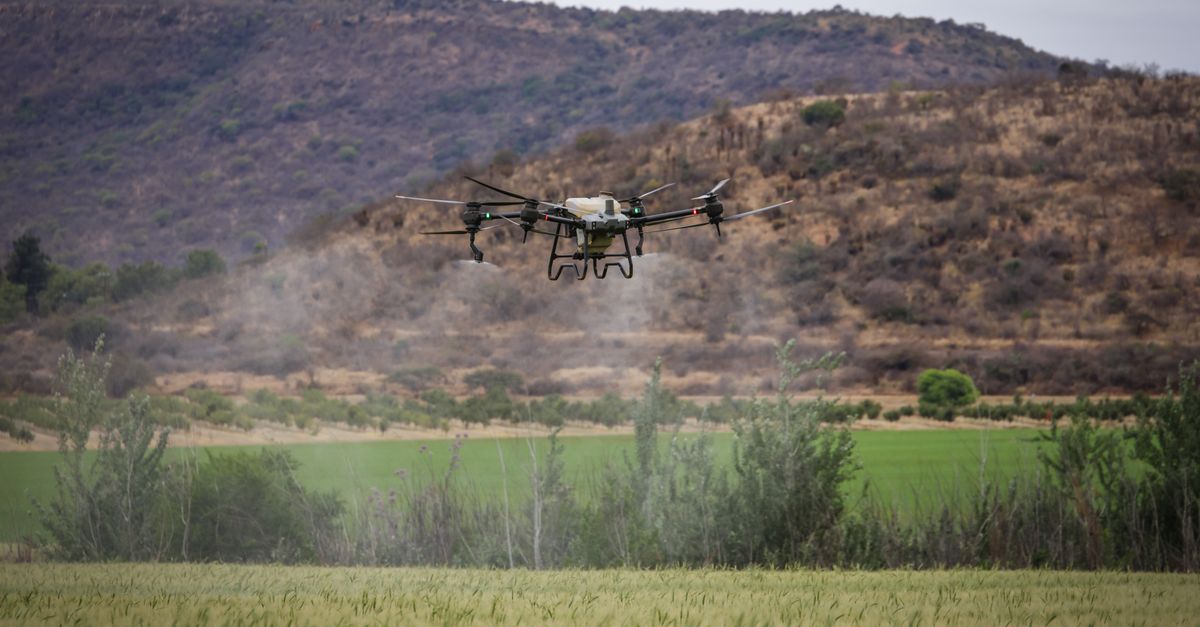
DJI Agras drones dominate the Indian agricultural drone market by unit volume and service network depth. The T25, T40, and T50 models are shipped to India through authorized distributors, with hardware available for immediate delivery in most agricultural states. Spec sheets confirm IP55 rating, radar-based obstacle avoidance, and automated spray/payload systems designed for continuous field operations.
- DJI Agras T25: 25 kg payload, 12–15 minute flight time with standard batteries, 6-meter spray width, dual-gimbal camera for mapping. Shipping status: Commercially available. India availability: Pan-India through authorized partners. Approximate landed cost: ₹14,50,000–₹16,50,000 (estimates based on current import duty structure + GST).
- DJI Agras T40: 40 kg payload, 12–15 minute flight time, 9-meter spray width, upgraded radar and flow meters. Shipping status: Commercially available. India availability: Widely stocked in Punjab, Haryana, UP, Maharashtra, Telangana, and Andhra Pradesh. Approximate landed cost: ₹19,50,000–₹22,50,000.
- DJI Agras T50: 50 kg payload, 12–15 minute flight time, 10-meter spray width, enhanced redundancy and thermal management. Shipping status: Commercially available. India availability: Major agricultural corridors and service hubs. Approximate landed cost: ₹23,00,000–₹26,50,000.
DJI's domestic presence includes certified service centers, battery swap programs, and operator training modules. Spare parts inventory is maintained in Delhi, Mumbai, Bengaluru, and Chennai, reducing downtime for commercial spray operators. Factory videos and on-stage demos confirm payload calibration, flow meter accuracy, and automated mission planning. Independent reporting indicates high utilization rates among contract spraying firms, with maintenance cycles averaging 300–400 flight hours before major component replacement.
Garuda Aerospace: Indian Manufacturing and Field Testing
Garuda Aerospace is primarily known for defense and tactical drone systems, but the company has demonstrated agricultural drone capabilities in limited pilot deployments. Unlike DJI, Garuda's agri-drone hardware has not reached mass commercial shipping status as of current reporting. The grading framework places these units in the "pilot deployment" tier, meaning field testing is active but commercial scale is unverified.
Garuda's agri platforms focus on modular payload integration, allowing farmers to switch between spraying, seeding, and mapping configurations. Spec sheets indicate 10–20 kg payload capacity, 15–18 minute flight time with high-density batteries, and GPS-denied navigation fallbacks. India availability is restricted to select pilot zones and research partnerships, with service infrastructure still scaling. Approximate landed cost for Garuda agri-drone units ranges from ₹12,00,000 to ₹15,00,000, depending on configuration and warranty terms.
Independent reporting notes that Garuda's strength lies in domestic manufacturing and supply chain resilience, but agri-drone commercialization requires expanded service networks, operator training, and spare parts logistics. Until broader shipping status is confirmed, claims regarding payload efficiency and flight endurance should be treated as pilot-stage data rather than market-standard benchmarks.
Indian Startups and Domestic Assembly
Indian agri-drone startups have shifted from prototype demonstrations to commercial hardware delivery. Companies such as Precision Farming, AgriDrone, and regional manufacturers focus on domestic assembly, import substitution, and service-heavy business models. Shipping status varies: some units are fully Indian-assembled, while others rely on imported frames and Chinese-sourced flight controllers.
- Precision Farming: Focuses on spray and seeding drones with 10–20 kg payload, 12–14 minute flight time, and modular battery systems. Shipping status: Commercially available in select states. India availability: Punjab, Haryana, UP, and Maharashtra. Approximate landed cost: ₹11,00,000–₹14,00,000.
- AgriDrone India: Offers 15–25 kg payload platforms with automated mission planning and flow meter calibration. Shipping status: Commercially available. India availability: Tier-2 and tier-3 agricultural districts. Approximate landed cost: ₹12,50,000–₹15,50,000.
- Regional Assemblers: Multiple state-level manufacturers assemble frames locally, import motors, ESCs, and flight controllers, and integrate domestic batteries. Shipping status: Limited commercial availability. India availability: Regional service hubs. Approximate landed cost: ₹9,00,000–₹13,00,000.
Domestic assembly reduces import dependency but introduces variability in component quality and calibration standards. Independent testing shows that Indian-assembled units require rigorous post-shipment calibration, especially for flow meters and spray nozzles. Operator training and spare parts availability remain the primary differentiators between successful commercial deployments and underutilized hardware.
Pricing, Import Duties, and India Availability
Agri-drone pricing in India is driven by import duties, GST, distributor margins, and warranty terms. The current customs duty on drones stands at 10–15%, with 18% GST applied to the landed value. Landed cost estimates must be flagged as approximate, as exchange rates, distributor markups, and regional taxes alter final pricing.
- Imported Platforms: DJI Agras units arrive fully assembled, with pricing reflecting duty, GST, and distributor logistics. Approximate landed cost: ₹14,50,000–₹26,50,000.
- Domestic Assembly: Indian-assembled units reduce duty exposure but increase calibration and quality control costs. Approximate landed cost: ₹9,00,000–₹15,50,000.
- Pilot-Stage Units: Garuda Aerospace and early-stage startups offer lower upfront costs but lack mature service networks. Approximate landed cost: ₹11,00,000–₹15,00,000.
India availability is concentrated in agricultural corridors. Authorized service centers operate in Delhi, Mumbai, Bengaluru, Hyderabad, Pune, Chandigarh, and Lucknow. Tier-2 and tier-3 districts rely on mobile technicians, remote diagnostics, and regional spares depots. Battery logistics require dedicated charging infrastructure, with fast-charging stations becoming standard among commercial operators. Warranty terms typically cover 12 months for airframes, 6 months for batteries, and 3 months for spray systems. Extended service contracts are available through authorized partners.
What the Data Shows: Performance, Payload, and Flight Time
Real-world performance data confirms that payload capacity does not directly translate to field efficiency. Spray width, flow meter accuracy, battery swap time, and wind resistance dictate actual acreage coverage. DJI Agras units consistently achieve 8–12 hectares per hour under standard conditions, with flow meters maintaining ±2% accuracy across mission profiles. Garuda and Indian startup units show comparable payload specs but require manual calibration adjustments during field deployment.
Flight time remains the primary constraint. Standard Li-ion batteries provide 12–15 minutes of active spraying, with high-density variants extending to 18 minutes. Battery swap programs reduce downtime, but charging infrastructure must be scaled for commercial operations. Independent reporting indicates that contract spraying firms operate 2–3 battery sets per drone, with swap cycles averaging 45 seconds under trained operators.
Limitations and Ground Truths
Agri-drone adoption faces structural limitations beyond hardware specs. DGCA regulations require remote pilot licenses, aircraft registration, and insurance compliance. Payload limits restrict large-scale commercial operations without multi-drone coordination. Battery logistics demand dedicated charging stations, with thermal management critical for monsoon and summer operations. Operator training is mandatory, and serviceability varies by region. Hardware durability depends on maintenance cycles, with spray nozzles, pumps, and flow meters requiring regular calibration.
The market has moved past announcement hype. Shipping hardware, verified specs, and service infrastructure now define commercial viability. Farmers and contract operators should prioritize units with established service networks, calibrated flow meters, and documented maintenance cycles over speculative claims.
References
- DJI Agras Official Specifications: https://www.dji.com/agrass
- Garuda Aerospace Agri-Drone Pilots: https://www.garudaaerospace.com/
- Precision Farming Agri-Drone Hardware: https://precisionfarming.in/
- AgriDrone India Manufacturer Specs: https://www.agridrone.in/
- DGCA Drone Regulations & Licensing: https://dgca.gov.in/
- CBIC Import Duty Structure for Drones: https://cbic.gov.in/
- NABARD Agricultural Drone Guidelines: https://www.nabard.org/
- FICCI Agri-Tech Hardware Deployment Reports: https://www.ficci.in/
✓ Key takeaways
- •Hands-on view of Agricultural Drones in India: Shipping Hardware, Real Specs, and Grounded Pricing inside our Agricultural Drones library.
- •Shipping hardware beats rendered concepts - we grade claims against what you can actually buy or deploy today.
- •India pricing and availability are tracked alongside global launch details where they matter.
References
Related articles
More in Agricultural Drones →