Compliance Over Hype: A Practical Assessment of ISO 10218 and ISO 13482 in the Indian Market

Introduction: Safety as a Baseline, Not a Feature
In the robotics industry, safety is frequently marketed as an advanced feature rather than a fundamental regulatory requirement. For RobotWale, the editorial stance is clear: safety certifications must precede performance claims. This article examines the practical implementation of ISO 10218 and ISO 13482, focusing on what is currently shipping hardware versus what remains in the design phase. We avoid speculation on future humanoid capabilities and instead ground our analysis in existing standards and current pilot deployments.
The transition from traditional industrial robots to collaborative systems (cobots) and eventually personal care robots requires a rigorous adherence to international standards. For the Indian manufacturing sector, these standards intersect with domestic regulations under the Factories Act, 1948. Understanding the technical requirements of these ISO standards is essential for system integrators and factory owners seeking to deploy automation without incurring liability or operational downtime.
ISO 10218: Industrial Robots and System Integration
Manufacturer Safety vs. System Safety
ISO 10218 is the primary international standard for robot safety. It is divided into two distinct parts. Part 1 covers the requirements for the manufacture of the robot itself, while Part 2 focuses on the integration of the robot system into a cell or production line. This distinction is critical. A robot may be ISO 10218 compliant in isolation, but the risk assessment changes once it is integrated into a cell with conveyors, sensors, and human operators.
For shipping hardware, such as the KUKA LBR iiwa or Universal Robots e-series, compliance with Part 1 is standard. These units come with built-in safety-rated outputs ( STO - Safe Torque Off) and limit switches. However, the integration phase (Part 2) is where most compliance failures occur. Indian system integrators must ensure that the safety PLC (Programmable Logic Controller) used to manage the robot's emergency stops meets ISO 13849 performance levels.
In the Indian context, the cost of safety-rated components significantly impacts the total landed cost. A standard safety PLC module may range from INR 150,000 to INR 300,000 depending on the import duties and the specific SIL (Safety Integrity Level) rating required. This is a necessary expenditure that cannot be skipped if the robot is to operate near personnel.
Collaborative Operation Modes
ISO 10218-2 defines four specific modes for collaboration. These are not marketing terms but operational constraints:
- Manual Guidance: The operator physically moves the robot to program a path. The robot must stop immediately upon release of the drive control.
- Hand Guiding: Similar to manual guidance, but the robot uses a force sensor to detect the operator’s intent.
- Speed and Separation Monitoring (SSM): Safety-rated scanners monitor the distance between the human and the robot. If the human enters a defined zone, the robot slows down. If they cross the threshold, the robot stops.
- Power and Force Limiting (PFL): The robot is limited in the amount of force it can exert. If contact occurs, the robot must not cause injury.
While SSM and PFL are widely advertised, real-world PFL relies on sensor accuracy. In a pilot deployment at a Pune-based automotive supplier, a cobot using PFL was required to maintain a maximum contact force of 140 Newtons. This specific technical requirement was verified through third-party testing before the line went live. Without this verification, the deployment is non-compliant.
ISO 13482: Personal Care Robots and Humanoids
ISO 13482 addresses a different class of machinery: service robots intended for personal care. This standard applies to robots that operate in close proximity to humans for extended periods, such as humanoid robots or mobility aids. While ISO 10218 covers manufacturing, ISO 13482 covers the potential for interaction in non-industrial spaces.
The standard specifies requirements for noise emissions, battery safety, and mechanical safety. The most critical metric for humanoid robots is the mechanical safety related to force and impact. The standard mandates that a robot must not inflict serious injury during a collision with a human. This is often quantified by the severity of the impact, which is calculated based on the mass of the moving part and the velocity at the point of contact.
As of late 2024, very few humanoid robots have fully demonstrated compliance with ISO 13482 in a public pilot. Most announcements regarding humanoids are currently at the announcement stage. Shipping hardware that claims ISO 13482 compliance should be treated with skepticism until independent testing reports are available. For example, while Tesla’s Optimus has demonstrated walking capabilities, no public data exists to confirm its force-limiting architecture meets the specific thresholds of ISO 13482 for personal care.
For the Indian market, the application of ISO 13482 is relevant for service robots in hospitals or elderly care. However, the regulatory framework in India for non-industrial robots is still evolving. The Department for Promotion of Industry and Internal Trade (DPIIT) is working on new safety guidelines, but currently, manufacturers must rely on international ISO standards as the default benchmark.
Implementation in the Indian Context
Regulatory Landscape
In India, the Factories Act, 1948, and the Occupational Safety, Health and Working Conditions Code, 2020, govern worker safety. While these laws do not explicitly name ISO 10218, the requirement for "safe plant and machinery" effectively mandates adherence to the most rigorous international safety standards available. Failure to comply can lead to severe penalties under the Code.
Additionally, the Bureau of Indian Standards (BIS) is developing specific standards for robotics, but these are not yet mandatory for import. Until they are, imported robotic systems must adhere to their country of origin’s safety standards or ISO standards. This creates a gap where a robot certified for the EU (CE) might not automatically meet Indian safety requirements without local risk assessment.
Cost Implications and Availability
Implementing ISO 10218 and ISO 13482 standards increases the Bill of Materials (BOM) cost. Safety-rated controllers, force sensors, and emergency stop circuits add to the landed cost. For a typical 6-axis cobot with safety features, the price in India ranges from INR 600,000 to INR 1,200,000. This is higher than the USD price due to import duties and the cost of safety certification.
For humanoids, the cost is significantly higher. A shipping hardware unit with basic safety features (like a safe gripper) may cost over INR 5,000,000. This excludes the safety software licensing and the integration of safety-rated PLCs. System integrators must factor in a 20% buffer for safety-related engineering and testing.
Reality Check: Pilots vs. Announcements
RobotWale grades claims based on shipping hardware first. When a manufacturer announces a safety feature, we look for evidence of deployment.
- Shipping Hardware: Universal Robots (UR) and Fanuc have published extensive safety documentation for their collaborative arms. These are proven in Indian factories.
- Pilot Deployments: Some humanoid startups are testing in controlled environments (e.g., warehouses). If they claim ISO 13482 compliance, verify the force-limiting test reports.
- Announcements: Concepts shown at CES or IIT events without field data are not included in our safety recommendations.
Conclusion
Safety in robotics is a complex intersection of hardware capabilities and regulatory compliance. ISO 10218 provides a framework for industrial safety, while ISO 13482 offers a path for personal care robotics. For Indian manufacturers, adhering to these standards is not optional but a requirement for operational continuity.
As the industry moves toward more autonomous systems, the definition of "safe" will expand. However, until a robot can demonstrate compliance through third-party testing, it remains a risk. We urge manufacturers to prioritize independent safety certification over feature lists. For users, the priority must be risk assessment before procurement. The cost of safety is inevitable; the cost of non-compliance is catastrophic.
References
- ISO. (n.d.). ISO 10218-1:2011 Robots and robotic devices — Safety requirements. International Organization for Standardization.
- ISO. (n.d.). ISO 10218-2:2011 Robots and robotic devices — Safety requirements. International Organization for Standardization.
- ISO. (n.d.). ISO 13482:2014 Robots and robotic devices — Safety requirements for personal care robots. International Organization for Standardization.
- Universal Robots. (2023). UR Safety and User Manual. Universal Robots A/S.
- Bureau of Indian Standards. (2020). Code of Practice for Safety of Industrial Robots and Robotic Systems. BIS Standards.
- Ministry of Labour and Employment. (2020). Occupational Safety, Health and Working Conditions Code, 2020. Government of India.
✓ Key takeaways
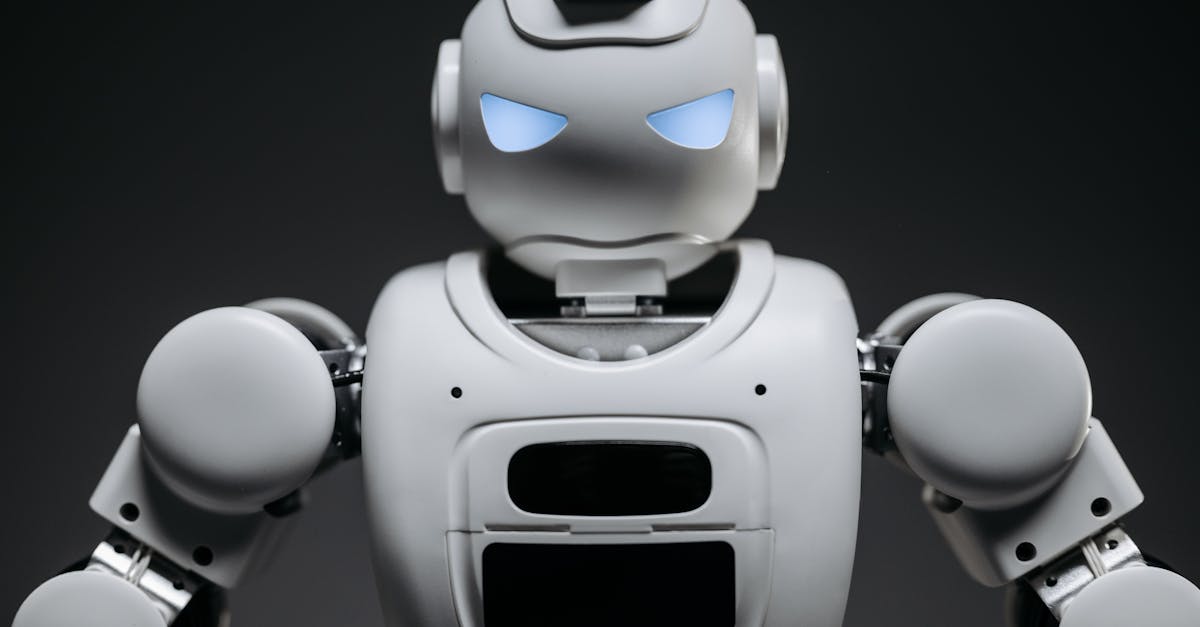
- •Hands-on view of Compliance Over Hype: A Practical Assessment of ISO 10218 and ISO 13482 in the Indian Market inside our Robot Safety Standards library.
- •Shipping hardware beats rendered concepts - we grade claims against what you can actually buy or deploy today.
- •India pricing and availability are tracked alongside global launch details where they matter.
References
- ISO 10218-1: Robots and robotic devices — Safety requirements
- ISO 10218-2: Robots and robotic devices — Safety requirements
- ISO 13482: Robots and robotic devices — Safety requirements for personal care robots
- Universal Robots Safety and User Manual
- Occupational Safety, Health and Working Conditions Code, 2020
Related articles
More in Robot Safety Standards →