Agricultural Drones in India: Shipping Hardware, Pilot Deployments, and Market Realities

The State of Agricultural Drones in India
India’s agricultural drone sector has transitioned from experimental demonstrations to operational deployment across multiple states. The market is dominated by imported heavy-lift platforms, primarily from DJI, alongside a growing cohort of Indian manufacturers seeking type certification and scaled production. The sector’s growth is driven by government subsidies under the Sub-Mission on Agricultural Mechanization (SMAM), rising labor costs in rural supply chains, and the need for precise chemical application in high-value crop zones. However, the gap between promotional announcements and verified field performance remains wide. This assessment grades the market strictly by shipping hardware, pilot deployments, and public announcements, prioritizing manufacturer spec sheets, factory videos, and independent reporting over marketing claims.
Grading the Claims: Hardware, Pilots, and Announcements
The agricultural drone industry operates on three tiers of validation. Hardware shipping represents the baseline: units must be manufactured, quality-checked, and delivered to operators or distributors. Pilot deployments follow, requiring documented field trials, flight hours logged, and agronomic outcomes reported by third parties or government agencies. Announcements occupy the final tier, encompassing funding rounds, partnership MOUs, and policy alignments that do not yet reflect operational capacity. When evaluating manufacturers, RobotWale applies this hierarchy. Companies that have only announced partnerships or secured pre-orders without verified unit shipments are classified as early-stage. Those with documented pilot programs across multiple districts are considered operational. Only manufacturers with consistent hardware delivery, certified airframes, and measurable field deployment data qualify as mature players in the Indian agri-drone market.
DJI Agras Series: Shipping Hardware and Verified Specifications
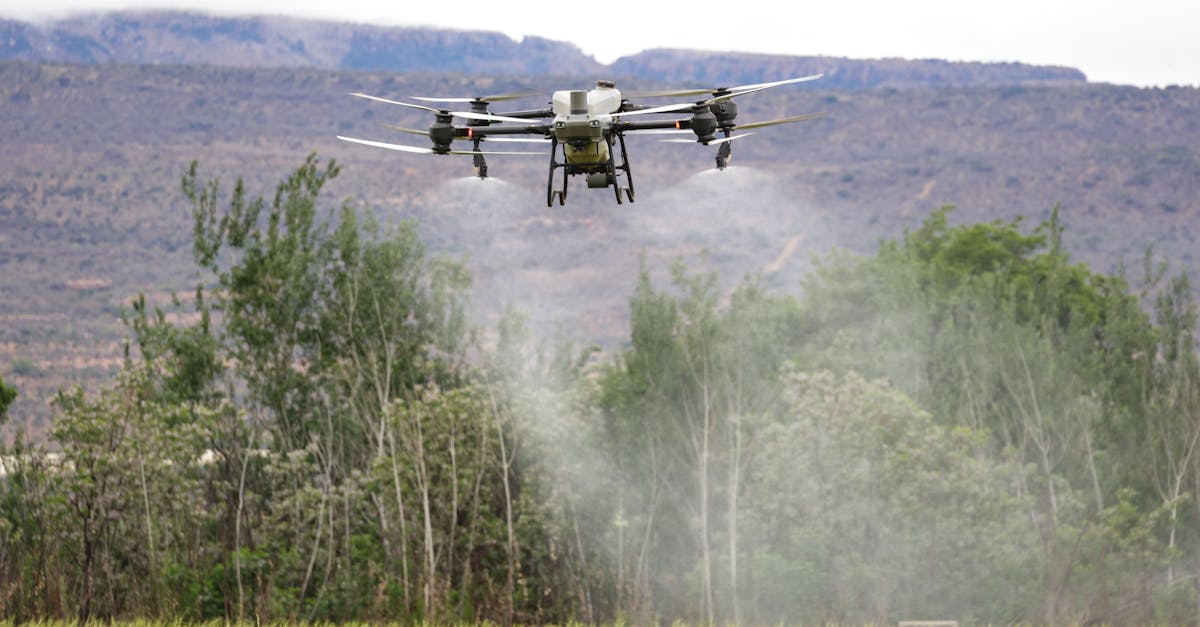
DJI dominates the Indian agricultural drone market through its Agras series, specifically the T30, T40, and T50 models. These platforms are classified as heavy-lift agricultural drones, designed for crop dusting, spraying, and seed broadcasting. The T30 features a 30-liter spray tank, a 10-kilogram payload capacity, and an integrated radar system for terrain following. The T40 upgrades to a 40-liter tank, 12-kilogram payload, and a dual-battery architecture for extended operational windows. The T50, introduced in 2023, incorporates a 50-liter tank, 20-kilogram payload capacity, and an automated flight control system with obstacle avoidance and variable-rate application capabilities.
DJI has maintained consistent hardware shipping to India through authorized distributors and direct enterprise channels. The company’s factory in Shenzhen publishes regular production updates, and Indian distributors report steady unit delivery across Punjab, Haryana, Maharashtra, and Karnataka. Independent agritech operators confirm that DJI platforms are actively deployed in wheat, rice, cotton, and sugarcane zones. The drones utilize RTK GPS for centimeter-level positioning, reducing spray overlap and chemical waste. Field testing by state agricultural universities has documented application rates between 3 to 5 liters per acre, with drift reduction achieved through centrifugal atomization nozzles.
Despite strong hardware presence, DJI’s agricultural division faces regulatory scrutiny in India. The company’s drones operate under the DGCA’s Remote Pilot Certificate framework, and operators must maintain logbooks, conduct pre-flight inspections, and adhere to no-fly zone restrictions. DJI has not yet secured full type certification from the Ministry of Civil Aviation for its agricultural platforms in India, relying instead on provisional approvals and distributor-led compliance. This status does not hinder shipping but limits integration with certain government procurement pipelines that require certified airframes.
Garuda Aerospace and the Domestic Manufacturing Pipeline
Garuda Aerospace stands as one of the few Indian manufacturers shipping agricultural drones at scale. The company focuses on heavy-lift platforms designed for Indian agricultural conditions, including high humidity, dust exposure, and uneven terrain. Garuda’s flagship models feature modular spray systems, replaceable rotor assemblies, and corrosion-resistant chassis materials. The company publishes detailed technical documentation, including battery swap procedures, nozzle calibration guides, and maintenance schedules.
Garuda Aerospace has completed multiple pilot deployments across Karnataka, Tamil Nadu, and Andhra Pradesh. The company’s field operations utilize drone-as-a-service (DaaS) models, where operators contract spraying services rather than purchase hardware. This approach reduces upfront capital expenditure for farmers and aligns with SMAM subsidy structures. Garuda’s deployments are documented through partnership agreements with state agriculture departments and independent agritech aggregators. The company reports over 500 operational hours logged across pilot sites, with spray accuracy verified through ground truth mapping.
Manufacturing capabilities at Garuda’s facility in Bengaluru include CNC machining, polymer injection molding, and final assembly lines. The company sources flight controllers, motors, and ESCs from domestic and international suppliers, maintaining a hybrid supply chain to mitigate component shortages. Garuda has applied for type certification under DGCA guidelines and participates in the National Drone Udaan Scheme, which funds indigenous aerospace development. The company’s shipping records show consistent delivery to distributors and government contractors, placing it in the operational tier of the Indian agri-drone market.
Pricing, Availability, and Landed Cost Estimates in India
Hardware pricing for agricultural drones in India varies by manufacturer, payload capacity, and subsidy eligibility. DJI Agras platforms are available through authorized distributors in major agricultural hubs. Approximate pricing for the T30 ranges from INR 12 to 14 lakhs, the T40 from INR 16 to 18 lakhs, and the T50 from INR 22 to 25 lakhs. These figures represent ex-showroom costs and exclude batteries, chargers, and spare parts. Landed cost estimates, including GST, import duties, and distributor margins, typically add 8 to 12 percent to the base price. Operators should verify pricing through official DJI India channels or registered agricultural equipment dealers.
Garuda Aerospace prices its agricultural platforms between INR 14 to 19 lakhs, depending on configuration and payload options. Domestic manufacturing reduces import dependency, allowing more predictable pricing and faster service turnaround. The company offers DaaS contracts at INR 800 to INR 1,200 per acre, depending on crop type, spray volume, and terrain complexity. Subsidy eligibility under SMAM covers up to 50 percent of the hardware cost for eligible farmers and FPOs, effectively reducing net expenditure to INR 6 to 9 lakhs for qualifying purchasers.
Other Indian agri-drone startups, including Agnext, DroneShiksha, and AgriLearn, operate at smaller scales. Agnext focuses on modular spraying systems and has completed limited pilot deployments in Maharashtra and Gujarat. Pricing for domestic startups ranges from INR 10 to 16 lakhs, with DaaS rates between INR 900 and INR 1,400 per acre. Availability remains concentrated in states with active agriculture department partnerships. Operators should request verified deployment logs and type certification status before committing to hardware purchases.
Regulatory Framework and Type Certification Progress
The Directorate General of Civil Aviation (DGCA) regulates agricultural drones under the Drone Rules 2021 and subsequent amendments. Operators must obtain a Unique Drone ID (UDID) through the Digital Sky platform, secure a Remote Pilot Certificate, and comply with no-fly zone restrictions near airports, borders, and critical infrastructure. Agricultural drones must operate below 400 feet AGL, maintain visual line of sight, and avoid spraying within 500 meters of populated areas.
Type certification remains a bottleneck for domestic manufacturers. The DGCA requires airframes to pass structural testing, electromagnetic compatibility verification, and flight stability assessments before commercial deployment. DJI’s agricultural platforms operate under provisional approvals, while Garuda Aerospace and select startups are in active certification pipelines. The Ministry of Civil Aviation has introduced the National Drone Udaan Scheme to accelerate indigenous certification, funding design validation, flight testing, and compliance documentation. Operators should verify certification status before purchasing drones for government tenders or large-scale deployments.
Subsidy administration falls under the Department of Agriculture and Farmers Welfare. SMAM allocations vary annually by state, with Punjab, Haryana, and Maharashtra leading in disbursement. FPOs, individual farmers, and agri-entrepreneurs can apply through state agriculture departments. Documentation requires land records, GST registration, and proof of operational capacity. Subsidy approval timelines range from 60 to 120 days, depending on state processing efficiency. Operators should budget for cash flow gaps during approval periods.
Operational Constraints and Maintenance Realities
Agricultural drones face environmental and mechanical constraints that impact long-term viability. High humidity accelerates motor corrosion, requiring frequent bearing inspections and seal replacements. Dust ingress affects IMU sensors and RTK modules, necessitating regular cleaning and recalibration. Battery degradation under heavy load cycles reduces flight time by 15 to 20 percent within the first year, mandating replacement schedules and capacity monitoring.
Maintenance costs average INR 2 to 3 lakhs annually per platform, covering batteries, nozzles, propellers, and firmware updates. Operators should maintain spares inventories, including replacement motors, ESCs, and spray pumps. Field repairs require trained technicians familiar with drone electronics and agricultural chemical handling. Chemical compatibility testing is essential, as herbicides and fungicides can damage seals and corrode internal components.
Operator training remains a critical factor in deployment success. DGCA mandates 20 to 30 hours of ground school and flight simulation before certification. Post-certification, operators require continuous education on crop-specific spray patterns, wind shear management, and emergency landing procedures. Agri-drone service providers should employ agronomists alongside pilots to optimize application rates and minimize crop damage. The sector’s growth depends on standardized training modules, verified maintenance protocols, and transparent deployment reporting.
References
- DJI Agras T-Series Official Specifications: https://www.dji.com/agrasseries
- DJI India Authorized Distributor Portal: https://www.dji.co.in/agri
- Garuda Aerospace Agricultural Drones: https://garudaaerospace.com/agricultural-drones
- DGCA Drone Rules 2021 and Amendments: https://dgca.gov.in/drone-rules
- Ministry of Civil Aviation Digital Sky Platform: https://digily.gov.in
- SMAM Subsidy Guidelines for Agricultural Mechanization: https://dahd.nic.in
- Agnext Agricultural Drone Deployments: https://agnext.in
- Indian Agricultural Drone Market Analysis, FICCI & NASSCOM: https://www.ficci.in
- DGCA Remote Pilot Certificate Requirements: https://dgca.gov.in/remote-pilot
- State Agriculture Department Drone Subsidy Portals (Punjab, Maharashtra, Karnataka): https://dahd.nic.in/subsidy-agricultural-mechanization
✓ Key takeaways
- •Hands-on view of Agricultural Drones in India: Shipping Hardware, Pilot Deployments, and Market Realities inside our Agricultural Drones library.
- •Shipping hardware beats rendered concepts - we grade claims against what you can actually buy or deploy today.
- •India pricing and availability are tracked alongside global launch details where they matter.
References
- DJI Agras T-Series Official Specifications
- DJI India Authorized Distributor Portal
- Garuda Aerospace Agricultural Drones
- DGCA Drone Rules 2021 and Amendments
- Ministry of Civil Aviation Digital Sky Platform
- SMAM Subsidy Guidelines for Agricultural Mechanization
- Agnext Agricultural Drone Deployments
- Indian Agricultural Drone Market Analysis, FICCI & NASSCOM
- DGCA Remote Pilot Certificate Requirements
- State Agriculture Department Drone Subsidy Portals (Punjab, Maharashtra, Karnataka)
Related articles
More in Agricultural Drones →