
India's DGCA Drone Rules Explained: Classification, Compliance, and Hardware Market Realities
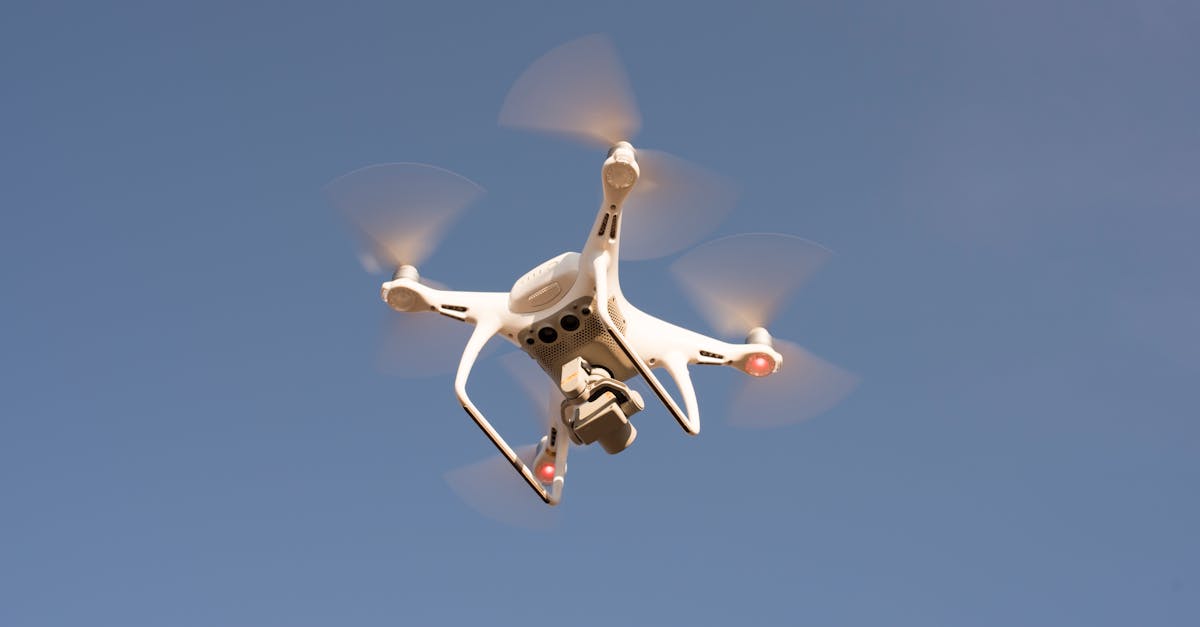
Understanding DGCA Drone Regulations in India
India's drone regulatory framework is administered by the Directorate General of Civil Aviation (DGCA) under the Ministry of Civil Aviation. The foundational document is the Drone Rules, 2021, which superseded earlier guidelines and established a unified regulatory ecosystem. The DGCA does not approve conceptual renders or pre-order campaigns; it certifies hardware that has undergone physical testing, meets airworthiness standards, and enters commercial distribution. Compliance is tracked through the Digital Sky platform, a government-hosted digital interface for registration, permissions, and operational reporting.
The regulatory approach prioritizes measurable safety outcomes over developmental announcements. Operators must distinguish between rule categories that are actively enforced, those currently under pilot implementation, and those still in the proposal stage. Hardware availability in India is segmented by weight class, payload capacity, and certification status. Pricing reflects landed costs, import duties, sensor configurations, and DGCA type certification expenses.
Regulatory Framework and Classification
The DGCA classifies drones by maximum take-off weight (MTOW) and operational purpose. This classification dictates registration requirements, licensing obligations, and airspace permissions.
- Nano Drones (0–250 grams): Exempt from registration and remote pilot licensing. Must operate below 50 feet AGL and maintain visual line of sight. Commercial use is restricted without additional permissions.
- Micro Drones (250 grams–2 kg): Require Digital Sky registration. Remote pilot license is not mandatory for recreational use, but commercial operations require an online authorization. Altitude limit is 200 feet AGL.
- Small Drones (2 kg–25 kg): Require Digital Sky registration, type certification, and a Remote Pilot License (RPL). Must operate within designated green zones. Altitude limit is 400 feet AGL. Commercial and industrial applications fall primarily in this category.
- Medium Drones (25 kg–150 kg): Require type certification, airworthiness certification, and operator ID. Must operate within designated corridors or with specific NOCs. Altitude limit is 600 feet AGL.
- Large Drones (above 150 kg): Treated under traditional aircraft regulations. Require full airworthiness certification, pilot licensing under standard aviation norms, and explicit DGCA clearance for each operation.
Type certification verifies that a drone model meets structural, navigation, and communication standards. Airworthiness certification confirms that individual units are safe for flight. The DGCA processes these through authorized testing agencies and does not fast-track untested prototypes.
Registration, Licensing, and Airspace Management
All drone operators in India must register on the Digital Sky platform. The platform issues a Unique Identification Number (UIN) for each airframe and an Operator ID for the business entity. Registration requires submission of proof of ownership, technical specifications, and insurance documentation. Hardware must be physically available for inspection during certification audits.
Remote Pilot Licenses are mandatory for Small, Medium, and Large drones. The DGCA authorizes training centers that conduct theoretical and practical examinations. Licenses are categorized by drone class and are valid for five years. Recreational Micro drone operators may use simplified digital authorization for limited commercial tasks, but payload delivery and aerial surveying still require full RPL compliance.
Airspace management is divided into green zones, yellow zones, and red zones. Green zones allow autonomous flight with prior digital notification. Yellow zones require explicit NOC from the DGCA and local law enforcement. Red zones include airports, military installations, and critical infrastructure, where flight is strictly prohibited. Geofencing is mandatory on all commercial drones to prevent unauthorized entry into restricted airspace.
Operational Restrictions and No-Fly Zones
Operational limits are enforced through digital permissions and hardware-level restrictions. The DGCA mandates that all commercial drones carry a digital signature system that transmits real-time location, altitude, and identity data to the Digital Sky platform. This requirement applies to all registered aircraft above the Nano class.
Daylight-only operations are standard unless specific night-flight permissions are granted. Maximum horizontal speed limits vary by class but generally do not exceed 20 meters per second for Small drones. Payload restrictions prohibit carriage of hazardous materials without explicit DGCA and Ministry of Home Affairs clearance. Emergency landing protocols must be documented during the type certification process.
Insurance is compulsory for all commercial operations. Third-party liability coverage must meet minimum limits set by the DGCA, typically starting at ₹50 lakh for Small drones and scaling with weight class. Hull insurance is optional but widely adopted for industrial survey and agricultural applications.
Hardware Availability and Pricing in India
The Indian drone hardware market is segmented by certification status and operational readiness. The DGCA grades commercial viability by shipping hardware first, verified pilot deployments second, and manufacturer announcements last. Only hardware that has completed type certification and airworthiness testing is eligible for commercial sale.
Nano and Micro drones are widely available through authorized distributors and online marketplaces. Prices range from ₹15,000 to ₹50,000 for basic models, with advanced sensor packages reaching ₹75,000. These units are primarily used for photography, light inspection, and educational purposes.
Small drones, which cover most commercial applications, are priced between ₹1,00,000 and ₹5,00,000 for standard quadcopters. Agricultural sprayers, LiDAR-equipped survey drones, and thermal imaging units range from ₹3,00,000 to ₹12,00,000. Imported models attract additional customs duties and GST, raising landed costs by approximately 18–22 percent. Domestic manufacturing under the Production Linked Incentive (PLI) scheme has reduced import dependency, but core components like brushless motors, flight controllers, and high-capacity batteries remain largely imported.
Medium and Large drones are procured through direct manufacturer contracts or authorized system integrators. Pricing ranges from ₹15,00,000 to ₹25,00,000 for agricultural and logistics platforms, with heavy-lift models exceeding ₹50,00,000. These units require dedicated maintenance teams, certified hangars, and DGCA-approved flight coordinators.
Humanoid robots and ground-based automation fall outside DGCA drone jurisdiction and are regulated under separate industrial and safety standards. Drone-to-ground handoff systems, where applicable, require interoperability testing and explicit operational approval.
Compliance, Certification, and Enforcement
The DGCA enforces compliance through periodic audits, digital flight logging, and penalty structures. Violations include operating without registration, exceeding altitude limits, entering restricted zones, or flying without an RPL. Penalties range from fines to aircraft seizure, depending on severity. Repeat offenders face suspension of Operator IDs and permanent bans from the Digital Sky platform.
Type certification requires submission of flight test data, structural analysis reports, communication failure recovery logs, and payload security documentation. Testing is conducted at DGCA-empaneled facilities. Manufacturers must demonstrate fail-safe mechanisms for GPS loss, battery depletion, and motor failure. Approval timelines typically span six to twelve months for complete documentation.
Airworthiness certification is issued per batch or per unit, depending on production volume. Serial numbers are logged in the Digital Sky registry. Modifications to certified airframes require re-certification. Second-hand drone sales mandate transfer of UIN and Operator ID through the platform, with updated insurance and inspection reports.
Key Takeaways for Operators
- Registration, licensing, and type certification are mandatory for commercial operations above the Nano class.
- Hardware availability in India is graded by shipping units, verified deployments, and manufacturer claims.
- Pricing reflects landed costs, sensor configurations, and certification expenses, with domestic PLI-assisted models offering reduced import duties.
- Airspace permissions are geofenced and digitally enforced through real-time transmission systems.
- Compliance is audited through flight logs, insurance documentation, and periodic DGCA inspections.
References
- Drone Rules, 2021 – Directorate General of Civil Aviation (DGCA) https://dgca.gov.in/
- Drone Rules Amendment, 2022 – Ministry of Civil Aviation, Government of India https://civilaviation.gov.in/
- Digital Sky Platform – DGCA Official Portal https://digital-sky.dgca.gov.in/
- Remote Pilot License Guidelines – DGCA https://dgca.gov.in/
- Production Linked Incentive Scheme for Drones – Ministry of Civil Aviation https://civilaviation.gov.in/
- DGCA Airworthiness Certification Requirements – DGCA Technical Circulars https://dgca.gov.in/
- India Drone Market Report 2023 – NASSCOM & FICCI https://www.nasscom.in/

