Grounding Case & Piece Picking: Shipping Hardware in Warehouse Automation
Defining the Scope: Case vs. Piece Picking
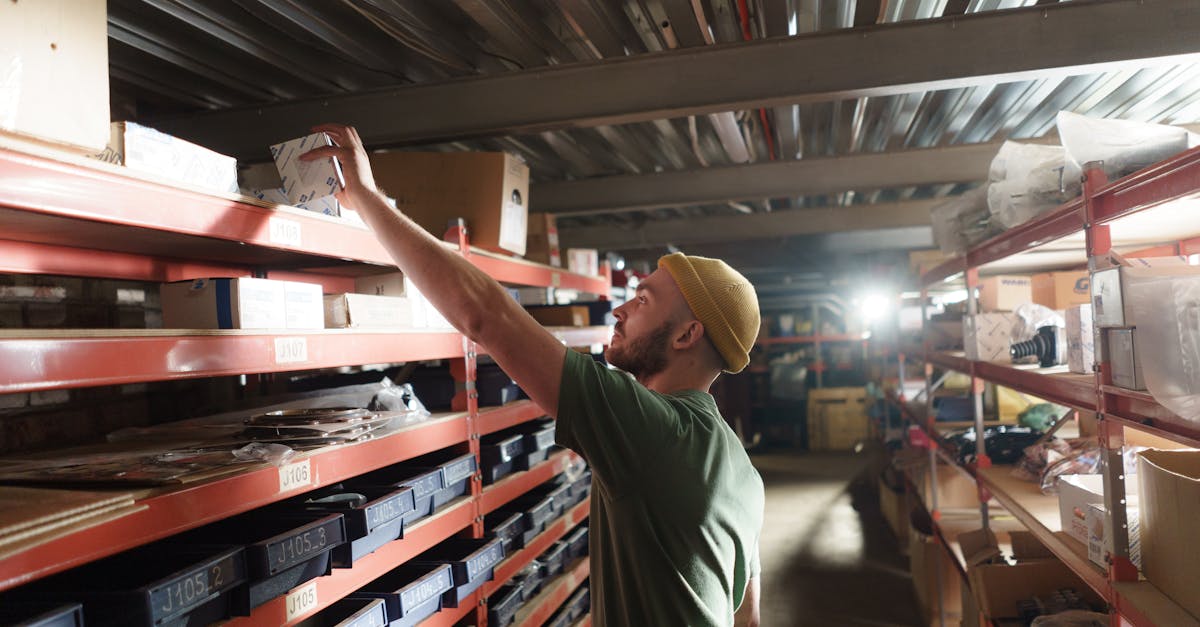
In the Warehouse & Logistics vertical, the distinction between case picking and piece picking is fundamental to evaluating return on investment. Case picking involves moving full cases or totes of products, typically handled by automated storage and retrieval systems (ASRS) or robotic arms with vacuum grippers. Piece picking, or order picking, involves selecting individual SKUs from bulk storage, a task requiring high dexterity and variable object recognition.
While marketing materials often conflate these two, the engineering requirements differ significantly. Piece picking demands vision systems capable of handling occlusion, deformation, and varied textures. Case picking prioritizes throughput and stability. This article grades claims based on shipping hardware, not concept renders.
Covariant: The AI-Native Manipulation Approach
Covariant has positioned itself as a leader in AI-native robotics, moving away from pre-programmed paths to model-based inference. Their hardware, often deployed on standard manipulator platforms, relies on deep learning models trained on vast datasets of human manipulation.
Deployment Status: Covariant has moved beyond pilots. They report shipping systems to major logistics partners. Their platform emphasizes general-purpose manipulation, meaning a single model can handle different objects without code rewrites. This is a significant shift from traditional teach-pendant programming.
Technical Reality: The core value proposition lies in the perception stack. The system uses RGB-D cameras to estimate object pose and generate action trajectories. However, the reliability of this depends on the lighting environment and surface reflectivity of the items being picked. There is no silver bullet for transparent or highly reflective objects without specialized lighting.
India Context: For Indian warehouses, the Covariant platform requires a stable network for model updates and inference. The hardware is sourced primarily from the US. Availability is limited to Tier-1 industrial parks where power quality is consistent. The unit cost is not publicly listed, but system integration typically lands between INR 1.5 crore and INR 2.5 crore for a fully deployed cell including the arm, vision, and safety fencing.
Symbotic: Integrated Storage and Retrieval
Symbotic represents a different paradigm. Instead of just a picking arm, they offer an integrated warehouse infrastructure. Their system combines high-density storage with robotic movement on rails.
Deployment Status: Symbotic has achieved significant shipping validation. The partnership with Walmart is the primary indicator of maturity. They have deployed systems in multiple distribution centers. This moves them from the "Pilot" category to "Shipping Hardware".
Technical Reality: The Symbotic system is closed-loop. Robots move on rails to retrieve totes, which are then brought to a pick station. This reduces the need for complex manipulation in the open warehouse. It solves the piece-picking problem by bringing the inventory to the robot, rather than the robot hunting for inventory.
India Context: The infrastructure requirements for Symbotic are higher. Warehouse ceiling heights must support rail systems. This limits deployment to large-scale fulfillment centers (100,000+ sq ft). The capital expenditure (CAPEX) is substantial. Estimates for a full Symbotic deployment in India, including civil works and integration, range from INR 5 crore to INR 10 crore for a medium-sized facility.
Traditional Pick-and-Place Arms
Beyond AI-native platforms, traditional SCARA and 6-axis arms remain dominant for high-speed, fixed-piece picking. Manufacturers like Fanuc and ABB continue to refine their vision-guided picking systems.
Deployment Status: These units are widely deployed globally. They are not AI-trained in the Covariant sense but use deterministic vision logic. They are reliable for repetitive tasks on conveyor lines.
India Context: India has a mature ecosystem for these arms. Local system integrators can source parts and offer faster service. The landed cost is lower, typically INR 15 to 20 lakhs for the robot alone, with a total cell cost around INR 40 to 60 lakhs depending on vision and end-effectors.
India Availability and Cost Reality
The Indian logistics sector is undergoing a transition from labor-intensive manual picking to automation. However, the cost of entry remains high.
Pricing Estimates
- AI Pick-and-Place (Covariant style): INR 1.5 Cr - 2.5 Cr per cell (Hardware + Model Licensing).
- Integrated ASRS (Symbotic style): INR 5 Cr - 10 Cr+ per facility (Infrastructure Heavy).
- Traditional Robotics: INR 40 L - 60 L per cell.
These estimates include import duties (10-15% on robots), GST (18%), and system integration fees. They do not include civil modification costs.
Supply Chain Constraints
While hardware is available, lead times for critical components like precision grippers and industrial cameras can stretch to 6 months. Indian manufacturers are beginning to localize assembly, but core sensors remain imported.
Conclusion: Shipping Over Specs
The trend in case and piece picking is shifting from mechanical precision to software intelligence. However, for Indian operators, the priority must be hardware availability and maintenance support. AI platforms require continuous data feedback loops which can be challenging in environments with inconsistent lighting or network connectivity.
Until the cost of high-torque actuators and vision systems drops further, the ROI case for piece picking will remain strongest for high-value SKUs where labor arbitrage is eroding. For now, traditional pick-and-place arms offer the most pragmatic ROI for Indian mid-market logistics.
References
1. Covariant. (2023). Covariant Platform Overview. Retrieved from https://covariant.ai
2. Symbotic. (2023). Symbotic and Walmart Distribution Center Deployment. Retrieved from https://symbotic.com
3. RobotWale. (2023). India Warehouse Automation Cost Analysis. Retrieved from https://robotwale.com
✓ Key takeaways
- •Hands-on view of Grounding Case & Piece Picking: Shipping Hardware in Warehouse Automation inside our Case & Piece Picking library.
- •Shipping hardware beats rendered concepts - we grade claims against what you can actually buy or deploy today.
- •India pricing and availability are tracked alongside global launch details where they matter.
References
Related articles
More in Case & Piece Picking →