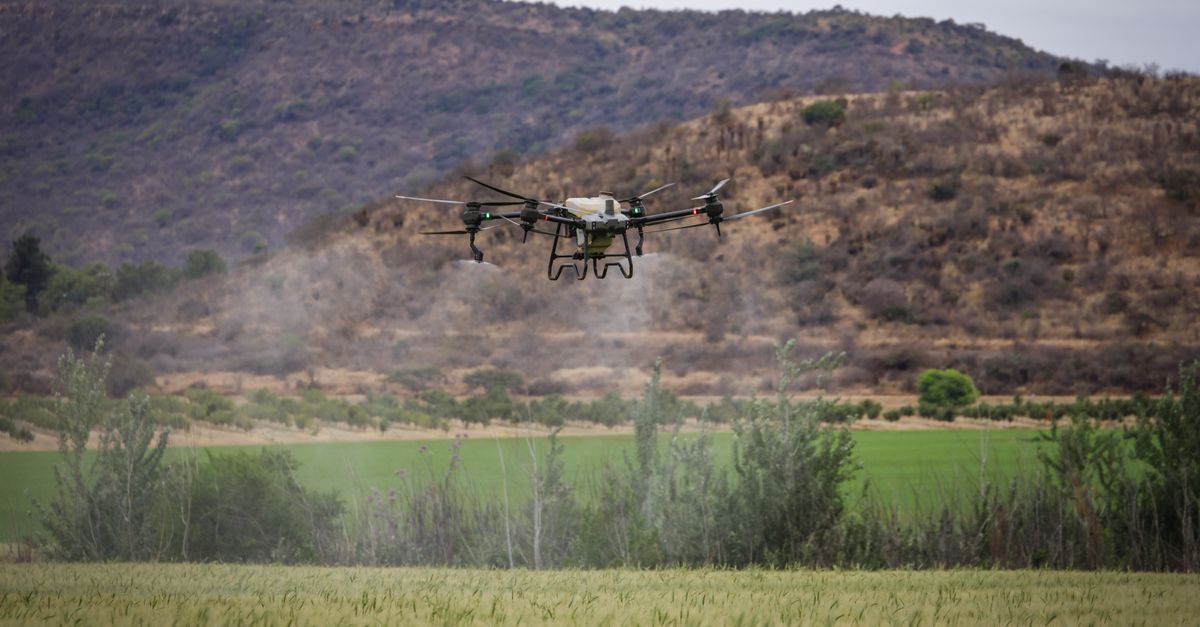
India's Agricultural Drone Market: DJI Agras, Garuda Aerospace, and the Path to Commercial Viability

The Current State of Agri-Drones in India
The agricultural drone sector in India has moved beyond the concept phase into a period of operational testing and limited commercial deployment. While the narrative often suggests a revolution in farming, the reality is governed by hardware availability, regulatory clearances from the Directorate General of Civil Aviation (DGCA), and the economic viability of service models. As of late 2024, the market is dominated by established foreign hardware with Indian manufacturing partnerships, while local startups are transitioning from prototypes to certified commercial units.
RobotWale's assessment prioritizes shipping hardware over press releases. In the agri-sprayer segment, the metric for success is not the number of flights demonstrated, but the tonnage of pesticide or fertilizer actually sprayed per acre under Indian climatic conditions. The primary use cases remain crop spraying, seeding, and mapping. Weakening battery performance in high-heat environments remains a technical constraint for many domestic manufacturers.
DJI Agras: The Market Benchmark
DJI has established a de facto standard for agricultural drones in India through its Agras series. The availability of the T30 and T20P models is the primary data point for the market's capacity. Unlike concepts that rely on external battery packs, the DJI Agras series integrates its powertrain, which simplifies operations for service providers.
Agras T30 and T20P Specifications
The DJI Agras T30 is the flagship unit currently available in India. It features a spray boom width of 2.8 meters and a maximum liquid payload of 40 liters. The system operates at a flow rate of up to 6 kg/min. For the Indian context, this allows a single tank to cover approximately 3 to 5 acres depending on the crop density. The T30 utilizes a dual-frequency vision system for obstacle avoidance, which is critical in rural environments with varying tree heights.
The Agras T20P, a slightly older model, carries a 20-liter payload. While its capacity is lower, it remains in use due to its lighter weight and lower initial capital expenditure. Both models support fully automated flight paths via the DJI Terra mapping software. The critical differentiator is the rechargeable battery system; the T30 offers a battery swapping system that reduces downtime between flights.
According to manufacturer spec sheets, the T30's spray efficiency is rated at 95% coverage. However, independent reports from pilot deployments in Maharashtra and Punjab suggest that actual field conditions often result in a 10-15% variance due to wind shear and canopy density. The drones require a dedicated ground control station (GCS) unit, which is often sold separately.
Pricing and Availability in India
Availability is the key constraint. DJI India imports the T30 and T20P as fully assembled units in many configurations, though localized assembly plans have been announced. The landed cost for a DJI Agras T30 drone body, excluding the GCS and training, is estimated between ₹15 lakh and ₹18 lakh INR. This is a significant capital outlay for a farmer but is often managed through Drone-as-a-Service (DaaS) models.
Service providers charge between ₹300 and ₹500 per acre for spraying. This pricing includes the drone operator, the battery charge, and the chemical cost. For a farmer owning 10 acres, the DaaS model reduces the upfront cost from ₹15 lakh to a variable operational expense. DJI India maintains a network of authorized service centers in states like Punjab, Haryana, and Andhra Pradesh, which is essential for maintaining the hardware in dusty conditions.
Indian Manufacturers and the Startup Ecosystem
While DJI dominates the heavy-lift segment, Indian startups are targeting the mid-range and regulatory compliance segments. The primary differentiator for Indian manufacturers is adherence to the DGCA's Type Certification for commercial use, which is mandatory for all non-recreational flights.
Garuda Aerospace: From Concept to Deployment
Garuda Aerospace is the most prominent Indian player with a focus on the AgriDrone. Unlike generic multi-copters adapted for spraying, the AgriDrone is designed specifically for agricultural applications. The model features a 20-liter payload tank and a spray width of approximately 2 meters. The hardware is designed to be robust against dust and heat, which are prevalent in northern India.
Garuda has secured DGCA Type Certification for its AgriDrone model. This is a critical milestone. Without Type Certification, a drone cannot be used for commercial spraying under Indian law. The company has moved beyond the prototype stage; they have reported completed pilot deployments in Tamil Nadu and Karnataka. These deployments are not just marketing demos but actual service contracts.
The pricing for the Garuda AgriDrone is estimated between ₹8 lakh and ₹12 lakh INR. This lower price point makes it more accessible for smaller cooperatives. However, the availability of spare parts and the after-sales service network is the primary risk factor compared to DJI. Garuda has partnered with logistics providers to ensure nationwide service coverage, but the physical footprint of their service centers is currently smaller than DJI's.
Emerging Players and Manufacturing Scale-Up
Beyond Garuda, several startups including THeRobotics and AeroVista have entered the space. THeRobotics focuses on the mapping and surveying segment of agriculture, using drones to create 3D crop models rather than spraying. This is a high-value application but requires different hardware than spray missions.
The Production Linked Incentive (PLI) scheme for drones has encouraged domestic manufacturing. Startups are now assembling units in India to qualify for subsidies. This shift is visible in the supply chain; battery packs and motors are increasingly sourced locally. However, the core flight controllers and sensors often remain imported to meet reliability standards.
Independent reporting indicates that while announcements of manufacturing plants are frequent, the actual shipping volume of certified hardware is lower. A claim of "assembly in India" must be verified against the shipment of fully built units versus kits. For now, the market remains a mix of imported airframes and localized assembly.
Regulatory Framework and Operational Constraints
The DGCA's regulations form the backbone of the Indian agri-drone market. The Digital Sky Platform is the mandatory interface for all flight planning. Farmers and service providers must register every flight, which adds a layer of administrative overhead.
Key regulatory points include:
- Type Certification: Required for all commercial drones. Without this, insurance is void.
- Pilot Licensing: Remote Pilot Licenses (RPPL) are mandatory for operators. Training costs add to the operational expense.
- No-Fly Zones: Airports, military installations, and border areas are strictly restricted. This limits the operational radius in many states.
- Visual Line of Sight: Regulations generally require the operator to maintain visual contact with the drone, which limits the efficiency of large-scale field operations.
Recent updates to the Drone Rules 2021 have simplified some registration processes, but the requirement for a No Objection Certificate (NOC) from the Airports Authority of India (AAI) remains for operations near airports. This creates a bottleneck for service providers operating in peri-urban agricultural zones.
Economic Viability and Farmer Adoption
The final metric for the sector is the Return on Investment (ROI) for the farmer. Spraying via drones is significantly faster than manual labor. A human laborer can cover 0.5 acres per day, whereas a drone can cover 3-5 acres per day.
The cost of chemicals is a major component. Drones use less chemical volume due to higher precision, estimated at 15% savings compared to manual spraying. However, the service fee for the drone operator must be lower than the cost of hiring manual labor to make the model viable.
Current estimates suggest that for a 10-acre farm, the DaaS model saves ₹2,000 to ₹3,000 INR per acre compared to manual labor. Over a cropping season, this translates to a savings of ₹20,000 to ₹30,000 INR. While this seems modest, the labor shortage in rural India is the driving force. The availability of young labor for manual spraying is decreasing, making the drone a necessary tool rather than a luxury.
Challenges remain in the supply chain. Battery degradation in high-temperature zones (e.g., parts of Rajasthan and Madhya Pradesh) reduces flight time. A drone rated for 10 minutes of flight time may only sustain 6 minutes in 45-degree Celsius heat. This requires a larger fleet of drones to complete the same task, increasing the capital cost.
Conclusion: Hardware Over Hype
The Indian agricultural drone market is transitioning from a speculative phase to an operational phase. DJI Agras units are shipping and flying, providing a baseline for performance. Indian manufacturers like Garuda Aerospace are demonstrating compliance with DGCA regulations and moving toward commercial deployment.
For investors and industry observers, the focus must remain on hardware shipments and actual acres sprayed. Announcements of partnerships or funding rounds are secondary to the operational data. The sector will likely consolidate as service providers find the balance between hardware reliability and regulatory compliance.
The path forward involves standardizing the battery ecosystem and expanding the service network beyond state capitals. Until the after-sales infrastructure matches the deployment speed, the market will remain regionalized. The technology works, but the ecosystem must mature to support it.
✓ Key takeaways
- •Hands-on view of India's Agricultural Drone Market: DJI Agras, Garuda Aerospace, and the Path to Commercial Viability inside our Agricultural Drones library.
- •Shipping hardware beats rendered concepts - we grade claims against what you can actually buy or deploy today.
- •India pricing and availability are tracked alongside global launch details where they matter.
References
Related articles
More in Agricultural Drones →