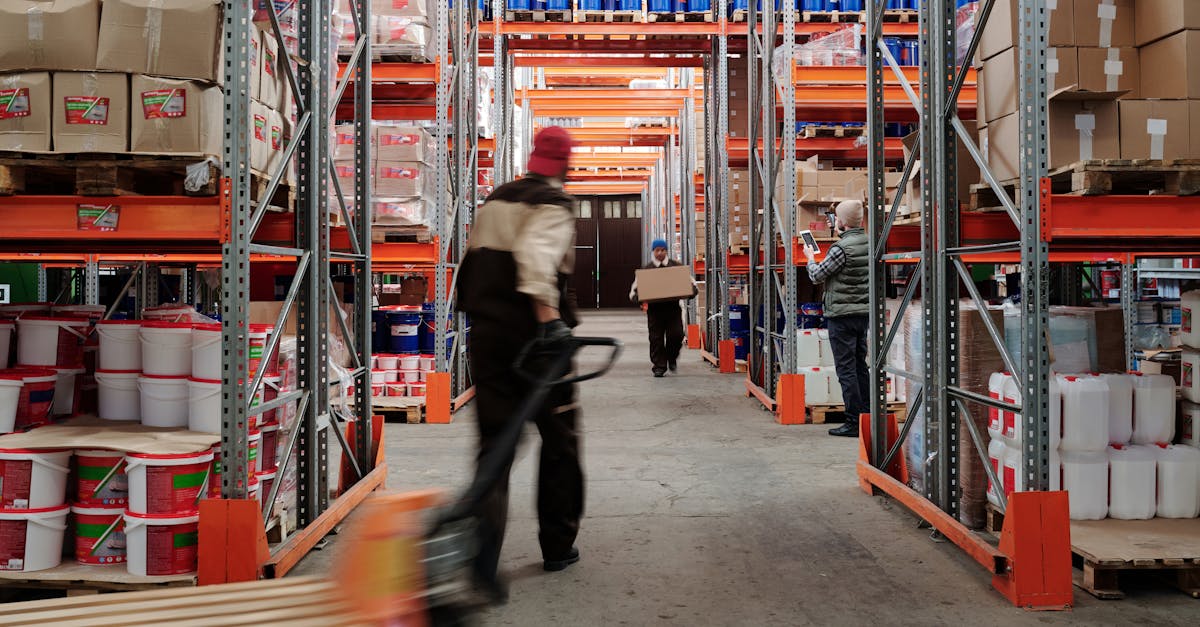
Humanoids in Logistics: Verified Deployments and Ground Truth
Humanoids in Logistics: Verified Deployments and Ground Truth
The logistics and warehouse automation sector has seen a rapid influx of humanoid robot announcements, but the gap between promotional timelines and operational reality remains significant. At RobotWale, we grade claims strictly by hardware shipments first, pilot deployments second, and public announcements last. This article examines where Figure AI, Apptronik, and Agility Robotics are actually deployed in logistics environments, what their verified hardware can do today, and what this means for India's supply chain automation trajectory.
Grading the Claims: Shipping Hardware, Pilots, and Announcements
Humanoid logistics applications require more than functional actuators. They demand reliable perception stacks, robust manipulation end-effectors, safe human-robot collaboration protocols, and integration with existing warehouse management systems (WMS) and autonomous mobile robot (AMR) fleets. We evaluate each manufacturer against three tiers:
- Shipping Hardware: Units delivered to operational sites, with verified power, safety, and connectivity specs.
- Pilot Deployments: Active testing in live warehouse or distribution environments, with measurable task completion rates and uptime data.
- Announcements: Partnership agreements, roadmaps, or conceptual timelines that have not yet translated into deployed hardware.
Using this framework, we can separate verified logistics deployments from marketing timelines and provide a clear picture of where humanoid logistics automation currently stands.
Figure AI: BMW and UPS Deployments
Figure AI has moved beyond announcement-stage hardware with verified shipments to industrial and logistics partners. The company's Figure 02 platform features a custom-designed humanoid form factor, high-torque joint actuators, and a perception stack built around stereo vision and tactile sensing. Figure's primary logistics-grade deployment has been with BMW Group at its Spartanburg, South Carolina manufacturing facility, where the robots have been shipped and integrated into parts handling and assembly support tasks.
Figure has also announced a partnership with UPS to deploy Figure 02 robots in package handling and sortation environments. While UPS deployment timelines extend into 2025 and 2026, the hardware shipment phase has begun, with units being integrated into UPS's logistics network for pilot operations. Figure's approach emphasizes teleoperation fallback, standardized end-effectors, and integration with existing warehouse infrastructure rather than fully autonomous end-to-end workflows.
Verified deployment status: Shipping hardware confirmed with BMW; pilot integration underway with UPS. Announcement-stage claims remain limited to expanded logistics fleet projections beyond initial pilot sites.
Apptronik (Apollo): Walmart and Retail Distribution Pilots
Apptronik's Apollo platform has been deployed in multiple retail and distribution center pilots. Apollo features a modular architecture, force-torque sensing in its wrists, and a perception system designed for structured and semi-structured warehouse environments. The robot has undergone extended pilot deployments with Walmart across multiple distribution centers, focusing on inventory replenishment, shelf restocking, and light material handling.
Apptronik has also partnered with Amazon and FedEx for pilot evaluations in fulfillment and logistics operations. These deployments are graded as active pilot deployments rather than full production rollouts. Apollo's hardware specifications include a 160 cm stature, 30 kg payload capacity, and a perception stack that relies on 3D cameras and LiDAR for navigation and object detection. The robot integrates with existing AMR platforms for base mobility, while its upper body handles manipulation tasks.
Verified deployment status: Active pilot deployments confirmed with Walmart, Amazon, and FedEx. Hardware shipments to pilot sites are documented, but full production deployment timelines remain unverified.
Agility Robotics (Digit): Amazon Fulfillment Center Integration
Agility Robotics' Digit platform represents one of the more advanced hardware shipments in the logistics sector. Digit features a bipedal locomotion system, dexterous hands with tactile feedback, and a perception stack optimized for warehouse environments. The robot has been deployed in Amazon fulfillment centers across multiple locations, including Kentucky and other regional hubs, where it performs package sorting, pallet handling, and inventory movement tasks.
Agility has established a dedicated manufacturing facility in Washington state to scale Digit production. The company's deployment grading places Digit in the shipping hardware and pilot deployment tier, with verified units operating in Amazon's logistics network. Digit's specifications include a 173 cm height, 23 kg payload capacity, and a mobility system designed for indoor warehouse flooring and ramp navigation. The robot's integration focuses on hybrid workflows, where it handles repetitive, high-volume tasks alongside human workers and AMR fleets.
Verified deployment status: Shipping hardware confirmed with Amazon; active pilot deployments in fulfillment centers. Production scaling is underway, but fleet-wide logistics deployment remains in the pilot-to-production transition phase.
Technical and Operational Realities in Warehouse Environments
Humanoid logistics robots are not drop-in replacements for existing automation. They require significant infrastructure adjustments, including standardized end-of-arm tooling, updated safety zones, and integration with existing WMS and robotic process automation (RPA) systems. Key technical requirements for verified deployments include:
- Perception and Manipulation: Reliable object detection in cluttered environments, force-controlled grasping, and adaptive end-effectors for varying package sizes.
- Safety and Compliance: ISO 10218 and ISO/TS 15066 compliance, collaborative work cell design, and fail-safe braking systems for bipedal locomotion.
- Integration: API compatibility with warehouse management systems, fleet management software for AMR coordination, and remote teleoperation interfaces for fallback scenarios.
- Maintenance and Uptime: Predictive maintenance protocols, modular component replacement, and thermal management for continuous operation cycles.
Manufacturers that have shipped hardware to logistics sites have demonstrated that humanoids can handle specific task subsets, but they do not yet replace dedicated automation systems like conveyors, pick-and-place arms, or AMR fleets. Humanoids are best positioned as flexible, task-specific augmentations in semi-structured environments.
India Availability, Landed Cost Estimates, and Market Readiness
As of this publication, none of the three manufacturers have announced official India availability or direct distribution partnerships. No verified hardware shipments, pilot deployments, or local integration programs have been confirmed for the Indian market. Logistics automation in India continues to rely on established AMR fleets, AGVs, and fixed automation systems, with humanoid robots remaining in the evaluation and pilot stage globally.
Approximate landed cost estimates for India can be calculated based on typical industrial humanoid pricing ranges, but these figures are unverified and speculative. Current global pricing for shipping hardware typically falls between $150,000 and $300,000 USD per unit. Converting to INR and accounting for import duties, GST, local integration costs, and pilot deployment fees, landed costs in India would likely range between ₹1.25 Crore and ₹2.5 Crore per unit. These estimates are flagged as speculative and should not be treated as official pricing until manufacturers release India-specific distribution agreements and cost structures.
India's logistics sector is highly price-sensitive and operates on thin margins. Humanoid robots will require localized support networks, component availability, and clear ROI metrics to gain traction. Until manufacturers establish India distribution, pilot programs, and local service infrastructure, humanoid logistics automation will remain outside the scope of standard Indian warehouse deployments.
References
- Figure AI. BMW Group and Figure Partner to Bring Humanoid Robots into Manufacturing. https://www.figure.ai/news/bmw-figure-partnership
- Figure AI. Figure Announces Partnership with UPS. https://www.figure.ai/news/figure-announces-partnership-with-ups
- Apptronik. Apptronik and Walmart Expand Apollo Pilot Program. https://www.apptronik.com/news/apptronik-and-walmart-expand-apollo-pilot-program
- Apptronik. Apollo Platform Specifications. https://www.apptronik.com/apollo
- Agility Robotics. Agility Robotics and Amazon Expand Digit Deployment. https://www.agilityrobotics.com/news/agility-robotics-and-amazon-expand-digit-deployment
- Agility Robotics. Digit Manufacturing Facility. https://www.agilityrobotics.com/factory
- RobotWale Editorial Standards. Deployment Grading Framework. https://robotwale.com/editorial-standards
✓ Key takeaways
- •Hands-on view of Humanoids in Logistics: Verified Deployments and Ground Truth inside our Humanoids in Logistics library.
- •Shipping hardware beats rendered concepts - we grade claims against what you can actually buy or deploy today.
- •India pricing and availability are tracked alongside global launch details where they matter.
References
- BMW Group and Figure Partner to Bring Humanoid Robots into Manufacturing
- Figure Announces Partnership with UPS
- Apptronik and Walmart Expand Apollo Pilot Program
- Apollo Platform Specifications
- Agility Robotics and Amazon Expand Digit Deployment
- Digit Manufacturing Facility
- RobotWale Editorial Standards
Related articles
More in Humanoids in Logistics →