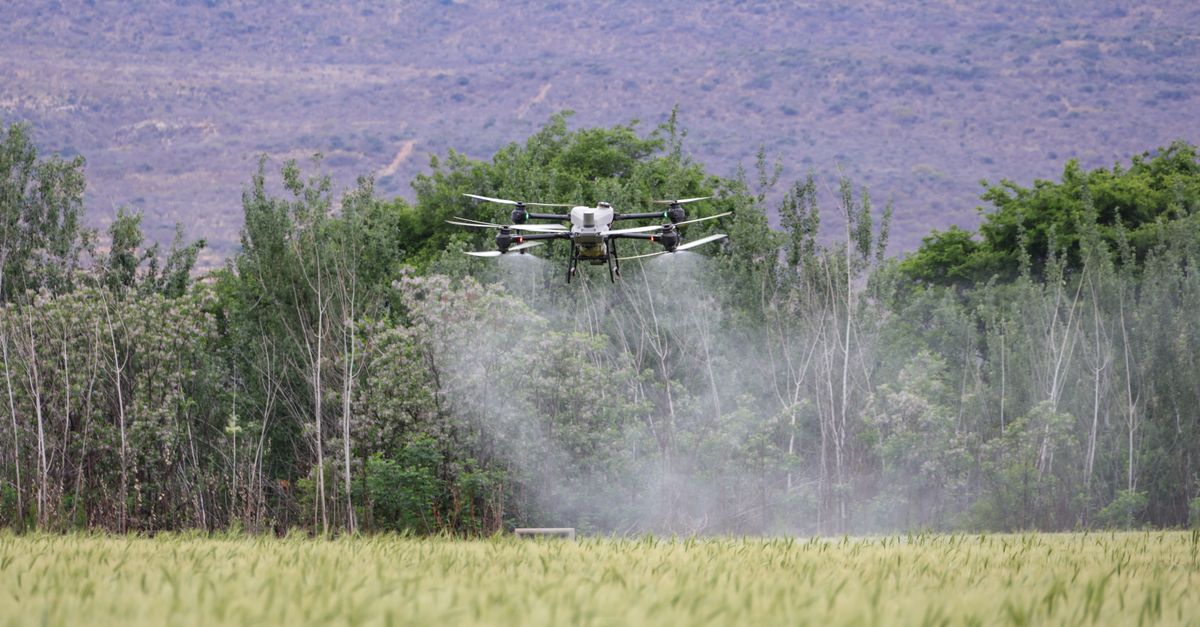
Infrastructure Inspection Drones: A Hardware-First Assessment of ideaForge and Skydio in India

Introduction: The End of Speculation
In the rapidly evolving robotics sector, the gap between capability claims and operational reality is widening. For Infrastructure Inspection Drones, the metric for success is not the flight time on a promotional video, but the reliability of thermal imaging during a 500-meter power line survey or the ability to maintain position in high-wind environments on a bridge structure. RobotWale’s editorial stance remains consistent: we grade claims by shipping hardware first, pilot deployments second, and announcements last.
This assessment focuses on two distinct players in the global drone ecosystem that have established significant footprints in India: ideaForge Technology (India-based) and Skydio (USA-based). Both companies market their solutions for infrastructure inspection, yet their value propositions differ fundamentally based on regulatory frameworks, hardware maturity, and supply chain availability.
The Hardware Grading: Shipping vs. Announcements
The drone industry suffers from a chronic 'announcement disease' where prototypes are unveiled years before mass production. For infrastructure clients—power utilities, civil engineering firms, and safety auditors—this risk is unacceptable. The following analysis prioritizes units currently in the supply chain.
When evaluating inspection drones, three hardware pillars determine viability:
- Sensor Accuracy: Thermal resolution (microns per pixel) and visible light dynamic range.
- Connectivity: Whether the drone relies on line-of-sight (LOS) radio or cellular network integration for beyond visual line of sight (BVLOS).
- Durability: IP ratings for dust and water resistance, critical for outdoor industrial environments.
Many manufacturers claim BVLOS capabilities, but actual certification in India requires adherence to the Digital Sky Platform (DSP) and DGCA (Directorate General of Civil Aviation) guidelines. Until BVLOS is fully operational in a specific zone, the hardware must be capable of stable manual or semi-autonomous control within visual range.
Case Study: ideaForge Technology
ideaForge Technology, headquartered in New Delhi, represents the most commercially mature option for the Indian infrastructure market. Their Tejas series is not merely a consumer-grade drone adapted for work; it is an industrial asset built for the Indian operational environment.
Tejas Nano and Tejas Pro Analysis
The Tejas Nano is a multi-rotor drone designed for thermal inspection. It supports the FLIR thermal sensor, allowing operators to detect hotspots in electrical substation components or overheating in wind turbines. The hardware ships with a gimbal-stabilized payload, ensuring that thermal data remains legible despite wind gusts.
The Tejas Pro (and the newer Tejas 3.0 iterations) offers a more robust airframe. It is often configured with high-resolution zoom cameras capable of identifying cracks in concrete structures from a safe distance. The key differentiator here is the ecosystem integration. ideaForge provides software that runs on local servers, reducing latency and data privacy concerns for government and defense-related infrastructure projects.
India Availability and Support
ideaForge’s primary advantage is domestic availability. Spare parts, battery replacements, and software updates are managed through local distribution channels. For a power utility company in Maharashtra or Gujarat, the logistics of maintaining a fleet of inspection drones are critical. ideaForge’s presence ensures that downtime due to supply chain disruptions is minimized.
Estimated Landed Cost: The Tejas Nano typically ranges between ₹2.5 Lakhs and ₹3.5 Lakhs (INR) depending on the payload configuration. The Tejas Pro, with extended range and higher durability, is estimated between ₹4.5 Lakhs and ₹6.5 Lakhs. These figures represent the landed cost including GST, though bulk procurement for utilities often attracts discounts.
Case Study: Skydio
Skydio Inc., based in the United States, has revolutionized the perception of drone autonomy. Their Skydio 2+ and the newer Skydio X2 are renowned for their obstacle avoidance systems, which utilize onboard AI to navigate complex environments without pilot intervention.
Autonomy vs. Regulatory Reality
Skydio’s hardware is undeniably advanced. The autonomous flight capabilities allow the drone to follow a technician or map a structure without the pilot needing to constantly manipulate the controls. For infrastructure inspection, this means a pilot can monitor a drone inspecting a bridge while standing safely on the ground. The hardware ships with advanced LiDAR and visual sensors that create 3D maps in real-time.
However, the implementation of Skydio technology in India faces significant hurdles. The data handling policies of the company, which historically involved cloud processing for autonomy, have raised concerns under India’s data sovereignty laws. While Skydio has stated efforts to localize data processing, the regulatory approval for autonomous BVLOS flights remains a bottleneck in the Indian airspace context.
Availability in the Indian Market
Unlike ideaForge, Skydio does not have a direct manufacturing footprint in India. Units are typically imported through authorized distributors or third-party vendors. This impacts the warranty and maintenance cycle. For a client purchasing a Skydio drone for infrastructure inspection, the landed cost includes significant import duties (often exceeding 20% depending on the HS code classification for drones).
Estimated Landed Cost: A Skydio 2+ or X2 unit typically costs between ₹8 Lakhs and ₹12 Lakhs (INR) on the ground in India. This price point places it out of reach for most small-to-medium enterprises (SMEs) in the construction sector, limiting its adoption to large infrastructure consultancies or defense agencies.
Infrastructure Inspection: Specific Use Cases
Not all inspection drones are created equal. The hardware requirements for inspecting a solar farm differ vastly from inspecting a high-voltage transmission tower. The following breakdown outlines the hardware requirements for specific infrastructure tasks.
Thermal Imaging for Energy Assets
For power utilities, thermal inspection is non-negotiable. Insulation failures in transformers or loose connections in transmission lines generate heat that must be detected early. Drones used here must carry sensors with a noise-equivalent temperature difference (NETD) of less than 50mK. Both the ideaForge Tejas series and Skydio X2 offer thermal payloads, but the integration depth varies. ideaForge allows for deeper software integration with local inspection reporting standards, whereas Skydio relies on its proprietary cloud ecosystem.
Visual Inspection for Civil Structures
Inspecting bridges, dams, and pipelines requires high optical zoom and stable video transmission. A drone must be able to hover at a distance of 100 meters while maintaining a video feed with a resolution of at least 4K. The Tejas Pro and Skydio X2 both support multi-axis gimbals, but the Tejas Pro’s optical stabilization is optimized for Indian wind conditions, which can be unpredictable in coastal regions.
LiDAR for Surveying
For mapping large infrastructure projects, LiDAR (Light Detection and Ranging) is essential. It measures distances to objects with laser pulses to create precise 3D models. While Skydio has integrated LiDAR into its newer X-series, it is often an add-on module. For infrastructure inspection in India, the cost-benefit analysis of adding a LiDAR module (adding ₹1.5 Lakhs to the base price) must be weighed against the actual need for 3D mapping versus simple visual inspection.
India Market Context: Pricing and Regulatory Friction
The Indian drone market is regulated under the Drones Rules, 2021 and the Digital Sky Platform. This framework impacts the acquisition and operation of inspection drones significantly.
Regulatory Compliance Costs
Operators must obtain a Unique Identification Number (UIN) for every drone. While the hardware cost is one aspect, the compliance cost includes registration fees, remote pilot training, and insurance. For infrastructure inspection, the requirement for a Remote Pilot Certificate adds to the operational overhead. ideaForge provides training modules that are often recognized within the Indian ecosystem, whereas Skydio’s training is often US-centric.
Import Duties and Supply Chain
With the government encouraging domestic manufacturing under the Production Linked Incentive (PLI) scheme for drones, imported drones face higher scrutiny. The current import duty structure for drones with a take-off weight above 2kg is significant. This has inadvertently boosted the market share of domestic players like ideaForge for commercial and industrial applications.
For infrastructure clients, this means that while imported hardware might offer superior autonomy features, the total cost of ownership (TCO) including regulatory friction and import duties often favors domestic options for routine inspections.
Conclusion: The Path Forward
The inspection drone market in India is moving past the hype cycle. The focus is now on reliability, data security, and maintenance logistics. For most Indian infrastructure inspection tasks, the ideaForge Tejas series offers the most pragmatic solution, balancing hardware capability with local support and regulatory compliance.
Skydio remains a formidable contender for high-end autonomy needs, but its current availability in India is limited by regulatory and supply chain constraints. Until the BVLOS regulations are fully democratized and data localization norms are standardized, the domestic player holds a structural advantage.
For procurement officers and engineering leads, the recommendation is clear: prioritize hardware that ships today, verify the thermal resolution specs independently, and calculate the total landed cost including regulatory overhead. The future of infrastructure inspection lies not in the fastest drone, but in the most reliable one.
References
- ideaForge Technology: https://ideaforge.com/ - Official product specifications and ecosystem documentation.
- Skydio Inc.: https://www.skydio.com/ - Product sheets for Skydio 2+ and X-series.
- Directorate General of Civil Aviation (DGCA): https://www.dgca.gov.in/ - Digital Sky Platform and Drone Rules 2021.
- Ministry of Civil Aviation: https://www.drones.gov.in/ - Official government portal for drone regulations in India.
✓ Key takeaways
- •Hands-on view of Infrastructure Inspection Drones: A Hardware-First Assessment of ideaForge and Skydio in India inside our Inspection Drones library.
- •Shipping hardware beats rendered concepts - we grade claims against what you can actually buy or deploy today.
- •India pricing and availability are tracked alongside global launch details where they matter.
References
Related articles
More in Inspection Drones →