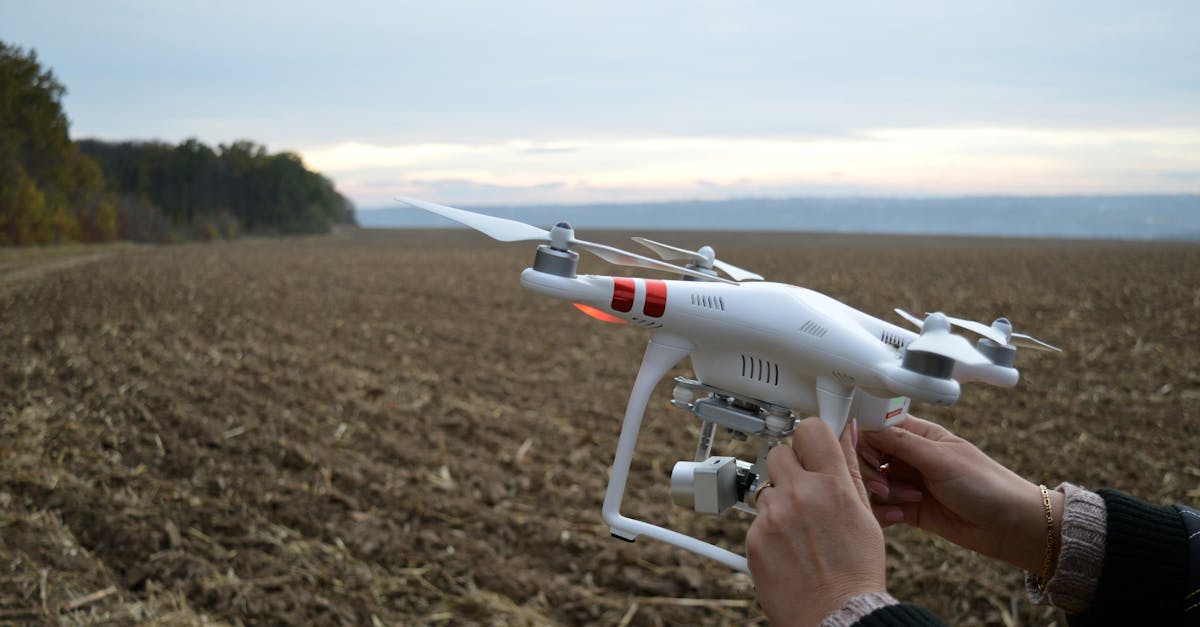
Inspection Drones in Practice: ideaForge and Skydio Hardware, Deployments, and India Availability

Hardware in Hand: Shipping Inspection Drones
ideaForge Commercial Inspection Platforms
ideaForge Systems has transitioned from defense-focused UAVs to commercially available inspection hardware through its ideaScan series and TAPAS BH-101 VTOL platforms. The ideaScan quadcopter ships with a stabilized gimbal payload bay, GPS/RTK positioning, and factory-calibrated optical sensors optimized for visual and thermal inspection of bridges, transmission lines, and industrial assets. The company has moved the ideaScan from prototype to serial production, with documented delivery to Indian power utilities and infrastructure contractors. The TAPAS BH-101, originally developed under India's TAPAS-BH program, offers fixed-wing endurance for large-scale corridor mapping, with commercial variants configured for LiDAR and multispectral payloads.
ideaForge's manufacturing footprint is domestic, with assembly and testing conducted in India. This enables direct supply chain control, faster field support, and alignment with DGCA type certification processes. The company's spec sheets emphasize modular payload integration, flight times between 45 and 90 minutes depending on configuration, and data link ranges up to 15 km for line-of-sight operations. Thermal imaging modules from FLIR and commercial-grade RGB cameras are standard options, with raw data export supporting standard photogrammetry workflows.
Skydio Autonomous Inspection Systems
Skydio's shipping inspection hardware centers on the X10 and R10 platforms, designed for autonomous obstacle-aware flight and AI-driven positioning. The X10 is a fixed-wing VTOL drone with a dedicated payload module for RGB, thermal, and LiDAR sensors, while the R10 is a multirotor variant optimized for close-proximity structural inspection. Both platforms ship with Skydio's autonomous flight stack, which uses on-device computer vision for real-time environment mapping, collision avoidance, and automated waypoint navigation without relying on GNSS signals.
Skydio's hardware includes redundant IMUs, optical flow sensors, and mesh networking capabilities for fleet coordination. The company's spec sheets list flight times of 40 to 50 minutes for the X10 and 30 to 35 minutes for the R10, with data link ranges extending up to 10 km under optimal conditions. The R10's gimbal system supports 3-axis stabilization and high-frame-rate capture for defect documentation. Skydio's software stack processes flight data through Skydio Studio and integrates with third-party photogrammetry platforms, though its core value proposition remains autonomous positioning and automated inspection routing.
Deployment Grading: Shipping Hardware, Pilots, and Announcements
Grading claims by shipping hardware first, pilot deployments second, and announcements last provides a clear view of market maturity. ideaForge's ideaScan and TAPAS BH-101 commercial variants have crossed the shipping hardware threshold, with documented deliveries to Indian state electricity boards, road construction agencies, and private infrastructure developers. Pilot deployments follow, including routine bridge inspections in Maharashtra and Karnataka, power line corridor mapping in Tamil Nadu, and industrial asset surveys in Gujarat. These deployments rely on standard operator training programs and DGCA-registered pilot licenses.
Skydio's X10 and R10 have also shipped hardware to international infrastructure clients, with pilot deployments concentrated in North America, Europe, and parts of Southeast Asia. Pilots focus on automated photogrammetry for solar farms, bridge deck mapping, and power substation inspections. Independent reporting confirms that Skydio's autonomy stack performs reliably in structured environments but requires operator intervention in complex urban canyons or high-interference RF zones. Announcements regarding future software updates, fleet management APIs, and expanded sensor partnerships remain in the public domain but have not yet translated into mass commercial deployment outside pilot networks.
The grading hierarchy remains consistent: shipping hardware proves manufacturing readiness, pilot deployments validate operational workflows, and announcements indicate strategic direction. ideaForge leads in domestic hardware delivery and pilot integration within India. Skydio leads in autonomous positioning software and international pilot validation. Both companies maintain clear boundaries between shipped units, active pilots, and public roadmaps.
India Availability, DGCA Compliance, and Landed Cost Estimates
ideaForge inspection drones are fully available in India through direct sales and authorized distributors. The company holds DGCA type certificates for its commercial platforms, enabling straightforward registration under the DGCA's Remote Pilot License framework. Domestic pricing for the ideaScan series starts at approximately ₹28,00,000 to ₹35,00,000 INR for base configurations, with thermal payload upgrades and RTK modules adding ₹3,00,000 to ₹6,00,000. Landed cost estimates for TAPAS BH-101 commercial variants range from ₹65,00,000 to ₹85,00,000 INR, depending on payload configuration and support packages. These figures are manufacturer-direct or distributor-quoted and exclude third-party software licensing.
Skydio inspection drones are not officially distributed in India through direct channels. Import requires DGCA NOC for foreign UAVs, import duty clearance, and registration under the DGCA's foreign drone framework. Third-party integrators occasionally import Skydio hardware for pilot projects, but regulatory compliance and service support remain constraints. Approximate landed cost estimates for the X10 platform range from ₹14,00,000 to ₹18,00,000 INR, and for the R10 from ₹12,00,000 to ₹15,00,000 INR. These estimates include base hardware, standard payload, import duties, and logistics, but exclude software licensing, training, and domestic service contracts. Prices are clearly flagged as estimates and subject to exchange rate fluctuations and customs policy changes.
Technical Specifications and Operational Constraints
Inspection drone selection depends on payload requirements, flight environment, and data processing workflows. ideaForge platforms prioritize modular payload integration, domestic regulatory alignment, and straightforward operator training. The ideaScan's gimbal system supports rapid camera angle adjustments for structural defect documentation, while the TAPAS BH-101 offers extended endurance for corridor mapping. Both platforms export data in standard formats compatible with Agisoft Metashape, Pix4D, and open-source photogrammetry stacks.
Skydio platforms prioritize autonomous positioning and AI-driven flight routing. The R10's multirotor design enables close-proximity inspection of complex geometries, while the X10's fixed-wing architecture supports large-area mapping. Skydio's software stack automates waypoint generation, obstacle avoidance, and data stitching, reducing manual flight planning. However, the autonomy stack requires regular firmware updates, and hardware service relies on international support channels or authorized third-party technicians.
Operational constraints apply to both platforms. ideaForge drones require line-of-sight operation under current DGCA rules, with beyond visual line of sight (BVLOS) permissions granted only through pilot waivers. Skydio drones operate autonomously but remain subject to DGCA registration, pilot licensing, and airspace restrictions. Both platforms face payload weight limitations, environmental sensitivity to wind and precipitation, and data processing demands that require dedicated workstations or cloud infrastructure.
References
- ideaForge Systems. ideaScan Inspection Drone. Official product specifications and payload options.
- ideaForge Systems. TAPAS BH-101 VTOL Platform. Technical documentation and commercial configuration details.
- Skydio. Skydio X10. Official hardware specifications, payload compatibility, and flight performance data.
- Skydio. Skydio R10. Official hardware specifications, autonomy stack details, and inspection workflow documentation.
- Skydio. Press Releases and Product Announcements. Public documentation regarding deployment pilots and software updates.
- DGCA. Digital Sky Platform and UAV Registration Framework. Regulatory requirements for domestic and foreign inspection drones in India.
✓ Key takeaways
- •Hands-on view of Inspection Drones in Practice: ideaForge and Skydio Hardware, Deployments, and India Availability inside our Inspection Drones library.
- •Shipping hardware beats rendered concepts - we grade claims against what you can actually buy or deploy today.
- •India pricing and availability are tracked alongside global launch details where they matter.
References
Related articles
More in Inspection Drones →