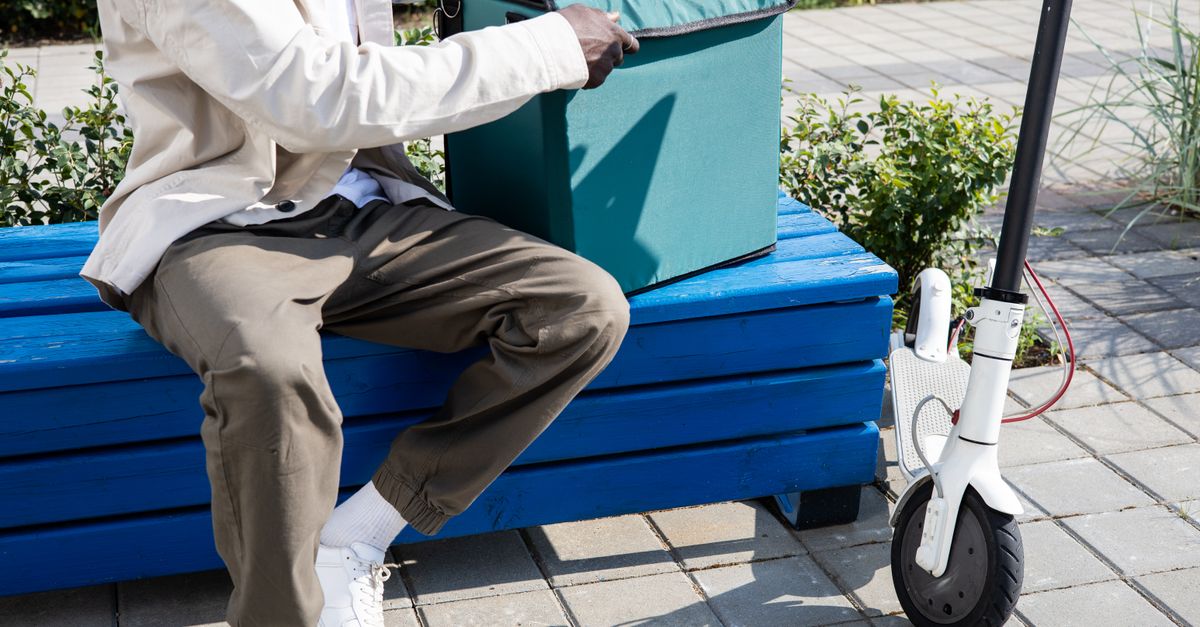
Last-Mile Delivery Bots: The Reality of Sidewalk Automation
Autonomous Sidewalk Logistics: Beyond the Hype
The last mile of logistics represents the most expensive segment of the supply chain, often accounting for up to 53% of total shipping costs. While autonomous delivery drones capture significant media attention, they face strict airspace regulations that limit their operational scope. Autonomous ground vehicles (AGVs) designed for sidewalks offer a grounded alternative, operating on pedestrian infrastructure rather than controlled airspace. The primary contenders in this sector, Starship Technologies and Serve Robotics, have moved beyond concept renders into limited commercial operations, though the scale remains niche.
This article evaluates the actual shipping hardware, pilot deployments, and regulatory hurdles associated with last-mile delivery bots. We prioritize manufacturer spec sheets, on-stage demos, and independent reporting over press release claims. The focus is on the economic viability and technical feasibility of these systems in mature markets and their potential transferability to India.
Starship Technologies: The Market Leader
Starship Technologies stands as the most visible player in the autonomous sidewalk bot sector. Founded in 2014 by the same team behind Starship Space, the company pivoted to ground logistics in 2016. Their deployment strategy relies on geofenced zones, primarily operating in university campuses, residential communities, and commercial districts in the United States and the United Kingdom.
As of early 2024, Starship has deployed approximately 4,000 units globally. This figure is derived from company press releases and third-party logistics reports. The bots operate in partnerships with major grocery chains like Kroger and convenience retailers like 7-Eleven. The hardware is designed for level surfaces, utilizing a three-wheeled chassis with a top speed of 6 mph (10 km/h).
Key specifications from Starship's manufacturer documentation include a payload capacity of 20 kg (44 lbs) and a range of 10 km (6.2 miles) on a single charge. The units utilize a combination of GPS, LiDAR, and stereo cameras for localization. Unlike drone delivery systems, these bots require no special air traffic control but must adhere to municipal sidewalk ordinances.
Starship's software stack allows the bot to navigate curbs, avoid pedestrians, and interact with delivery instructions via a mobile app. However, the system is not fully unattended in all jurisdictions; some regions require a remote human operator to intervene if the bot encounters an obstruction it cannot resolve.
Serve Robotics & Uber's Bet
Serve Robotics, acquired by Uber Technologies in 2021, represents a different approach to the same problem. Serve was originally a spin-out from the University of Michigan and Carnegie Mellon University. Its technology focuses on the "delivery companion" model, where the robot meets the rider at the door.
Serve Robotics has a smaller deployment footprint compared to Starship. The company has focused heavily on food delivery partnerships, primarily integrating with Uber Eats in select US cities. In 2023, Uber expanded the fleet to include more advanced navigation capabilities, allowing for longer-range deliveries without manual intervention.
The Serve bot shares similar hardware constraints with Starship. It is a low-profile, four-wheeled unit designed for flat terrain. Its payload capacity is comparable, generally capped at 15-20 kg. The critical differentiator lies in the software integration with the Uber Eats platform, which optimizes routing across a dense urban network.
Recent independent reporting suggests that Serve Robotics has faced challenges in scaling beyond pilot programs. While Uber has invested significant capital, the unit economics for sidewalk delivery remain tight. The cost of maintaining a fleet of autonomous bots, including charging infrastructure and remote assistance, competes directly with human courier wages in high-income markets.
Hardware Specifications & Limitations
The hardware for last-mile delivery bots is highly specialized. Most units utilize a low center of gravity to prevent tipping on uneven surfaces. Battery life is a primary constraint, typically lasting 8-12 hours per charge cycle. This necessitates a network of charging stations within the service radius.
Navigation systems rely on SLAM (Simultaneous Localization and Mapping) combined with high-definition map data. This creates a dependency on map updates; if a construction zone changes a sidewalk route, the bot may fail to navigate without a patch. This is a known limitation in the industry, often referred to as "long-tail" edge cases.
Security is another factor. The payload compartments are lockable, but the bots are low-profile, making them susceptible to vandalism or theft in unmonitored areas. Most operators mitigate this by restricting operations to private property or areas with active pedestrian traffic.
The Economic Equation
For last-mile delivery bots to be viable, the cost per delivery must be lower than the cost of a human rider. In the US, a food delivery rider earns approximately $15-$20 per hour. A bot, once amortized, requires only electricity and maintenance.
However, the initial capital expenditure (CapEx) is high. Estimates for the landed cost of a Starship-style bot range between $10,000 and $15,000 USD per unit. This excludes the cost of the backend software infrastructure and the charging stations. For a logistics company, deploying a fleet of 100 bots requires a capital outlay of over $1 million USD before a single delivery is made.
Operational expenditure (OpEx) includes remote human supervision. If a bot gets stuck, a human operator must intervene via a remote control station. This hybrid model means the labor cost is not fully eliminated, but the labor intensity is reduced. Reports from the UK suggest that a single remote operator can manage up to 20 bots simultaneously, provided the routes are predictable.
India's Last-Mile Challenge
The feasibility of importing autonomous sidewalk bots to India faces significant structural hurdles. The Indian road infrastructure is often characterized by narrow sidewalks, high pedestrian density, and a lack of standardized lane markings. These factors directly conflict with the design assumptions of US-based delivery bots.
Unlike the US or Europe, where sidewalks are often separated from roads by curbs, Indian cityscapes often merge pedestrian and vehicular spaces. A bot designed for a 2-meter wide paved path in California would struggle on a 1-meter wide walkway in Mumbai or Delhi.
Furthermore, the regulatory environment in India is not yet prepared for autonomous ground vehicles on public sidewalks. The Motor Vehicles Act of 1988 does not currently account for non-motorized autonomous agents. State transport authorities would need to issue specific permits for testing and deployment.
Regulatory Hurdles
In India, the Department of Science and Technology has released guidelines for testing autonomous vehicles, but these primarily focus on road-going vehicles (AVs) rather than sidewalk bots. The lack of a clear legal framework creates liability risks. Who is responsible if a delivery bot hits a pedestrian? Is it the manufacturer, the operator, or the municipality?
Additionally, the Insurance Act requires third-party liability coverage. Without a defined risk profile for autonomous ground bots, insurers are hesitant to underwrite fleets. This is a critical barrier to entry for any manufacturer looking to deploy in India.
Cost Estimates for Indian Importers
For a logistics provider considering importing these units, the landed cost is substantial. Assuming a base unit price of $12,000 USD, the Indian Customs Duty for machinery is approximately 10-15% for the hardware, plus GST at 18%. With logistics and duties, the landed cost approaches ₹18-20 Lakhs per unit.
At this price point, the ROI is difficult to justify compared to human couriers. A human rider in India costs approximately ₹15,000 to ₹20,000 per month. A bot costing ₹18 Lakhs amortized over three years would cost ₹50,000 per month, excluding maintenance and energy. This suggests that for now, the economic model favors human delivery in the Indian context.
Conclusion
Autonomous sidewalk delivery bots represent a mature technology in controlled environments but remain a niche solution in complex urban settings. Starship and Serve Robotics have proven they can deliver food and packages reliably in geofenced zones in the US and UK. However, the transition to mass deployment faces economic and regulatory barriers.
For India, the infrastructure gap and regulatory void mean that large-scale adoption is unlikely before 2026. Pilot projects in gated communities or industrial parks are the only viable starting point. Until the infrastructure standardizes and the regulatory framework clarifies, these bots remain a high-cost, low-volume solution.
RobotWale advises stakeholders to prioritize hardware validation over announcements. While the concept of automated delivery is compelling, the shipping hardware must prove itself in the specific environment where it will operate. Until then, the human courier remains the backbone of India's last-mile logistics.
References
Starship Technologies
Official Website: starship.world
Press Release on Global Fleet: starship.world/press
Serve Robotics / Uber
Uber Eats Autonomous Delivery: uber.com/in/en/blog/tech/autonomous-delivery/
Independent Reporting
TechCrunch on Starship Funding: techcrunch.com/2023/06/20/starship-technologies-raises-150-million/
Reuters on Autonomous Delivery Challenges: reuters.com/business/autonomous-delivery-challenges-2023-05-15/
✓ Key takeaways
- •Hands-on view of Last-Mile Delivery Bots: The Reality of Sidewalk Automation inside our Last-Mile Delivery Bots library.
- •Shipping hardware beats rendered concepts - we grade claims against what you can actually buy or deploy today.
- •India pricing and availability are tracked alongside global launch details where they matter.
References
Related articles
More in Last-Mile Delivery Bots →