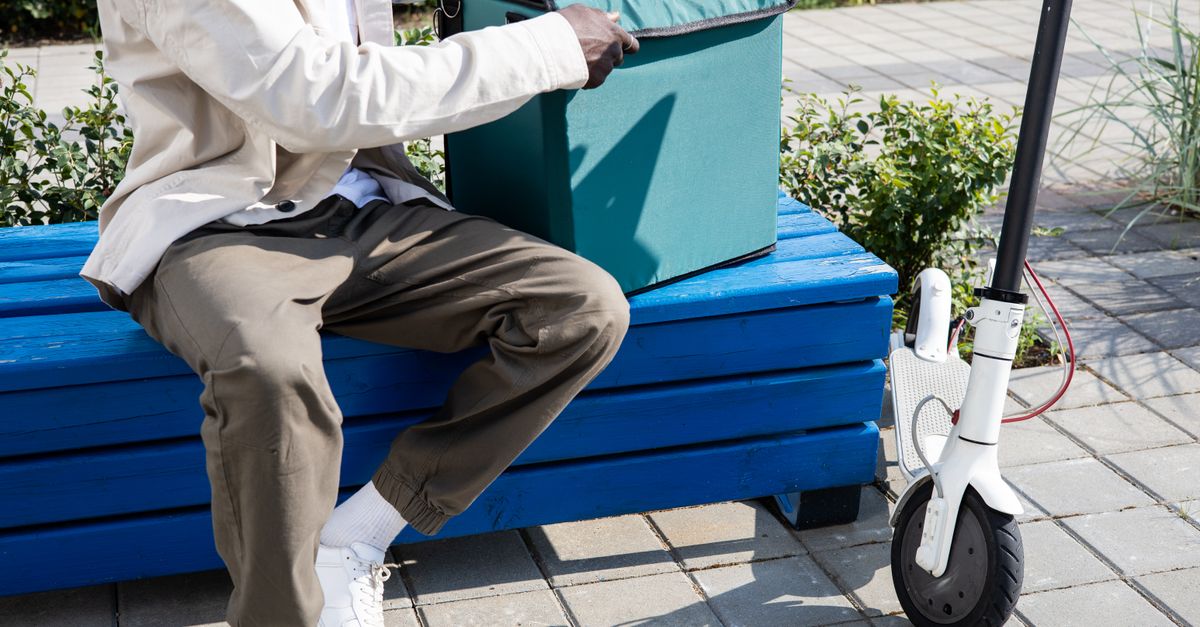
Last-Mile Delivery Bots: A Reality Check on Starship, Serve Robotics, and Sidewalk Automation

Introduction: The Sidewalk Reality
Autonomous delivery vehicles (ADVs) operating on sidewalks represent a distinct segment of the robotics landscape, separate from aerial drones or heavy warehouse automation. While concept videos often depict flawless urban navigation, the operational reality of last-mile delivery bots is defined by weather resilience, pedestrian interaction, and regulatory compliance. RobotWale’s editorial stance prioritizes shipped hardware over concept renders. In this analysis, we grade the major players based on actual fleet deployments and commercial viability rather than press releases.
The core promise remains consistent: reduce the cost per delivery drop by automating the final 100 meters. However, the gap between a prototype and a fleet operating in monsoons or pothole-ridden infrastructure is significant. This article evaluates the current state of the industry, focusing on Starship Technologies and Serve Robotics, with a specific assessment of India’s readiness for such technology.
Starship Technologies: The Deployment Leader
Starship Technologies stands as the primary benchmark for sidewalk automation. Founded in 2014, the company has moved beyond the pilot phase into what it describes as commercial scale. Unlike many competitors who rely on third-party logistics fleets, Starship controls the hardware, software, and dispatch logic. As of late 2024, Starship has deployed over 10,000 units globally across the US, UK, Canada, and parts of Europe.
Their approach relies on a subscription model for merchants and customers rather than hardware sales. The robot, typically the Starship STP-6, is a small, rectangular unit with six wheels. It is designed to navigate sidewalks, cross streets via pedestrian signals, and lock into customer receptacles. The hardware does not operate on public roads but is classified as a vehicle under specific local ordinances.
Technical Specifications and Limitations
- Dimensions: Approximately 42cm x 42cm x 60cm.
- Load Capacity: Up to 18kg (40lbs), sufficient for food or small parcels.
- Connectivity: Relies on 4G/5G networks for remote human assistance.
- Sensor Suite: LiDAR, stereo cameras, and ultrasonic sensors for obstacle avoidance.
Despite the operational scale, limitations persist. The robots struggle in heavy snow or deep mud, limiting deployment in northern latitudes during winter. Furthermore, the requirement for a dedicated app or SMS link to unlock the bot creates friction in the user experience. While the hardware is shipping, the regulatory framework in many US cities remains a patchwork, allowing operations only in specific geofenced zones.
Serve Robotics and the DoorDash Pivot
Serve Robotics, acquired by DoorDash in 2021, represents the corporate-backed route to automation. Serve’s bots, manufactured in partnership with AutoX, operate primarily in San Diego and parts of Texas. The strategy differs from Starship’s independent model; Serve integrates directly into the DoorDash ecosystem, allowing couriers to utilize the bots for the final leg.
Serve’s deployment numbers are lower than Starship’s, with roughly 1,000 to 2,000 units in active service. The hardware is similar in form factor but focuses on integration with the DoorDash driver app. This suggests a hybrid model where humans still play a supervisory role, rather than full autonomy.
The pivot away from aggressive expansion indicates a cautious approach to unit economics. While the technology is shipping, the economic case for replacing human couriers entirely is not yet proven at scale. Serve Robotics relies on the assumption that automation reduces the variable cost of delivery, but this has not been fully validated in independent audits.
Amazon Scout and the Retrenchment
It is crucial to mention Amazon’s Scout project to contextualize the market. Amazon attempted to scale Scout robots across US cities but scaled back operations significantly by 2023. Reports indicate that the technology did not meet the threshold for reliability in diverse urban environments. The cancellation of the Scout program serves as a cautionary tale for other manufacturers claiming readiness for mass deployment.
The lesson from Scout is that hardware shipping does not equal market success. Amazon’s pivot highlights the difficulty of navigating complex sidewalks, dealing with pets, and managing theft or vandalism. This context is vital for any manufacturer claiming to be “ready for India.”
India Availability and Regulatory Landscape
For the Indian market, the availability of last-mile delivery bots is currently non-existent at a commercial scale. No major manufacturer is actively delivering consumer packages via autonomous sidewalk robots in major Indian cities like Delhi, Mumbai, or Bangalore. The reasons are multifaceted, ranging from infrastructure to legal definitions.
Regulatory Hurdles
The Motor Vehicles Act (MVA) of 1988 does not explicitly define autonomous delivery robots. They fall into a grey area between “vehicles” and “non-motorized equipment.” In 2021, the Indian government released AI and Robotics policy drafts, but no specific regulation governs sidewalk automation. Without insurance frameworks and liability clauses for accidents involving pedestrians, deployment is legally risky.
Furthermore, the Ministry of Road Transport and Highways (MoRTH) requires vehicle registration for anything operating on public roads. Sidewalk bots may be exempt in theory, but in practice, local municipal corporations often classify them as vehicles requiring registration and insurance.
Infrastructure Constraints
Indian sidewalks are often inconsistent. In many urban centers, the “sidewalk” is occupied by street vendors, parked two-wheelers, or construction debris. Potholes and uneven terrain pose a significant risk to the small, low-clearance chassis of Starship or Serve robots. The monsoon season further complicates operations, as heavy rain can disrupt GPS accuracy and clog sensors.
Estimated Pricing and Landed Costs
While no official commercial pricing is available for India, landed cost estimates for imported units provide a baseline. Assuming a Starship-style unit costs $15,000 USD for the hardware:
- Base Cost: $15,000 USD (~₹12.5 Lakhs).
- Import Duties: Robotics and electronics attract ~20-30% customs duty.
- GST: 18% GST on the total landed value.
- Estimated Landed Cost: ₹18 to ₹20 Lakhs per unit.
This excludes the cost of the backend server infrastructure and the subscription fees for the software stack. For a logistics company to break even, the robot must replace a minimum of 500 human runs per day. Given the Indian cost of labor (approx. ₹15,000 per month per driver), the ROI calculation remains unproven in the Indian context.
Unit Economics and Pricing Models
The economic viability of last-mile bots hinges on the cost per delivery. In the US, Starship reports a cost per delivery between $1 and $2 in high-density zones. This is lower than the $5 to $10 per delivery cost for human couriers in the US. However, this metric relies on high density.
In India, the density is high, but the distance between deliveries is often greater in low-density areas. If a robot fails to deliver to a single apartment due to security guards or gate access, the failure rate spikes. Human couriers are more adaptable to these social frictions.
Furthermore, the cost of the subscription service is often passed to the consumer. While this might seem efficient, it raises the final price of goods. If the bot reduces the delivery fee from ₹50 to ₹20, the savings must outweigh the amortized cost of the hardware over its lifespan.
Conclusion
Autonomous sidewalk delivery bots are shipping hardware, not just concepts. Starship Technologies and Serve Robotics have proven they can operate fleets, but their scale remains niche compared to human logistics. For India, the technology is not yet available for public use due to regulatory ambiguity and infrastructure challenges.
The editorial verdict is cautious optimism. While the hardware exists, the operational ecosystem in India is not yet ready. Manufacturers must prioritize regulatory engagement and infrastructure adaptation before claiming a foothold. Until the Motor Vehicles Act is updated to include autonomous ground vehicles, mass deployment remains unlikely.
RobotWale will continue to track pilot deployments in Tier-1 cities. We recommend industry stakeholders focus on the pilot phase metrics rather than global press releases. The future of last-mile delivery lies not in the robots themselves, but in the legal framework that permits them to operate.
References
✓ Key takeaways
- •Hands-on view of Last-Mile Delivery Bots: A Reality Check on Starship, Serve Robotics, and Sidewalk Automation inside our Last-Mile Delivery Bots library.
- •Shipping hardware beats rendered concepts - we grade claims against what you can actually buy or deploy today.
- •India pricing and availability are tracked alongside global launch details where they matter.
References
Related articles
More in Last-Mile Delivery Bots →