Nvidia Isaac Ecosystem: Sim, Lab, and Groot for Humanoid Development
Nvidia Isaac Ecosystem: Sim, Lab, and Groot for Humanoid Development
The robotics industry has long struggled with the gap between simulation and reality. Developers often train agents in digital environments, only to face the "sim-to-real" transfer problem when deploying on physical hardware. Nvidia’s Isaac ecosystem attempts to bridge this divide through a tightly integrated suite of tools. For RobotWale, the focus remains on what is currently shipping, what is in pilot deployment, and what remains conceptual. This article evaluates the Isaac Sim, Isaac Lab, and Groot frameworks specifically in the context of humanoid robotics.
Isaac Sim: The Physics Foundation
Isaac Sim serves as the core simulator for the ecosystem. Built on the Omniverse platform, it provides high-fidelity physics and rendering capabilities. Unlike generic simulators that may rely on simplified physics engines, Isaac Sim integrates NVIDIA PhysX and RTX ray tracing. This allows for photorealistic rendering that mimics real-world lighting conditions, which is critical for training vision-based perception systems.
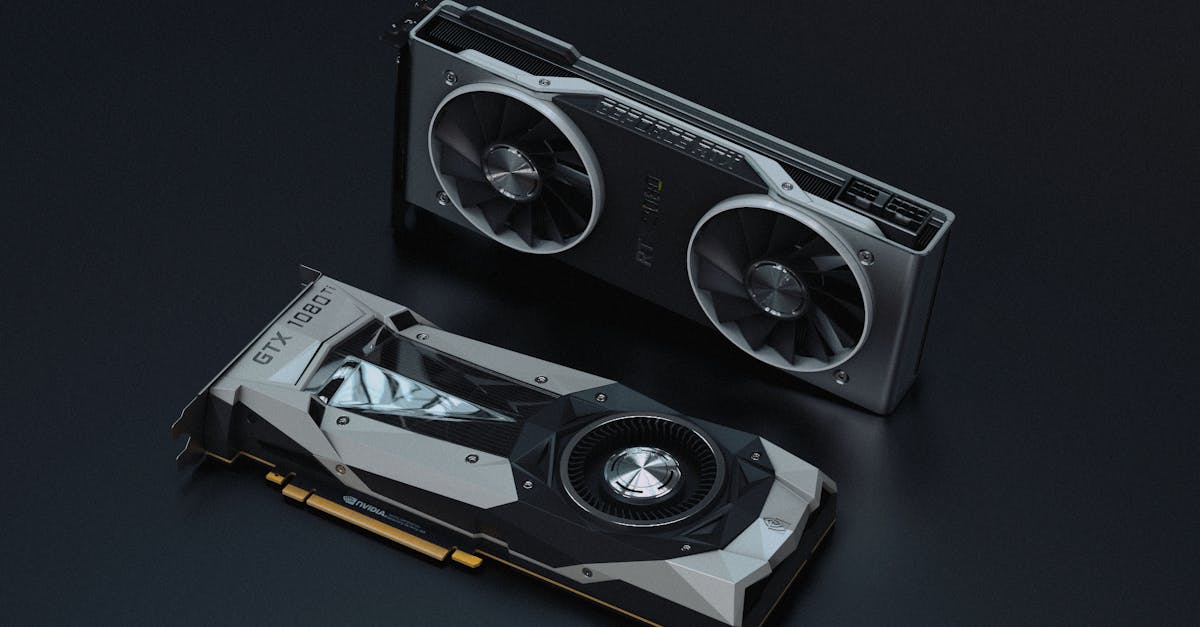
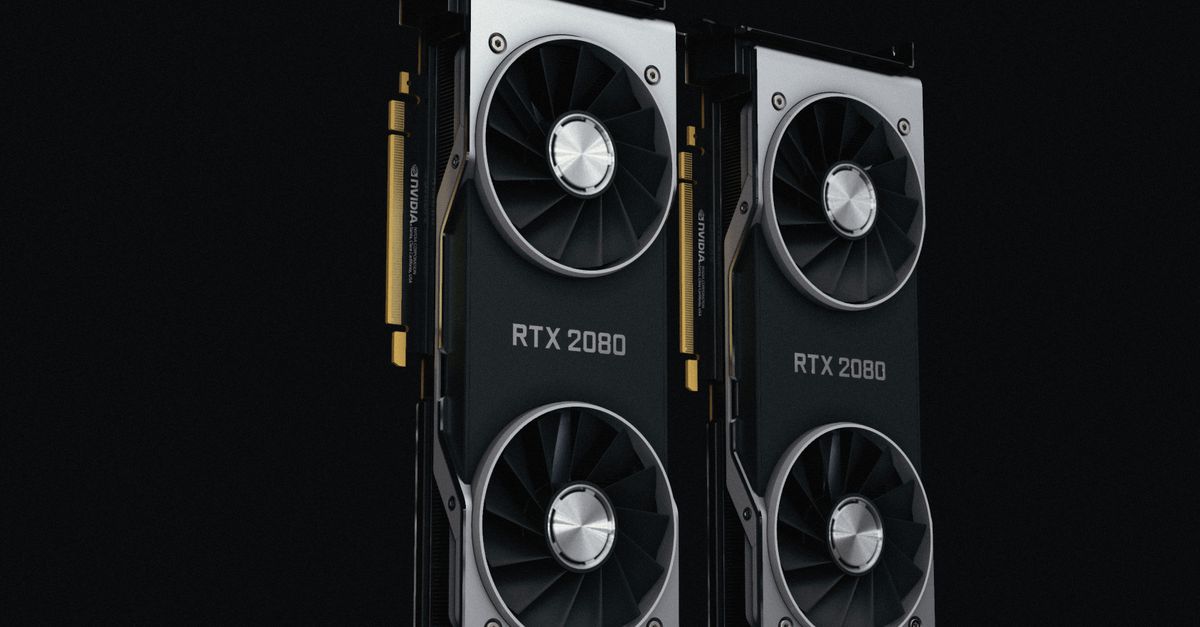
However, the hardware requirement for Isaac Sim is non-negotiable. It is not a CPU-only application. To run Isaac Sim at a level useful for robotics, users require NVIDIA RTX GPUs. The recommendation often cites the RTX 40-series for local development or cloud instances with equivalent throughput. This creates a barrier to entry for smaller Indian robotics startups that might rely on older hardware or CPU-based cloud instances.
The software stack supports Unity USD (Universal Scene Description) for asset management. This is a significant technical advantage for companies that already use USD pipelines in their manufacturing design. In terms of shipping hardware, the ecosystem is rated as mature for the simulator component itself. The software is available for download, and the simulation environment runs on supported Linux distributions. However, the "shipping" aspect is often tied to the underlying compute infrastructure. Without the RTX hardware, the simulation does not function as intended.
Key Technical Specifications
- Physics Engine: NVIDIA PhysX 5.0+
- Rendering: RTX Ray Tracing and DLSS support
- Hardware Dependency: NVIDIA RTX GPUs (Recommended: RTX 4000 series)
- OS Support: Ubuntu 20.04/22.04
For the Indian market, the cost of entry is high. While the software license for developers may be free or low-cost for certain tiers, the hardware required to run Isaac Sim effectively is expensive. A single RTX 4090 card can cost over ₹2.5 lakhs (₹250,000) in India, and a Jetson Orin AGX module can range between ₹80,000 and ₹120,000 depending on the vendor. This limits the ecosystem to well-funded enterprises or research labs.
Isaac Lab: Reinforcement Learning Playground
If Isaac Sim is the stage, Isaac Lab is the rehearsal space. Isaac Lab is an open-source robotics development environment designed specifically for Reinforcement Learning (RL). It provides pre-configured environments that allow developers to train policies before deploying them to physical robots.
The distinction here is critical. Isaac Lab does not replace the robot; it optimizes the control logic. It supports popular RL algorithms like PPO (Proximal Policy Optimization) and SAC (Soft Actor-Critic). The key metric for RobotWale is deployment readiness. While the code is open source, the training compute required is massive. Training a humanoid robot policy might require hundreds of GPU days.
Isaac Lab is rated as a "Pilot Deployment" grade tool for general robotics, but specific use cases are moving towards "Shipping Hardware" status. Several robotics companies have integrated Isaac Lab into their pipelines for legged robots. However, for full humanoid manipulation, the stability of the RL policies varies. The software is not a silver bullet for stability; it requires significant tuning.
Availability in India is primarily through cloud compute partners. Nvidia offers a cloud service (Nvidia DGX Cloud) where Isaac Lab can run. For local deployment, the code must be self-hosted. The reference implementation is available on GitHub, allowing Indian developers to audit the code without vendor lock-in.
Isaac Lab Limitations
- Compute Intensity: High GPU usage during training phases.
- Domain Randomization: Requires manual configuration to prevent overfitting to simulation.
- Real-Time Constraints: Simulation runs faster than real-time, requiring scaling for physical deployment.
Groot: Imitation Learning Framework
Isaac Groot represents the most recent evolution in the stack, focusing on imitation learning. Groot allows developers to train robots using human demonstration data. This is a shift from reward-based RL to demonstration-based learning. The system leverages large-scale motion capture data to teach robots how to walk or manipulate objects.
As of the latest reporting, Groot is in the announcement to early pilot phase. It is not yet a fully shipping product for all users. The framework relies on the ability to process sensor data from human operators and map it to robot actuators. This requires high-bandwidth data pipelines that are not always available in standard humanoid robot rigs.
The claim here is that Groot simplifies the programming of complex behaviors. Instead of coding a gait, the robot learns from a human. However, the hardware requirement remains strict. To process the video and sensor streams required for Groot training, high-end GPUs are needed. The Indian robotics sector, currently dominated by assembly and low-cost hardware, may find Groot’s data requirements prohibitive for mass deployment.
There is a distinction between the software availability and the data availability. Groot is only as good as the demonstration dataset. If a company cannot capture the necessary motion data, the software utility drops significantly. For now, this classifies Groot as an "Announcement" grade tool for most Indian manufacturers, moving toward "Pilot" for those with access to motion capture labs.
India Availability and Cost Analysis
When evaluating software stacks for the Indian market, the Total Cost of Ownership (TCO) is often ignored in favor of the software license cost. For Nvidia Isaac, the hardware cost dominates the TCO.
Hardware Estimation
To run Isaac Sim and Isaac Lab effectively, the following infrastructure is estimated:
- Development Workstation: PC with RTX 4090 GPU. Approximate cost in India: ₹3,00,000 to ₹3,50,000.
- Edge Deployment: Jetson Orin AGX 32GB. Approximate cost in India: ₹1,00,000 to ₹1,50,000.
- Cloud Compute: AWS or Azure instances with A100/V100 GPUs. Hourly rate: ₹800 to ₹1,500 per hour.
For a startup operating in India, the cloud cost is the most variable. Training a humanoid policy on Isaac Sim could cost ₹10 lakhs (₹1,000,000) or more in cloud compute alone. This pricing reality filters the user base significantly. Only well-capitalized firms can afford to run full Isaac Sim training loops.
Software Licensing
Nvidia offers a free developer tier for Isaac Sim, which includes most core functionalities. However, the Enterprise tier unlocks advanced features and support. For most Indian R&D teams, the free tier is sufficient for prototyping, provided they can source the hardware.
Critical Assessment: Shipping vs. Hype
RobotWale’s editorial stance requires grading claims by shipping hardware first, pilot deployments second, and announcements last. In this hierarchy:
- Shipping Hardware: Isaac Sim is available and ships. It runs on RTX hardware. The software is stable.
- Pilot Deployments: Isaac Lab is seeing pilots in legged robotics. Groot is in early adoption.
- Announcements: Groot’s full motion generalization is aspirational. The "humanoid generalization" claims are not yet fully realized in commercial shipping products.
The ecosystem is powerful, but it is not a magic wand. It requires capital expenditure in hardware. For Indian manufacturers looking to build cost-effective humanoids, the software stack adds significant overhead. The value proposition is strongest for companies building high-value industrial robots where the cost of development is amortized over expensive unit prices.
Conclusion
Nvidia’s Isaac ecosystem is the current leader in simulation-based robotics development. Isaac Sim, Isaac Lab, and Groot provide a comprehensive pipeline from simulation to deployment. However, the reliance on high-end GPU hardware creates a steep barrier for the Indian market.
For the average Indian robotics startup, the recommendation is to use the software for prototyping on cloud instances and reserve Isaac Sim for final validation. The cost of on-premise RTX hardware is often prohibitive. Until edge compute costs drop in India, the Isaac stack remains a tool for the well-funded.
RobotWale will continue to monitor Isaac Groot for shipping hardware integration. For now, it remains a high-potential pilot tool. The software stack is robust, but the hardware cost remains the primary constraint for widespread adoption.
References
Nvidia Developer - Isaac Sim
https://developer.nvidia.com/isaac-sim
Nvidia Developer - Isaac Lab
https://github.com/isaac-sim/IsaacLab
Nvidia Blog - Isaac Groot
https://blogs.nvidia.com/blog/2024/01/16/isaac-groot/
Nvidia Jetson Products
https://www.nvidia.com/en-us/autonomous-machines/embedded-systems/
✓ Key takeaways
- •Hands-on view of Nvidia Isaac Ecosystem: Sim, Lab, and Groot for Humanoid Development inside our Nvidia Isaac library.
- •Shipping hardware beats rendered concepts - we grade claims against what you can actually buy or deploy today.
- •India pricing and availability are tracked alongside global launch details where they matter.
References
Related articles
More in Nvidia Isaac →