Nvidia Isaac Stack: Reality Check on Simulation, Learning, and Teleoperation for Indian Robotics
The Nvidia Isaac Ecosystem Defined
When Nvidia introduced Isaac Sim, Isaac Lab, and Groot, the robotics industry saw a potential leap forward in autonomy. However, RobotWale evaluates technology not by what it promises in a keynote, but by what it delivers in a pilot. Nvidia Isaac is a suite of tools designed to accelerate the development of embodied AI, specifically for humanoid and mobile robots. While the marketing suggests a plug-and-play path to autonomy, the reality involves significant computational overhead, licensing costs, and the persistent Sim2Real gap.
Isaac Sim remains the core rendering and physics engine. Isaac Lab focuses on reinforcement learning (RL) workflows. Groot introduces teleoperation and imitation learning capabilities for humanoid data capture. For Indian robotics firms, the question is not whether the software exists, but whether the infrastructure to run it is economically viable. The ecosystem is robust, but the entry barrier is high.
Unlike open-source frameworks, Isaac Sim requires a subscription or license tied to hardware. This creates a dependency on Nvidia hardware ecosystems. For startups in India, where capital is scarce, this creates a friction point. We grade the ecosystem as mature software, but one that demands hardware validation before deployment.
Isaac Sim: Rendering Physics or Just Pretty Graphics?
Isaac Sim is built on Omniverse, leveraging ray tracing and physics engines to create digital twins. It supports NVIDIA PhysX for rigid body dynamics and NVIDIA Warp for soft body physics. While the visual fidelity is high, the utility depends on accurate sensor simulation. Manufacturers often claim their robots work because they "trained in Isaac," but verification requires physical testing.
The engine supports CUDA cores for parallel processing, allowing complex simulations to run faster than real-time. This is critical for training reinforcement learning agents. However, the rendering pipeline demands dedicated hardware. A standard workstation may not suffice. We grade Isaac Sim as a mature software tool, but one that requires specific hardware validation before deployment.
Simulation Validity
Isaac Sim claims to support ROS2 out of the box. This is a significant advantage for developers using the Robot Operating System. However, the latency between the simulated environment and the physical controller remains a variable. Indian startups must validate the physics parameters against their specific mechanical setups. The software does not guarantee that a simulated walk will succeed on a real robot.
Recent updates to Isaac Sim have improved the sensor fidelity. Cameras can now simulate noise and occlusion more accurately. LIDAR simulates point cloud noise. This brings it closer to reality. However, the underlying physics engine still relies on approximations. For safety-critical applications, this gap must be closed with physical testing.
Isaac Lab: Reinforcement Learning for Deployment
Isaac Lab is designed to streamline the training of robotic policies. It provides a framework for reinforcement learning, allowing developers to train agents in parallel. The key feature is the ability to run thousands of simulations simultaneously. This accelerates the discovery of successful behaviors.
For humanoid robots, this is crucial. Training a legged robot to walk requires millions of steps. Isaac Lab optimizes this process. However, the training data generated in simulation often fails to transfer to the physical world. This is the Sim2Real problem. Developers must use domain randomization to bridge the gap.
Training Efficiency
Isaac Lab supports curriculum learning. This means the robot learns simple tasks before complex ones. While this reduces training time, it does not eliminate the need for physical fine-tuning. The software provides the sandbox, but the physical prototype provides the safety. We grade Isaac Lab as a pilot-grade tool, essential for research but not a deployment guarantee.
The integration with PyTorch is native. This allows for easy transfer of models to production code. However, the computational cost is high. Training a humanoid policy can take weeks on a single GPU. This requires a cluster. For Indian firms, a DGX system is the standard reference.
Groot: Teleoperation and Humanoid Behavior
Groot is Nvidia's recent addition to the Isaac family. It focuses on teleoperation and imitation learning. The system allows users to control a robot remotely and record the actions. These recordings are then used to train the robot to replicate the behavior autonomously.
This approach reduces the need for complex hand-coding of behaviors. Instead, the robot learns by watching. This is a promising direction for humanoid development. However, the latency of the teleoperation link is critical. If the network lags, the recorded data becomes noisy.
Hardware Requirements
Groot requires low-latency control. This often means edge computing hardware. For Indian developers, this means local processing is mandatory. Cloud processing introduces too much delay for real-time control. The system is best run on NVIDIA Jetson Orin or similar edge devices.
The Groot software stack includes a motion generator. This allows the robot to adapt to terrain changes. While this is impressive in demos, the robustness in real-world conditions is unproven. Indian robotics firms must test Groot on their own hardware fleets before trusting it.
Hardware Barriers: What Runs Isaac in India?
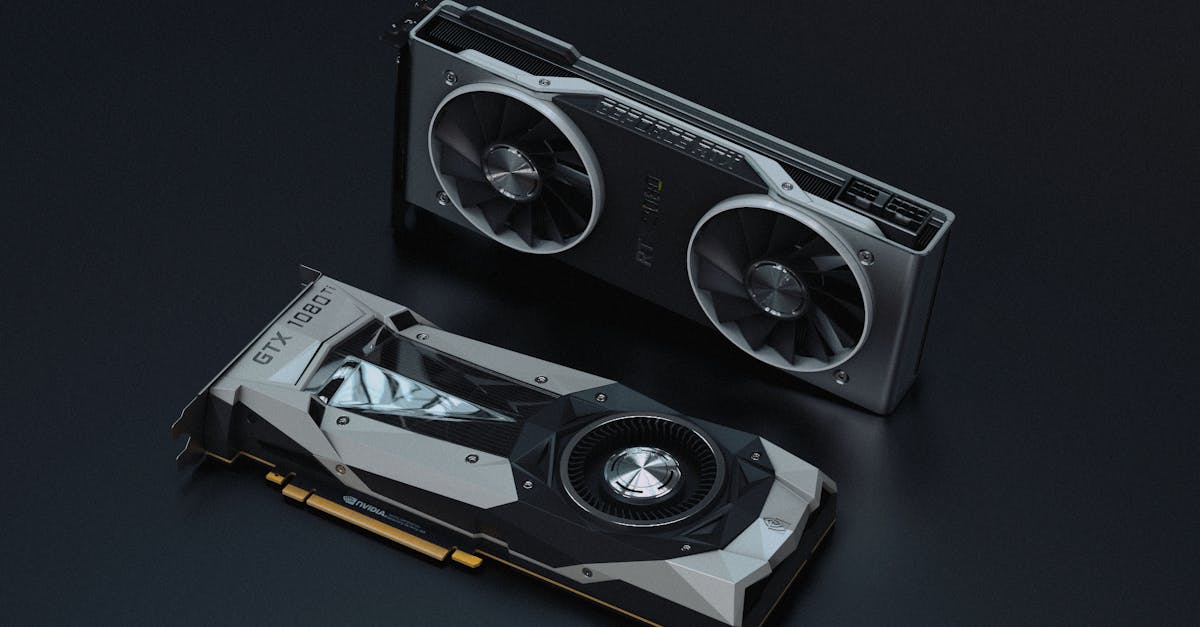
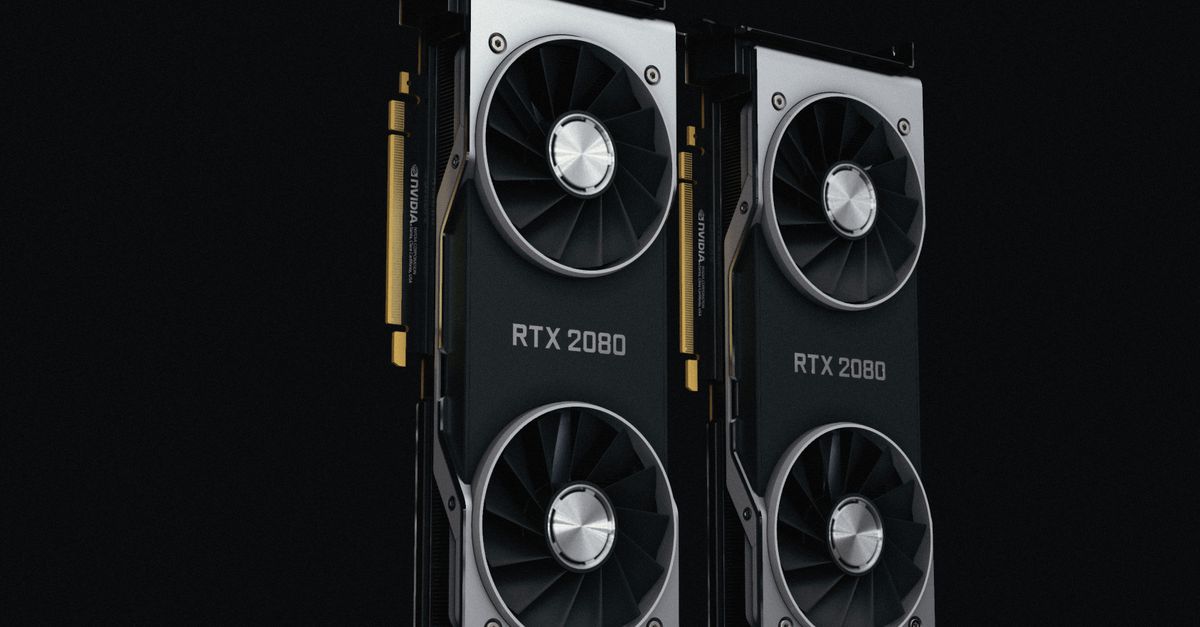
The software stack is free to download, but the hardware is not. Running Isaac Sim and Isaac Lab requires high-performance GPUs. This is where the Indian market faces challenges. The cost of a single NVIDIA GPU can exceed the budget of a small startup.
- Jetson AGX Orin: Costs approximately ₹6 to ₹8 lakhs (INR).
- DGX Station: Costs approximately ₹60+ lakhs (INR).
- Cloud Resources: High hourly rates for cloud GPU instances.
For a startup building a humanoid robot, the capital expenditure (CapEx) on hardware is significant. This limits the number of iterations possible. Many Indian firms opt for open-source alternatives like Gazebo or PyBullet to reduce costs. However, these alternatives lack the visual fidelity and physics speed of Isaac.
The supply chain for Nvidia hardware is also a concern. Import duties on electronics in India can raise the landed cost by 15-20%. This makes a ₹6 lakh GPU closer to ₹7.5 lakhs. For a startup, this is a significant tax on innovation.
Economic Feasibility for Indian Startups
Isaac offers a competitive advantage in terms of speed and fidelity. However, the ROI (Return on Investment) is not immediate. Firms must calculate the cost of training time against the cost of hardware. If a simulation runs on a ₹5 lakh GPU, the hourly cost is high.
For larger enterprises, the value proposition is stronger. A factory deploying 50 robots can amortize the cost of a DGX system. For a startup, the software stack is a luxury item. We grade the economic feasibility as medium-high for enterprises and low for startups.
The licensing model has changed recently. Nvidia now offers Isaac Sim as part of the AI Workstation Program. This reduces the cost for developers who buy the hardware. However, the hardware itself remains a barrier. For Indian firms, this means buying a Jetson or DGX is a prerequisite for using the software.
Regulatory and Compliance Considerations
Indian robotics firms must consider data privacy laws. Isaac Sim generates massive amounts of data. If this data includes human faces or private property, it must be anonymized. The software does not handle this automatically.
Furthermore, the export controls on advanced AI chips affect Indian supply chains. Nvidia’s high-end GPUs may face restrictions. This creates uncertainty for long-term planning. Firms must ensure they have access to the hardware they need for the next 3 years.
Conclusion: The Path Forward
Nvidia Isaac is a powerful tool for robotics development. It offers simulation, learning, and teleoperation capabilities that are hard to match. However, it is not a silver bullet. The Sim2Real gap remains the primary bottleneck.
Indian robotics firms should use Isaac Sim for initial prototyping. They should transition to physical testing early. The software helps, but it does not replace the need for hardware validation. For those with the capital, Isaac is a viable path. For those without, open-source alternatives remain relevant.
The future of Isaac depends on the hardware ecosystem. As hardware costs drop, the software will become more accessible. Until then, the stack remains a high-end tool for serious development. We grade the technology as promising but expensive. Indian startups must weigh the cost against the benefit.
In summary, Nvidia Isaac is a mature software stack with a high hardware barrier. It is best suited for funded enterprises. For smaller players, the ROI is questionable. The industry must wait for hardware costs to fall before Isaac becomes a standard tool.
✓ Key takeaways
- •Hands-on view of Nvidia Isaac Stack: Reality Check on Simulation, Learning, and Teleoperation for Indian Robotics inside our Nvidia Isaac library.
- •Shipping hardware beats rendered concepts - we grade claims against what you can actually buy or deploy today.
- •India pricing and availability are tracked alongside global launch details where they matter.
References
Related articles
More in Nvidia Isaac →