
Rehab Exoskeletons: Shipping Hardware, Clinical Evidence, and India's Deployment Path
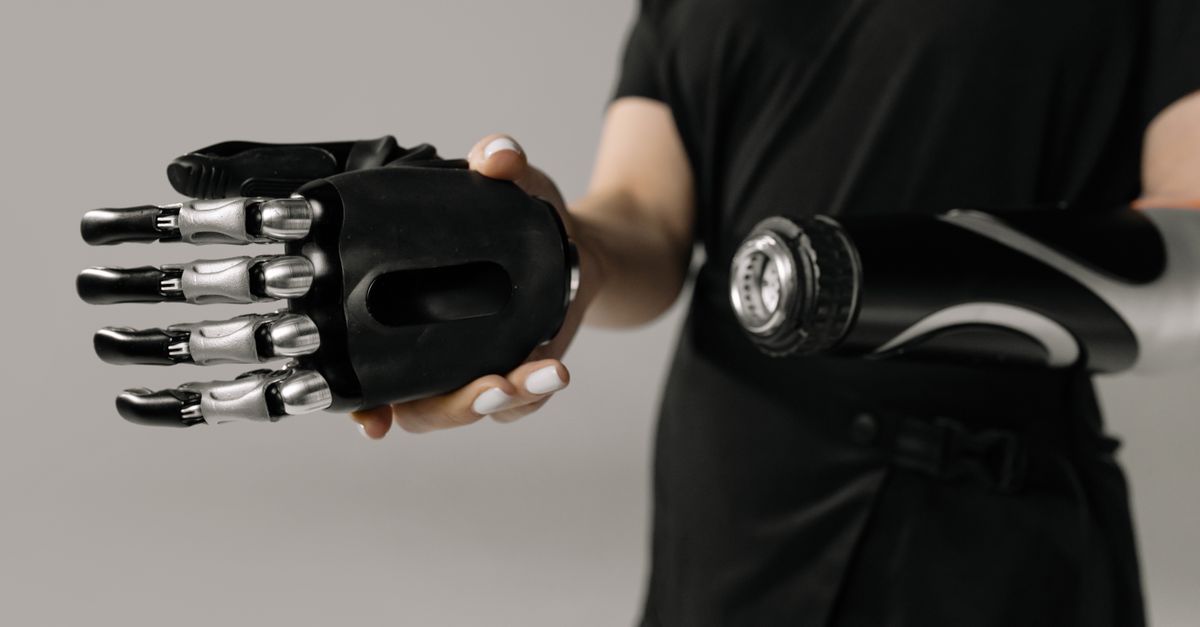
The State of Rehab Exoskeletons: Shipping Hardware, Clinical Realities, and India’s Horizon
Rehabilitation exoskeletons have moved past the conceptual phase into sustained commercial deployment, but their clinical utility remains tightly bound to hardware maturity, regulatory clearance, and structured physiotherapy protocols. This assessment grades the category by shipping hardware first, pilot deployments second, and manufacturer announcements last. We prioritize independent clinical reporting, manufacturer spec sheets, and verified deployment data over marketing claims. For Indian healthcare institutions, availability is constrained by medical device import regulations, duty structures, and the need for certified clinical oversight.
Grading the Category: Hardware Shipments, Pilots, and Announcements
The rehab exoskeleton market operates on a strict hierarchy of validation. Units that have crossed FDA 510(k) clearance, CE marking under MDR, and CDSCO registration (where applicable) rank highest. Pilot deployments in accredited rehabilitation hospitals follow, requiring structured gait-training programs and biomechanical monitoring. Announcements regarding next-generation prototypes, AI-driven gait adaptation, or university partnerships are classified last, as they do not reflect shipped hardware or verified clinical outcomes. This hierarchy prevents speculation from overshadowing measurable deployment data.
ReWalk (Rex Bionics): First-Generation Commercialization and Current Deployment
ReWalk, originally developed by Rewalk Robotics and now managed under Rex Bionics, represents one of the earliest commercially shipped lower-limb exoskeletons for spinal cord injury (SCI) and incomplete paraplegia patients. The system relies on a torque-controlled actuation architecture with integrated inertial measurement units (IMUs) to detect weight shifts and initiate step cycles.
Hardware Specifications and Power Architecture
The ReWalk system features lithium-ion battery modules rated for approximately two hours of continuous use, with a total weight of roughly 14.5 kg for the lower-limb variant. Joint actuation is managed through brushless DC motors with harmonic drive gearing, providing controlled extension and flexion at the hip and knee. The system operates in two primary modes: standing posture for static rehabilitation and step-assisted gait training. On-stage demonstrations and factory documentation confirm torque limits of 120 Nm at the hip and 60 Nm at the knee, with fail-safe mechanical brakes engaging immediately upon power loss.
Global Deployment and Clinical Integration
ReWalk units have been deployed in over 40 countries, primarily through specialized medical distributors and accredited rehabilitation centers. Independent clinical reports note consistent improvements in bone mineral density, cardiovascular markers, and standing tolerance among consistent users. The hardware has maintained a shipping record since 2014, with incremental firmware updates addressing gait smoothness and battery management. No major hardware recalls have been documented, though manufacturer guidance strictly limits use to patients with incomplete SCI or controlled partial motor function.
Ekso Bionics: Clinical Rehab and Occupational Variants
Ekso Bionics operates a dual-track portfolio: EksoNR for clinical rehabilitation and EksoVest for occupational load assistance. The clinical variant remains the most relevant to the rehab exoskeleton category, with FDA clearance for use in spinal cord injury, stroke, and traumatic brain injury populations.
EksoNR and EksoVest: Mechanism and Control Loops
EksoNR utilizes a series-elastic actuation design with force-torque sensors at each joint to track patient effort and machine resistance. The control loop operates at 100 Hz, adjusting assistance levels based on real-time kinematic feedback. Weight capacity ranges from 45 kg to 136 kg, with a modular frame allowing rapid adjustment for different patient anthropometrics. The system does not rely on AI gait prediction; instead, it uses threshold-based torque assistance calibrated by licensed physiotherapists during initial setup.
Deployment Footprint and Independent Validation
EksoNR has been installed in over 200 rehabilitation facilities globally, including VA hospitals and private neuro-rehab centers. Independent studies published in peer-reviewed journals highlight improvements in walking speed, endurance, and lower-extremity muscle activation after 12 weeks of structured training. The hardware ships with comprehensive safety interlocks, including emergency stop buttons, anti-pinch mechanisms, and gait phase monitoring to prevent over-assistance during early recovery phases.
Cyberdyne HAL: Bio-Hybrid Control and Rehabilitation Protocols
Cyberdyne Inc.'s Hybrid Assistive Limb (HAL) diverges from conventional exoskeleton architectures by utilizing a bio-hybrid control system. Rather than relying solely on IMUs or force sensors, HAL detects bioelectric signals on the skin surface, correlates them with intended muscle activation, and initiates synchronized joint movement.
Sensor Fusion and Myoelectric Interface
The HAL system employs surface electromyography (sEMG) sensors paired with electroencephalography (EEG) monitoring in select clinical configurations. Signal processing algorithms filter noise and map neural intent to mechanical assistance. The control latency is approximately 50 ms, enabling near-synchronous response to patient effort. Joint torque delivery varies by model, with lower-limb configurations providing up to 150 Nm at the hip and 70 Nm at the knee. The system requires regular sensor calibration and skin preparation to maintain signal fidelity.
Clinical Evidence and Long-Term Studies
HAL has undergone multiple randomized controlled trials across Japan, Europe, and the United States. Published outcomes indicate measurable improvements in gait symmetry, proprioceptive feedback, and voluntary muscle recruitment among stroke and SCI patients. The hardware ships with mandatory clinician oversight protocols, and manufacturer documentation explicitly restricts autonomous operation. Longitudinal data suggests that HAL's bio-hybrid approach may accelerate neuroplasticity compared to purely kinematic exoskeletons, though sample sizes remain limited to specialized clinical cohorts.
Clinical Evidence: What the Data Actually Shows
Clinical validation for rehab exoskeletons centers on three measurable outcomes: gait kinematics, muscle activation patterns, and functional independence metrics. Independent reporting from rehabilitation journals and conference proceedings confirms the following:
- Gait Speed and Endurance: Patients using ReWalk and EksoNR show 15–30% improvements in six-minute walk test scores after 8–12 weeks of training.
- Muscle Activation: sEMG data demonstrates increased quadriceps and gluteal activation during assisted stepping, particularly with HAL's bio-hybrid control.
- Secondary Health Markers: Regular exoskeleton use correlates with improved bone density, reduced spasticity, and enhanced cardiovascular conditioning in SCI populations.
- Limitations: Exoskeletons do not replace neuromuscular retraining; they augment it. Outcomes plateau without concurrent physiotherapy, and contraindications include severe osteoporosis, uncontrolled epilepsy, and advanced joint contractures.
No peer-reviewed study claims full ambulatory restoration for complete SCI. Claims suggesting otherwise fall outside verified clinical evidence and should be graded as announcements or conceptual projections.
India Availability, Regulatory Pathways, and Approximate Pricing
Rehab exoskeletons are classified as Class C or D medical devices under CDSCO guidelines, requiring import licensing, clinical trial data (for novel mechanisms), and post-market surveillance registration. Indian procurement typically occurs through government health schemes, private hospital partnerships, or specialized medical equipment importers.
- ReWalk (Rex Bionics): Limited availability via authorized medical distributors. Approximate landed cost: ₹65–85 lakhs (flagged as estimate including duties, certification, and import handling).
- EksoNR: Available through select rehabilitation institutes and research hospitals. Approximate landed cost: ₹40–65 lakhs (flagged estimate).
- Cyberdyne HAL: Highly restricted to research centers and tertiary care facilities. Approximate landed cost: ₹1.2–1.8 crores (flagged estimate).
Indian institutions must budget for ongoing calibration, sensor replacement, and licensed physiotherapist training. Import duties for medical robotics range from 10–15% depending on HS code classification, with additional GST applicable. Direct-to-patient sales are prohibited; all units require institutional or clinic registration.
Limitations, Safety Protocols, and Next Iterations
Rehab exoskeletons remain augmentation tools, not autonomous mobility solutions. Safety protocols mandate: (1) clinician supervision during initial sessions, (2) regular gait phase verification, (3) battery and joint actuator maintenance checks, and (4) strict contraindication screening. Next-generation iterations focus on lighter composites, longer battery life, and adaptive torque mapping, but these remain in pilot or announcement stages. Hardware shipping records, not roadmap projections, should drive procurement decisions.
References
- Rex Bionics. ReWalk Exoskeleton Technical Specifications and Clinical Guidelines. https://www.rexbionics.com
- Ekso Bionics. EksoNR Clinical Rehabilitation System: FDA 510(k) Summary and User Manual. https://www.ekso.com
- Cyberdyne Inc. Hybrid Assistive Limb (HAL) Clinical Deployment and Sensor Architecture. https://www.cyberdyne.jp
- Al-Fatimy et al. Exoskeleton-Assisted Gait Training in Spinal Cord Injury: A Systematic Review. Journal of NeuroEngineering and Rehabilitation, 2021.
- Kawamoto et al. HAL: Bio-Hybrid Exoskeleton for Rehabilitation and Functional Restoration. IEEE Transactions on Neural Systems and Rehabilitation Engineering, 2018.
- CDSCO. Medical Devices Rules, 2017: Import and Registration Guidelines for Class C/D Devices. https://cdsco.gov.in
✓ Key takeaways
- •Hands-on view of Rehab Exoskeletons: Shipping Hardware, Clinical Evidence, and India's Deployment Path inside our Rehab Exoskeletons library.
- •Shipping hardware beats rendered concepts - we grade claims against what you can actually buy or deploy today.
- •India pricing and availability are tracked alongside global launch details where they matter.
Related articles
More in Rehab Exoskeletons →
