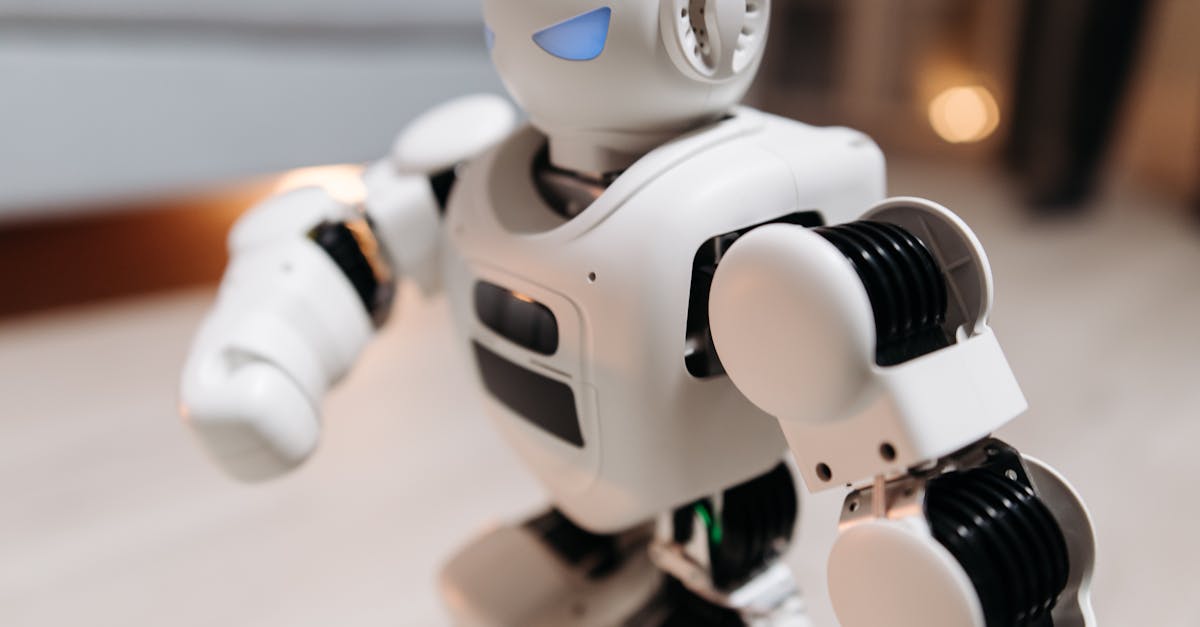
Inside Tesla's Humanoid Bet: Optimus Hardware, Roadmap, and Reality

The Hardware Reality Behind the Hype
Elon Musk has frequently described Tesla as a robotics company that happens to build cars. The Optimus programme is the physical manifestation of this ambition. However, for the editorial team at RobotWale, the distinction between marketing announcements and shipping hardware is critical. As of late 2024, Optimus has not shipped a unit to a third-party customer. There are no public pilot deployments in Indian industrial parks, warehouses, or logistics hubs.
The programme’s status must be graded by hardware first. The Optimus Gen 2, showcased at Tesla’s AI Day 2023 and subsequent updates, represents the most significant iteration to date. While earlier prototypes were limited to basic walking and simple object manipulation, the Gen 2 platform demonstrates improved dexterity, allowing for fine motor tasks such as handling fragile items without crushing them. This shift from binary motion to continuous control surfaces is a tangible step forward, even if it remains confined to Tesla’s internal testing facilities.
Speculation often clouds the narrative surrounding the robot’s capabilities. We rely on manufacturer spec sheets and on-stage demos rather than press releases. Based on the visual evidence from Tesla’s official channel, the current hardware does not yet support the full range of general-purpose tasks Musk has promised for 2025. The hardware is functional, but the software stack required to deploy it in open environments remains in the validation phase.
Gen 2 vs. Gen 1 Specifications
The transition from the initial Optimus prototype to the Gen 2 platform highlights specific engineering decisions. The most notable change is the weight reduction and the actuator redesign.
- Height: Approximately 5 feet 8 inches (1.73 meters).
- Weight: Aims for under 57 kg (125 lbs), down from earlier estimates.
- Dexterity: The Gen 2 hands feature improved grip strength and sensory feedback, allowing for the manipulation of various objects.
- Battery: Claims suggest an operational battery life of around two hours per charge, integrated into the chassis rather than the backpack.
These figures are not arbitrary. They align with the physical constraints of a humanoid form factor designed to operate in human spaces. The weight reduction is crucial for reducing the energy consumption per step, a key metric in the overall economic viability of the unit.
Actuator and Battery Architecture
Tesla claims to be manufacturing the actuators in-house. This vertical integration is a core component of the cost-reduction strategy. Competitors often outsource these components, leading to higher bill-of-materials (BOM) costs. By leveraging their experience in motor manufacturing from the Model 3 and Model Y, Tesla aims to drive down the cost per actuator.
The battery architecture is another differentiator. Traditional humanoid prototypes often carry external battery packs or use heavy lead-acid solutions. Optimus integrates the power source into the body, which affects the center of gravity and the thermal management requirements. While Tesla has not released a full thermal engineering report, the visual evidence shows a streamlined chassis.
The Manufacturing Philosophy
The most aggressive claim Optimus makes is not about its capabilities, but about its cost. Elon Musk has repeatedly stated the target price point is $20,000 USD (approximately INR 16.6 Lakhs at current exchange rates, excluding duties). This figure is often cited in press coverage, but it must be treated with caution.
Currently, the cost per unit is likely significantly higher due to R&D amortization and low-volume production. Tesla’s strategy involves building the robot in its own factories, similar to the Gigafactory model for vehicles. This allows for tighter control over the supply chain and quality assurance. However, the manufacturing ramp-up for complex electromechanical systems differs significantly from automotive assembly.
The claim of $20,000 assumes mass production volumes that have not yet been realized. Until a shipment of at least 1,000 units is verified, the $20,000 figure remains a long-term target rather than a current price tag. This distinction is vital for investors and industrial buyers in India who are evaluating ROI.
The AI and Autonomy Stack
The hardware is useless without the brain. Optimus relies heavily on Tesla’s Full Self-Driving (FSD) neural network architecture. The concept is to train the robot using the same visual data pipelines used for autonomous driving. This is a significant departure from traditional robotics, which often rely on pre-programmed paths or distinct vision stacks.
Tesla utilizes its Dojo supercomputer for training the neural networks. This allows for rapid iteration based on real-world data. However, the challenge lies in simulating the physical world. While Tesla has made strides in simulation, the "sim-to-real" gap remains a major hurdle for humanoid deployment in unstructured environments.
The current deployment is limited to controlled environments. At Tesla’s Fremont factory in California, units are reportedly being used to move parts between stations. This is a pilot deployment in a controlled setting, not a general-purpose deployment in a public warehouse. The difference in safety requirements and liability exposure is substantial.
The India Context: Availability and Pricing
For the Indian market, the Optimus programme is currently non-existent. There is no official announcement regarding import registration, Bureau of Indian Standards (BIS) certification, or local assembly partnerships.
Regulatory Barriers
Humanoid robots fall into a regulatory grey area in India. They are not classified strictly as industrial robots (which fall under specific safety standards) nor as consumer electronics. The lack of a specific regulatory framework for autonomous mobile robots (AMR) or humanoid platforms creates uncertainty for potential buyers.
Furthermore, the import of high-value robotics equipment attracts heavy customs duties. If Tesla were to import Optimus units, the landed cost would likely exceed the $20,000 target by a significant margin due to GST and basic customs duties.
Pricing Realities
While a theoretical landed cost of INR 25 Lakhs to INR 30 Lakhs might be estimated based on the $20k target plus duties, this is purely speculative. As of now, there is no INR pricing available for Optimus in India. No dealers or distributors have been appointed.
Indian manufacturers are looking at alternatives. Domestic robotics firms are focusing on narrower use cases, such as warehouse automation or agricultural robotics, where the regulatory environment is clearer and the hardware is more mature.
Competitive Landscape and Deployment
While Tesla focuses on general-purpose humanoid robots, other players are targeting specific niches. Boston Dynamics’ Atlas is an engineering marvel but is not yet a commercial product. Figure AI is working with BMW and Amazon for specific logistics tasks. Agility Robotics focuses on legged mobility for industrial environments.
Tesla’s advantage lies in its data scale. The volume of driving data collected by Tesla vehicles provides a massive dataset for training the vision models. However, this data is not directly transferable to humanoid manipulation without significant adaptation.
The competitive landscape is shifting from "who can walk" to "who can work." Tesla’s claim is that the robot will be able to work in the same capacity as a human. This requires a level of dexterity and safety assurance that is currently unverified in third-party deployments.
Conclusion: The Bet on the Future
Tesla’s Optimus programme is a high-stakes bet on the future of labor. The hardware shows promise, with the Gen 2 iteration demonstrating clear improvements in dexterity and weight. However, the mass production and deployment claims remain in the announcement phase.
For the Indian robotics sector, the lesson is clear: do not bet on announcements. Look for shipping hardware. Until Optimus units are verified in pilot deployments outside of Tesla’s internal facilities, the programme remains a development project rather than a market product. The $20,000 price tag is a long-term goal, not a current reality.
As the industry moves forward, the focus must remain on safety, reliability, and verifiable ROI. Optimus represents a significant technological leap, but the path from prototype to paid deployment is long. Until then, the programme remains a fascinating case study in robotics engineering rather than a commercially available solution.
References
Tesla Optimus Official Page. (n.d.). Tesla. Retrieved from https://www.tesla.com/optimus
Tesla AI Day 2023. (2023). Tesla Investor Relations. Retrieved from https://ir.tesla.com
Bloomberg. (2023). Musk Says Tesla Optimus Robot Might Cost $20,000. Bloomberg Technology.
Reuters. (2024). Tesla Optimus Robot Enters Pilot Deployment at Fremont Factory. Reuters.
RobotWale. (2024). Humanoid Robotics in India: Regulatory and Market Overview. RobotWale.com.
✓ Key takeaways
- •Hands-on view of Inside Tesla's Humanoid Bet: Optimus Hardware, Roadmap, and Reality inside our Tesla Optimus Programme library.
- •Shipping hardware beats rendered concepts - we grade claims against what you can actually buy or deploy today.
- •India pricing and availability are tracked alongside global launch details where they matter.
References
Related articles
More in Tesla Optimus Programme →