
Inside Tesla's Optimus Programme: Shipping Hardware, Pilots, and the Road to Deployment
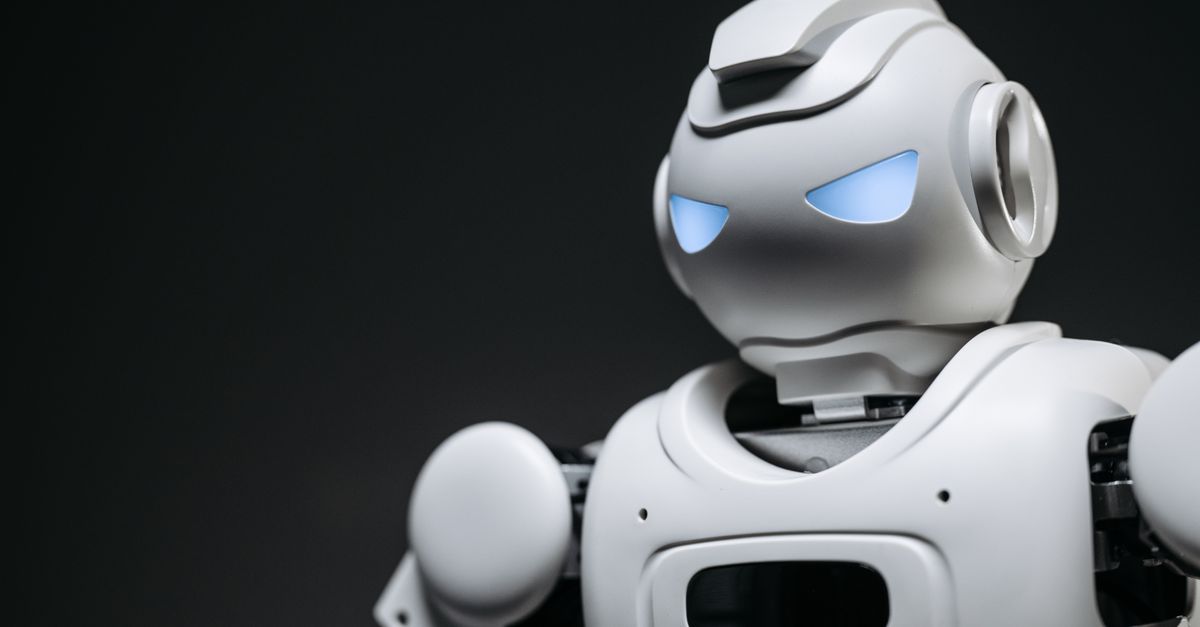
The Optimus Programme: Hardware Iterations and Shipping Milestones
Gen 1 to Gen 3: Physical Benchmarks
Tesla’s Optimus programme has progressed through three distinct hardware generations since its public debut in 2022. The grading of capability must follow the shipping hierarchy: Gen 1 was a functional prototype demonstrating basic bipedal locomotion and simple grasping. Gen 2, revealed in late 2023, introduced a lighter frame, improved joint packaging, and a redesigned hand with 11 degrees of freedom. Gen 3, showcased in 2024, represents the current production-intent hardware. It features custom rotary actuators, harmonic drives, and a reinforced skeletal structure designed for repeated factory loads rather than one-off demonstration cycles.
Shipping hardware milestones are measured by durability and repeatability, not by cinematic walking demos. Tesla has confirmed that Gen 3 units are being manufactured in limited quantities at Giga Texas. The company’s public demonstrations have shifted from open-floor walking to structured task execution: picking up standardized objects, navigating controlled aisles, and performing repetitive pick-and-place operations. These are incremental but necessary steps toward industrial validation.
Actuation, Sensing, and Compute Architecture
Optimus Gen 3 relies on a distributed actuation architecture. Each joint uses a custom rotary motor paired with a harmonic reducer, prioritizing torque density and thermal management over pure speed. The hands utilize tendon-driven mechanisms with force-torque sensors at the fingertips, enabling controlled grip forces for fragile or irregular items. Vision systems are stereo cameras mounted on the torso and head, feeding into a neural network trained on Tesla’s existing vehicle perception stack. This shared architecture reduces development time but introduces domain-transfer constraints, as factory environments differ significantly from road conditions.
Compute is handled by a dedicated AI inference module derived from Tesla’s Full Self-Driving (FSD) hardware. The system runs on-chip neural processing, allowing low-latency sensor fusion and real-time motor control without relying on cloud connectivity. This edge-compute approach is critical for factory safety and operational independence, though it demands rigorous thermal and power management within a compact chassis.
Pilot Deployments and Production Readiness
Giga Texas and Factory Integration
Pilot deployments form the second tier of capability validation. Tesla has placed Optimus units inside Giga Texas to assist with material handling, battery cell sorting, and component transport. These pilots are not public beta tests but internal process validations. The robots are operating alongside human workers and existing automation lines, collecting data on task completion rates, collision avoidance, and battery endurance under continuous use.
Factory integration requires more than walking stability. It demands predictable cycle times, tool interchange reliability, and compatibility with existing safety protocols. Tesla’s pilot data, as reported in investor briefings and independent factory coverage, indicates that the current generation handles static pick-and-place tasks with reasonable consistency. Dynamic environment navigation, multi-step assembly, and long-duration endurance remain areas under active testing.
Scaling and Quality Control
Scaling a humanoid platform involves manufacturing tolerances, supply chain stability, and field serviceability. Tesla has emphasized vertical integration for critical components, including actuators, sensors, and compute modules. This reduces dependency on third-party robotics suppliers but increases capital expenditure and quality control complexity. The company’s approach mirrors its electric vehicle manufacturing strategy: design for mass production from day one, iterate through software updates, and refine hardware revisions based on pilot feedback.
Quality control metrics for industrial deployment include mean time between failures, grasp repeatability, and software patch stability. Tesla has not published independent reliability reports, but internal pilot data suggests that hardware failures are concentrated in high-wear joints and end-effectors. Software updates are delivered over-the-air, allowing rapid iteration of control algorithms without hardware swaps.
Official Announcements vs. Demonstrated Capability
What Tesla Has Actually Shown
Announcements sit at the bottom of the grading hierarchy. Tesla’s public statements, including investor day presentations and executive interviews, outline long-term targets: mass production, sub-$20,000 unit pricing, and deployment across automotive factories and eventually external customers. These targets are strategic roadmaps, not immediate shipping commitments.
What has been demonstrated on stage and in factory footage includes controlled walking, object manipulation, and task execution within defined boundaries. The robots operate in structured environments with mapped navigation zones, pre-programmed pick locations, and supervised safety perimeters. This is standard for industrial robotics validation and does not imply general-purpose autonomy. Tesla’s hardware is functional for specific tasks but remains constrained by environmental predictability and software maturity.
Roadmap Claims and Timeline Reality
Tesla has communicated a phased rollout strategy. The first phase targets internal factory use, where environmental control and safety margins are manageable. The second phase involves limited external deployments with partner facilities. The third phase, contingent on reliability data and manufacturing scale, would enable broader commercial distribution.
Timeline claims must be evaluated against hardware shipping rates and pilot success metrics. Tesla’s production ramp for Optimus is tied to Giga Texas capacity, actuator supply chains, and software validation cycles. Independent observers note that humanoid robotics faces mechanical wear, software edge cases, and safety certification hurdles that typically extend deployment timelines. Tesla’s vertical integration and software-driven iteration model may accelerate this process, but physical manufacturing and field validation cannot be bypassed.
India Market Context: Availability and Pricing
Import Dynamics and Landed Cost Estimates
Tesla Optimus is not officially available in India. No authorized distribution partners, import clearances, or localized service networks have been announced. Indian businesses interested in humanoid robotics must evaluate import pathways, which involve customs duties, compliance certifications, and logistical handling.
Importing a prototype or pilot unit would trigger multiple cost layers. Base hardware pricing, while Tesla has targeted sub-$20,000 for mass production, currently reflects R&D and low-volume manufacturing costs. Landed cost estimates for India, accounting for shipping, insurance, and applicable import duties, place initial acquisition between INR 1.5 crore and INR 2.2 crore per unit. This range is flagged as an estimate based on current Indian customs duty structures for advanced robotics and compute hardware, plus freight and handling fees. It does not include installation, safety certification, or local maintenance contracts.
Domestic Assembly and Regulatory Pathways
Domestic assembly in India would require regulatory approval, technology transfer agreements, and compliance with the Bureau of Indian Standards (BIS) for electrical safety and electromagnetic compatibility. The Indian government’s production-linked incentive (PLI) schemes for advanced manufacturing and robotics could eventually support localized assembly, but no official partnership with Tesla has been disclosed.
Indian industrial buyers should monitor three developments: Tesla’s official export pricing and warranty terms, BIS certification status for humanoid platforms, and domestic robotics manufacturers offering comparable task-specific automation. Until Optimus achieves certified compliance and localized service infrastructure, Indian adoption will remain limited to research pilots, university collaborations, or high-budget R&D facilities willing to navigate import complexities.
Conclusion
Tesla’s Optimus programme is advancing through hardware iteration, factory pilots, and software refinement. The current generation demonstrates functional actuation, vision-guided manipulation, and edge-compute autonomy, but operates within structured environments and supervised safety zones. Manufacturing scale, reliability data, and certification pathways will determine the transition from internal pilots to commercial deployment. For India, availability remains constrained by import duties, regulatory compliance, and the absence of authorized distribution. Businesses evaluating humanoid robotics should prioritize demonstrated task reliability, service infrastructure, and total cost of ownership over long-term roadmap targets.
References
- Tesla AI Day 2022 Presentation: tesla.com/AI
- Tesla AI Day 2023 Presentation: tesla.com/AI
- Tesla AI Day 2024 Presentation: tesla.com/AI
- Tesla 2024 Investor Day Materials: ir.tesla.com
- Tesla Press Release: Optimus Gen 3 Update (2024): tesla.com/news
- Reuters Coverage: Tesla Optimus Factory Pilots at Giga Texas: reuters.com
- Bloomberg Reporting: Tesla Humanoid Robot Production Timeline: bloomberg.com
- Indian Customs Duty Structure for Robotics & Compute Hardware: cbic.gov.in
- Bureau of Indian Standards (BIS) Certification Guidelines for Robotics: bis.gov.in
✓ Key takeaways
- •Hands-on view of Inside Tesla's Optimus Programme: Shipping Hardware, Pilots, and the Road to Deployment inside our Tesla Optimus Programme library.
- •Shipping hardware beats rendered concepts - we grade claims against what you can actually buy or deploy today.
- •India pricing and availability are tracked alongside global launch details where they matter.
References
- Tesla AI Day 2022 Presentation
- Tesla AI Day 2023 Presentation
- Tesla AI Day 2024 Presentation
- Tesla 2024 Investor Day Materials
- Tesla Press Release: Optimus Gen 3 Update
- Reuters Coverage: Tesla Optimus Factory Pilots at Giga Texas
- Bloomberg Reporting: Tesla Humanoid Robot Production Timeline
- Indian Customs Duty Structure for Robotics & Compute Hardware
- Bureau of Indian Standards (BIS) Certification Guidelines for Robotics
Related articles
More in Tesla Optimus Programme →
