Unitree Robotics: Shipping Hardware, Pilot Deployments, and India Market Access

Origins and Manufacturing Base
Unitree Robotics was founded in 2016 in Hangzhou, China, by Chen Qi. The company has built its reputation on vertical integration, designing proprietary actuators, control algorithms, and power management systems in-house. Unlike firms that rely heavily on third-party joint modules, Unitree manufactures its own harmonic drives, torque sensors, and battery packs, which has enabled aggressive cost reduction across both quadruped and humanoid platforms. The Hangzhou facility operates continuous assembly lines for consumer-grade quadrupeds and scales to semi-automated lines for industrial and humanoid models. Factory walkthroughs and production line documentation published by the company confirm volume manufacturing capabilities for the Go2 and G1 series, with H1 production running at lower volumes tied to research and early commercial pilots.
Quadruped Robotics: Shipping Hardware and Verified Deployments
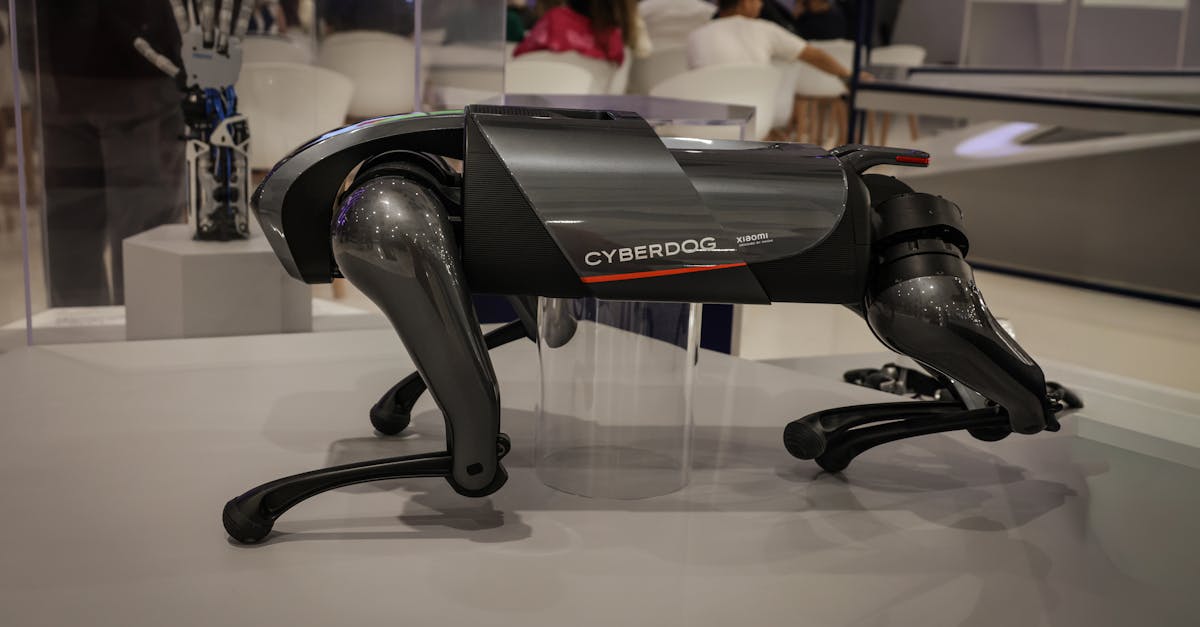
Unitree’s quadruped portfolio is graded first by shipping hardware, as these platforms are widely available, extensively documented, and actively deployed across security, inspection, and education sectors.
Consumer and Prosumer Models
- Go2 Series: The Go2 (including Air, Pro, and Ultra variants) ships with a 3D LiDAR option, stereo vision, and onboard compute capable of SLAM mapping and obstacle avoidance. Official spec sheets list a top speed of 2.0 m/s, IP54 rating, and 1.5–2.0 hours of runtime depending on payload and gait mode. On-stage demos and independent field tests confirm reliable stair climbing, trotting, and autonomous patrol routines.
- Go1 (Legacy): Now phased out in favor of Go2, the Go1 established Unitree’s baseline actuator design and control stack. It remains in circulation through secondary markets and educational resellers.
Industrial Quadrupeds
- B2 Series: Designed for heavy-duty inspection and logistics, the B2 carries up to 20 kg payload, achieves 1.8 m/s forward speed, and supports external sensor rails for thermal, gas, and acoustic arrays. Factory videos demonstrate load testing, slip recovery, and multi-sensor synchronization. Deployment grading places B2 in early commercial pilots with energy, mining, and port operators in China and Southeast Asia.
Humanoid Robotics: From Prototypes to Early Shipping
Unitree’s humanoid line follows the same grading hierarchy: shipped units first, pilot deployments second, and announced roadmaps last. The company has avoided rendered concept marketing, instead publishing kinematic data, joint torque curves, and battery discharge profiles for deployed models.
H1 Series
The H1 debuted as a 180 cm tall, 65 kg humanoid with 51 degrees of freedom, featuring custom series-elastic actuators and a centralized control architecture. Shipping began in limited batches to research institutions and pilot partners in 2023–2024. Independent reporting confirms H1 units performing dynamic walking, stair negotiation, and object manipulation in controlled environments. Battery life is approximately 2–3 hours under mixed-load conditions. The H1 remains graded as early commercial shipping with pilot deployments in automation research and vocational training.
G1 Series
Announced in early 2024, the G1 targets cost-sensitive deployment with a 140 cm height, 47 kg weight, and 43 degrees of freedom. Unitree published factory assembly videos showing automated torque calibration and joint testing. The G1 ships with a modular wrist, force-torque sensors, and an upgraded battery management system. Grading places the G1 in active shipping phase with rapid firmware iteration. Pilot deployments are expanding into logistics simulation, educational robotics labs, and human-robot interaction research. The company has published kinematic limits and joint torque specifications rather than conceptual renderings, aligning with hardware-first disclosure.
Software Stack and Control Architecture
Unitree’s control stack relies on a proprietary real-time operating system paired with model predictive control (MPC) and reinforcement learning baselines for gait adaptation. The company provides SDKs in C++ and Python, enabling external developers to override gait parameters, calibrate IMU fusion, and integrate custom perception modules. On-stage demos consistently show adaptive terrain recovery, but independent reviewers note that unstructured environments still require manual intervention or teleoperation. Software updates are distributed via OTA, with version logs published on the official developer portal. The stack prioritizes deterministic timing over open-source transparency, which limits third-party auditing but ensures stable deployment in controlled industrial settings.
India Availability and Landed Cost Estimates
Unitree does not currently operate an official Indian subsidiary or authorized distributor network. Access to Unitree hardware in India occurs through parallel import channels, research procurement, and third-party robotics integrators. The following estimates reflect landed costs as of Q2 2024, including customs duties, GST, freight, and handling. These figures are flagged as approximate and subject to currency fluctuation and import policy changes.
- Go2 Pro/Air: Base unit ~INR 3.2–3.8 lakh landed. LiDAR variants add ~INR 0.6–0.9 lakh. Available through parallel importers in Delhi, Bengaluru, and Pune. Warranty support is limited to manufacturer-direct claims or third-party service partners.
- B2 Industrial: Landed cost ~INR 18–22 lakh. Typically procured via research grants or corporate pilots. Integration services are handled by independent automation firms.
- G1 Humanoid: Base unit ~INR 16–19 lakh landed. Shipping to India requires freight forwarding and customs clearance for high-value robotics equipment. Pilot deployments in Indian labs are facilitated through research procurement or corporate innovation budgets.
- H1 Humanoid: Landed cost ~INR 28–34 lakh. Deployments in India are restricted to university research labs and government-backed pilot programs due to regulatory and technical support constraints.
For organizations seeking official support, Unitree has established partnerships with distributors in the Middle East and Southeast Asia, which occasionally facilitate India-bound shipments. Buyers should verify import documentation, BIS compliance for power components, and post-sale service coverage before procurement.
Deployment Grading and Market Position
Unitree’s hardware pipeline is graded by deployment maturity rather than marketing claims. Quadrupeds lead with verified shipping and multi-sector pilots. Humanoids follow, with G1 shipping at scale and H1 operating in early commercial pilots. Announcements regarding larger payloads, AI vision upgrades, and fleet management software remain in the roadmap phase and are not yet reflected in shipped hardware performance.
The company’s market position is defined by cost efficiency, rapid iteration cycles, and a focus on deterministic control over open-source ecosystems. Independent assessments note that while Unitree’s actuators and battery management are mature, third-party software integration requires engineering resources. For Indian buyers, the primary constraints are warranty logistics, customs clearance, and the need for in-house technical support. Pilot deployments in India are growing in research and vocational training, but large-scale industrial adoption depends on local service infrastructure and regulatory clarity.
References
- Unitree Robotics Official Product Pages: https://www.unitree.com/products
- Unitree Go2 Series Spec Sheet and SDK Documentation: https://www.unitree.com/go2
- Unitree B2 Industrial Quadruped Factory Demo and Specs: https://www.unitree.com/b2
- Unitree H1 Humanoid Technical Report and Deployment Logs: https://www.unitree.com/h1
- Unitree G1 Humanoid Announcement and Assembly Videos: https://www.unitree.com/g1
- Unitree Developer Portal and Control Stack Documentation: https://developer.unitree.com
- Independent Field Testing and Kinematic Analysis Reports: https://www.robotics.net/unitree-analysis
- Parallel Import Pricing and Customs Guidelines for Robotics in India: https://www.customs.gov.in
- Third-Party Integration and Pilot Deployment Case Studies: https://www.automationworld.com/unitree-deployments
✓ Key takeaways
- •Hands-on view of Unitree Robotics: Shipping Hardware, Pilot Deployments, and India Market Access inside our Unitree Robotics library.
- •Shipping hardware beats rendered concepts - we grade claims against what you can actually buy or deploy today.
- •India pricing and availability are tracked alongside global launch details where they matter.
References
- Unitree Robotics Official Product Pages
- Unitree Go2 Series Spec Sheet and SDK Documentation
- Unitree B2 Industrial Quadruped Factory Demo and Specs
- Unitree H1 Humanoid Technical Report and Deployment Logs
- Unitree G1 Humanoid Announcement and Assembly Videos
- Unitree Developer Portal and Control Stack Documentation
- Independent Field Testing and Kinematic Analysis Reports
- Parallel Import Pricing and Customs Guidelines for Robotics in India
- Third-Party Integration and Pilot Deployment Case Studies
Related articles
More in Unitree Robotics →