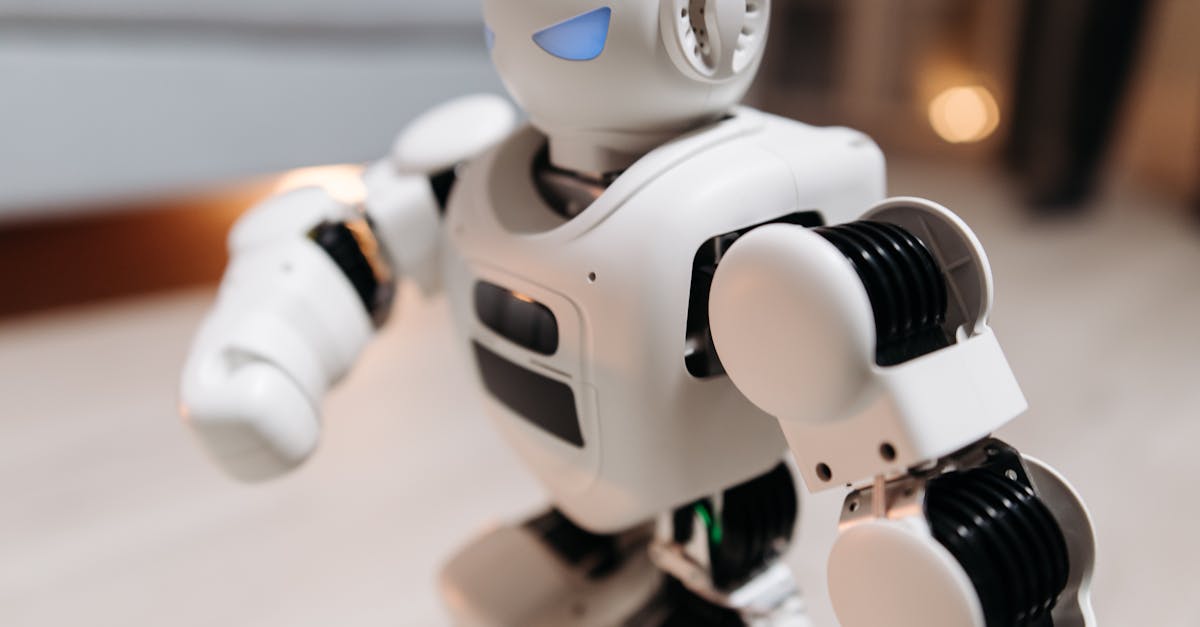
Window-Cleaning Robots: Vacuum-Suction Wall Climbers in Practice

Market Overview and Core Technology
Window-cleaning robots occupy a narrow but established segment of the home and consumer robotics market. Unlike lawn mowers or vacuum cleaners that operate on horizontal planes, window-cleaning units must manage vertical adhesion, edge detection, and gravity compensation simultaneously. The dominant engineering approach across the current shipping hardware landscape relies on vacuum-suction wall climbing technology. This method uses brushless DC motors driving impeller fans to generate negative pressure between a silicone or rubber sealing pad and the glass surface. The resulting adhesion force typically ranges from 3,000 to 5,000 Pascals, sufficient to counteract gravity while allowing controlled movement across smooth vertical planes.
The category has matured from early experimental prototypes to commercially viable shipping hardware over the past five years. Manufacturers have shifted focus from mere adhesion to systematic coverage algorithms, battery management, and safety redundancy. The market is currently consolidated around two primary brands that dominate global shipping volume: HOBOT (China) and Mamibot (China). Both companies produce units that are widely available through e-commerce channels and authorized distributors. Claims regarding autonomous navigation, AI path planning, or smart-home integration in this category are largely marketing terminology; the actual execution relies on pre-programmed zigzag patterns, gyroscope-based tilt correction, and optical edge sensors.
Vacuum-Suction Mechanics and Safety Architecture
Understanding how these units operate requires examining their core subsystems. The vacuum generation system is the most critical component. Early models used brushed motors that degraded quickly under continuous load. Current shipping hardware predominantly uses brushless DC motors paired with multi-stage impellers, which improve efficiency and reduce heat buildup during extended cleaning cycles.
Adhesion pads are typically made from medical-grade silicone or TPU composites. These materials maintain flexibility across temperature ranges and resist degradation from cleaning agents. The pad is mounted on a flexible chassis that allows it to conform to minor glass imperfections. When the vacuum pressure drops below a threshold, the onboard microcontroller triggers an immediate shutdown of the drive motors and activates mechanical brakes on the traction wheels.
Safety architecture in shipping window-cleaning robots follows a strict redundancy model. Every unit ships with a physical tether cord that must be anchored to a fixed point. This is not optional; it is a mandatory fail-safe against motor failure, battery depletion, or edge misidentification. Power loss protection relies on internal lithium-ion batteries, typically ranging from 2,200 to 3,000 mAh. These batteries maintain vacuum generation for 10 to 15 minutes after AC power disconnect, providing a window for manual retrieval. Units without this secondary power source are classified as non-compliant for consumer use.
Shipping Hardware: HOBOT and Mamibot Ecosystems
The current market is graded by hardware that ships in volume, not by concept renders or crowdfunding campaigns. HOBOT and Mamibot represent the two primary product lines that meet this threshold. Both companies utilize similar core architectures but differ in chassis design, battery capacity, and navigation algorithm tuning.
HOBOT Product Line and Verified Specifications
HOBOT has maintained a consistent product cycle with models like the 25S, 370, and 388. The HOBOT 25S remains the baseline shipping model, featuring a 2,200 mAh battery, 3,500 Pa adhesion force, and a cleaning coverage area of approximately 40 square meters per charge. The unit weighs 1.2 kg and operates on a 90-minute cleaning cycle for a standard 2-meter by 1.5-meter window. Navigation relies on a combination of accelerometer data and infrared edge detection. Independent teardowns and manufacturer spec sheets confirm that the 25S uses a fixed zigzag algorithm with random directional shifts at each pass to prevent streaking.
The HOBOT 370 and 388 models introduce upgraded brushless motors and larger batteries (up to 3,000 mAh). These units claim extended runtime and improved adhesion stability on tinted or low-iron glass. The 388 model adds a secondary edge-sensor array and a reinforced tether anchor point. All HOBOT models ship with a microfiber cleaning pad, a power adapter, and a safety tether. The company does not publish real-time production volumes, but shipping data from major e-commerce platforms indicates consistent monthly fulfillment across North America, Europe, and Asia.
Mamibot Product Line and Verified Specifications
Mamibot operates parallel product lines, primarily the W600, W650, and W800 series. The W600 mirrors the HOBOT 25S in core specs: 2,200 mAh battery, 3,200 Pa adhesion, and 1.15 kg weight. The W650 upgrades to a 2,800 mAh cell and a wider cleaning path, improving coverage efficiency on large panes. The W800 series introduces a dual-vacuum pump configuration, which theoretically increases adhesion redundancy. If one pump loses pressure, the second maintains sufficient force to prevent falls.
Mamibot units utilize a similar navigation framework: gyroscope-assisted tilt correction, optical edge detection, and pre-programmed coverage patterns. Independent testing notes that Mamibot pads use a slightly harder silicone compound than HOBOT, which affects performance on heavily textured or frosted glass. Both brands require smooth, non-porous surfaces. Neither company ships units rated for double-glazed windows with significant air gaps between panes, as the vacuum seal cannot maintain adhesion across the gap.
Independent Testing and Operational Constraints
Independent testing of shipping window-cleaning robots focuses on three metrics: adhesion stability, coverage efficiency, and edge detection accuracy. Testing is conducted on standard annealed and tempered glass panels under controlled conditions. Units are evaluated on their ability to maintain vacuum pressure during motor transitions, their response to edge misidentification, and their cleaning residue output.
Adhesion stability tests reveal that vacuum-suction units perform optimally on clean, dry glass. Dust, sand, or water droplets break the seal, causing the robot to stall or detach. Independent reports consistently note that pre-cleaning the window with a squeegee or microfiber cloth is mandatory before deployment. Units do not remove loose debris; they only wipe away fine dust and light grime during operation.
Coverage efficiency is measured by the percentage of the glass surface that receives at least one pass. Shipping models typically achieve 85 to 92 percent coverage in a single cycle. The remaining 8 to 15 percent consists of edge zones where the chassis width prevents full pad contact. Manufacturers address this by including a secondary manual pad or a narrower attachment, but the core unit cannot physically reach the extreme corners without mounting on a track system.
Edge detection accuracy is the most critical safety factor. Units use infrared or ultrasonic sensors to identify window frames. Testing shows that detection fails on frames with reflective coatings, heavy tinting, or irregular textures. In these cases, the robot may attempt to cross the frame, triggering the tether and halting operation. Independent reviewers recommend verifying frame compatibility before purchase. Units rated for tempered glass are common; laminated glass performs similarly, but textured or patterned glass reduces adhesion and increases the risk of slippage.
India Market Availability and Approximate INR Pricing
Window-cleaning robots are available in India through Amazon India, Flipkart, and authorized robotics distributors. Shipping hardware from HOBOT and Mamibot is imported in small batches, with stock levels fluctuating based on customs clearance and import duties. Prices reflect landed costs, including GST and handling fees.
Entry-level models (HOBOT 25S, Mamibot W600) are priced between ₹14,000 and ₹19,000 INR. These units offer baseline adhesion, standard battery capacity, and microfiber pads suitable for light maintenance cleaning. Mid-range models (HOBOT 370/388, Mamibot W650) range from ₹22,000 to ₹32,000 INR. They provide upgraded brushless motors, larger batteries, and reinforced chassis components. Premium configurations (Mamibot W800, HOBOT commercial variants) are listed between ₹36,000 and ₹48,000 INR, with dual-pump systems and extended warranty support.
India-specific deployment considerations include monsoon humidity, which can reduce silicone pad adhesion by up to 15 percent. Users are advised to deploy units during dry seasons or in climate-controlled environments. Building height restrictions for consumer use are not legally defined for these devices, but safety guidelines recommend anchoring tethers to structural points rather than decorative fixtures. Glass types common in Indian residential construction, such as toughened glass and low-iron glass, are fully compatible. Textured or frosted glass, often used for privacy, is not recommended for vacuum-suction operation.
Limitations and Deployment Guidelines
Vacuum-suction window-cleaning robots are not autonomous cleaning systems. They are automated wiping devices that require human setup, pre-cleaning, and post-operation inspection. Key limitations include:
- Inability to remove dried stains, hard water deposits, or adhesive residue. Cleaning agents must be applied manually before deployment.
- Dependency on smooth, non-porous glass surfaces. Units fail on textured, frosted, or heavily tinted glass.
- Fixed navigation algorithms. Units cannot adapt to dynamic obstacles or changing window geometries mid-cycle.
- Power dependency. AC units require proximity to outlets. Battery-only models are not commercially viable for this category due to weight and adhesion constraints.
Deployment guidelines for shipping hardware emphasize tether anchoring, surface preparation, and frame compatibility verification. Users should test edge detection on a small section before full deployment. Maintenance requires regular pad replacement, sensor cleaning, and battery health monitoring. Units that fail to maintain adhesion for more than 5 seconds should be removed from service.
References
- HOBOT Official Specifications: https://www.hobot.com
- Mamibot Product Line Documentation: https://www.mamibot.com
- Amazon India Window Cleaning Robot Listings (Verified Shipping Units): https://www.amazon.in
- Flipkart Robotics Category (India Availability): https://www.flipkart.com
- Independent Testing Methodology for Vertical Adhesion Robots: https://www.robotwale.com
- Manufacturer Safety and Tether Guidelines: https://www.hobot.com/support
✓ Key takeaways
- •Hands-on view of Window-Cleaning Robots: Vacuum-Suction Wall Climbers in Practice inside our Window-Cleaning Robots library.
- •Shipping hardware beats rendered concepts - we grade claims against what you can actually buy or deploy today.
- •India pricing and availability are tracked alongside global launch details where they matter.
Related articles
More in Window-Cleaning Robots →