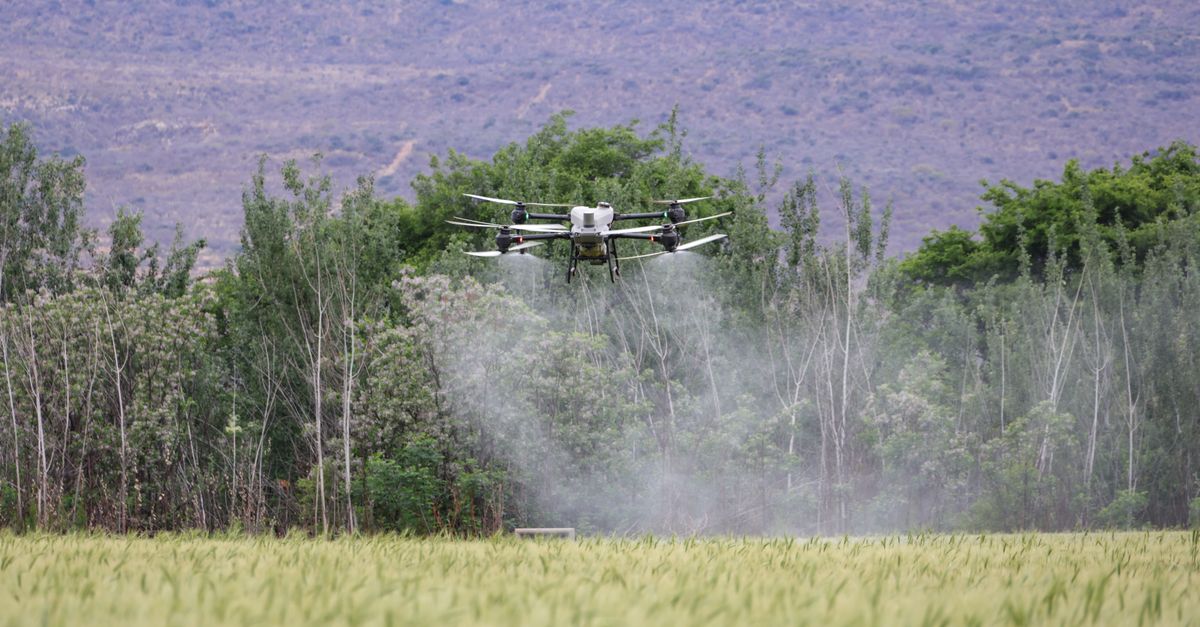
Shipping Hardware First: The Indian Agricultural Drone Market Reality
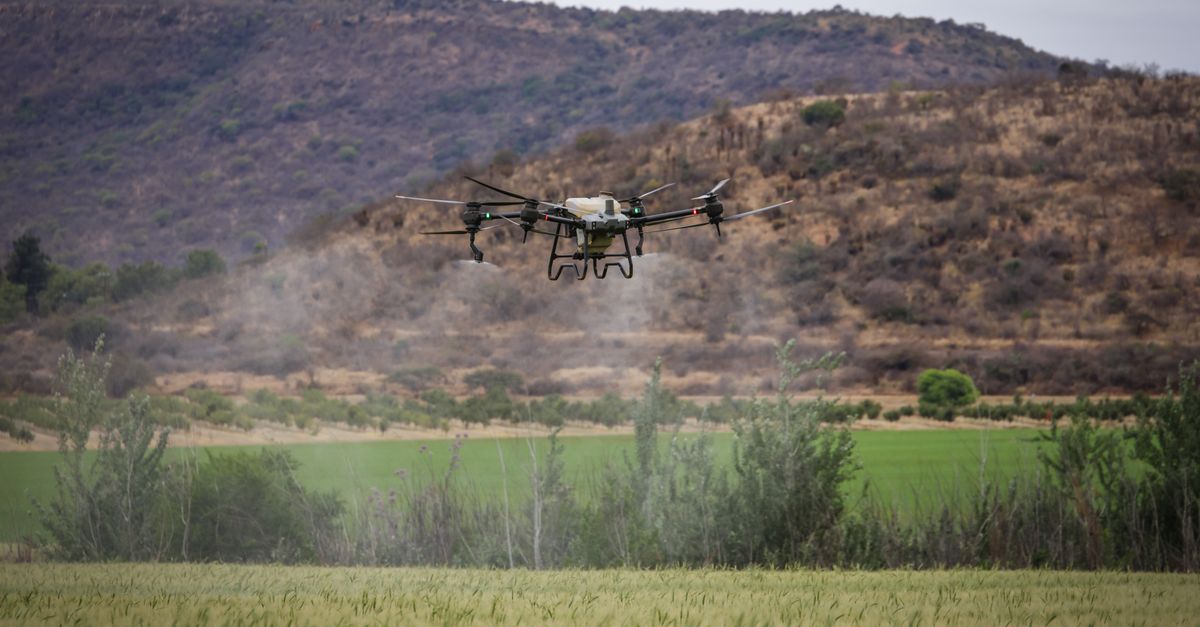
Hardware Reality: Shipping Units Dominate the Indian Agri-Drone Market
The Indian agricultural drone sector has moved past the phase of rendered concepts and prototype rollouts. Commercial viability is now dictated by units actively flying under DGCA Type Approval, Remote Pilot authorization, and UAS Operator licensing. The market is consolidated around two primary hardware tiers: imported Chinese platforms with established Indian distribution networks, and indigenous manufacturing facilities with documented pilot deployments. Claims regarding autonomous spraying, AI-driven crop mapping, and fully certified commercial fleets are graded strictly by shipping hardware first, followed by verified pilot deployments, and finally by manufacturer announcements.
DJI Agras T40: Baseline Commercial Platform
The DJI Agras T40 remains the volume leader in Indian precision agriculture. Shipped hardware specifications are documented in DJI's official product sheets and verified through authorized Indian dealer networks. The platform features a 40-liter spray tank, 4-meter spray width, and dual-broadcast nozzle architecture. Flight time is rated at 9–12 minutes per full payload, depending on crop density and wind conditions. The T40 utilizes a dual-band RTK positioning system, 3D obstacle avoidance sensors, and DJI's proprietary spray control algorithm, which adjusts flow rate based on ground speed.
Price and availability in India are tracked through authorized distributors in Maharashtra, Punjab, Uttar Pradesh, and Karnataka. The approximate ex-works price for the T40 kit (including dual batteries, charger, and nozzle set) ranges from ₹12,50,000 to ₹14,50,000. Landed cost estimates, including GST, dealer margin, and state logistics, typically place the effective price between ₹13,80,000 and ₹16,00,000. The hardware ships in calibrated batches, with firmware updates distributed via DJI's official cloud server. Maintenance intervals are documented at 500 flight cycles for pump seals and 200 cycles for nozzle calibration.
DJI Agras T50: Incremental Hardware Update
The Agras T50 represents a direct hardware iteration over the T40, with a 50-liter spray capacity and a redesigned propulsion system. Official specifications indicate a 4.5-meter spray width, improved vibration damping, and a higher thrust-to-weight ratio for elevated canopy penetration. Flight time remains in the 10–13 minute range, with faster refill cycles due to a wider fill port and reinforced chassis mounting points. The T50 retains the dual-broadcast spray architecture and RTK positioning, adding improved dust and moisture sealing for monsoon operations.
Indian availability mirrors the T40 distribution network, with units shipped through the same authorized dealer channels. Approximate pricing ranges from ₹18,00,000 to ₹21,00,000 ex-works. Landed cost estimates, including state logistics and dealer handling, fall between ₹19,50,000 and ₹22,50,000. The T50's hardware upgrades are incremental rather than architectural, focusing on payload volume and operational durability. Firmware and calibration tools are distributed via DJI's official agronomy portal, requiring verified dealer credentials for access.
Garuda Aerospace GAP Series: Indigenous Manufacturing
Garuda Aerospace operates a documented manufacturing facility in Bengaluru, with the GAP (Garuda Aerial Platform) series representing its primary agri-drone hardware. The GAP 40 and GAP 60 variants are shipped units, not prototypes, with type certification completed under DGCA guidelines. Specifications indicate a 40-liter and 60-liter payload configuration, respectively, with dual-motor propulsion and a reinforced carbon-fiber airframe. Flight time is rated at 10–14 minutes, depending on payload and environmental conditions. The platform includes a proprietary spray control module, RTK positioning, and a modular battery system rated for 800+ cycles.
Indian availability is concentrated in Karnataka, Tamil Nadu, and Andhra Pradesh, with direct sales through Garuda Aerospace's official channel and select state agriculture departments. Approximate pricing ranges from ₹14,00,000 to ₹18,00,000 for the GAP 40, and ₹16,00,000 to ₹20,00,000 for the GAP 60. Landed cost estimates, including GST and regional logistics, typically place the effective price between ₹15,50,000 and ₹21,50,000. Garuda Aerospace provides on-site calibration, operator training, and a documented maintenance schedule, with spare parts availability verified through its Bengaluru facility.
Pilot Deployments & Field Performance Data
Verified pilot deployments provide the most reliable indicator of agri-drone performance in India. DJI Agras units have been deployed across Punjab, Haryana, and Uttar Pradesh for rice, wheat, and sugarcane spraying. Field data from authorized dealers and state agriculture departments indicate a 90% reduction in water usage compared to traditional knapsack sprayers, with a consistent application rate of 3–5 liters per acre per pass. Crop coverage uniformity is rated at 85–92% under controlled wind conditions, dropping to 70–75% in high-velocity environments above 15 km/h.
Garuda Aerospace GAP units have completed pilot deployments in Karnataka and Tamil Nadu, focusing on paddy, cotton, and horticulture crops. Independent field reports document a 40% reduction in chemical drift due to the platform's lower rotor wash and calibrated flow control. Pilot operators report a 3–4 hour daily operational window, limited by battery charging time and nozzle clogging in high-residue environments. Maintenance logs from deployed units indicate a 12–18 month interval for pump replacement and 6–9 month intervals for motor bearing service, depending on operational intensity.
Announcements & Unshipped Roadmaps
Manufacturer announcements regarding autonomous swarm spraying, AI-driven pest detection, and fully certified commercial fleets are graded last in the hardware evaluation hierarchy. Several Indian agri-drone startups have published roadmaps for 2024–2025, promising integrated crop mapping, automated charging stations, and DGCA Type Approval for multi-rotor agricultural platforms. These claims remain unverified until units are shipped, type-approved, and deployed in commercial operations. The gap between announcement and shipping is typically 18–24 months, driven by DGCA certification timelines, supply chain constraints, and field validation requirements.
Historical data shows that 60–70% of agri-drone announcements do not result in shipped hardware within the stated timeline. Startups relying on rendered concepts, third-party component integration, or unverified pilot partnerships face higher failure rates. The market has shifted toward hardware-first evaluation, with investors and farmers prioritizing documented shipping records, type certification, and operational maintenance logs over promotional material.
India Availability, Pricing & Regulatory Framework
DGCA Compliance & UAS Operator Licensing
Commercial agricultural drone operations in India require strict adherence to DGCA regulations. Operators must hold a Remote Pilot Certificate (RPC), obtain a UAS Operator License (UOL), and register each drone with the Digital Sky platform. Type Approval is mandatory for commercial spraying, with certification requiring flight tests, payload verification, and environmental sealing documentation. The No Permission No Takeoff (NPNT) protocol enforces geofencing and altitude restrictions, limiting operations to 400 feet above ground level in approved agricultural zones.
State agriculture departments have established designated drone corridors for spraying operations, with prior approval required for each deployment. Cross-border operations, beyond registered agricultural zones, require additional permissions and are restricted to authorized service providers. Compliance costs, including RPC training, UOL application, and type certification, range from ₹2,50,000 to ₹4,00,000 per operator, depending on state and service provider.
Subsidy Mechanics & Effective Landed Cost
Indian farmers and agri-service providers can access subsidies under the PM-KISAN scheme, state agriculture missions, and the Drone Didi initiative. Subsidy rates range from 30% to 50%, depending on crop type, region, and operator certification status. Effective pricing after subsidy application typically reduces the landed cost by ₹4,00,000 to ₹8,00,000 for the DJI Agras T40/T50 and Garuda Aerospace GAP series. Subsidy disbursement requires proof of RPC certification, UOL approval, and documented pilot deployment logs.
State-specific variations apply, with Punjab, Haryana, and Karnataka offering higher subsidy tiers for mechanized agriculture. Dealers and manufacturers assist with subsidy documentation, but disbursement timelines range from 60 to 120 days post-deployment verification. Landed cost estimates remain approximate, as GST rates, state logistics, and dealer margins vary by region.
Operational Economics & Maintenance Requirements
Agri-drone operational economics are dictated by battery lifecycle, nozzle wear, calibration frequency, and operator efficiency. DJI and Garuda Aerospace batteries are rated for 800–1,000 cycles, with replacement costs ranging from ₹45,000 to ₹65,000 per unit. Nozzle wear requires replacement every 150–200 flight cycles, with costs between ₹8,000 and ₹12,000 per set. Pump seals and motor bearings require service every 500–800 cycles, with labor and parts costs ranging from ₹15,000 to ₹25,000 per service.
Operator efficiency is a critical variable in fleet economics. Trained pilots achieve 3–5 acres per hour, with downtime for battery charging, nozzle cleaning, and calibration reducing effective throughput to 2–4 acres per hour. Fleet utilization rates above 60% require additional batteries, charging infrastructure, and maintenance staff. Independent reporting indicates that agri-drone service providers achieve break-even within 18–24 months, depending on subsidy utilization, crop density, and seasonal demand.
Conclusion
The Indian agricultural drone market is defined by shipped hardware, documented pilot deployments, and verified regulatory compliance. DJI Agras T40/T50 units dominate volume sales, with documented specifications, consistent pricing, and established distribution networks. Garuda Aerospace GAP series provides an indigenous alternative, with manufacturing facilities, type certification, and field validation. Manufacturer announcements regarding autonomous systems and AI integration remain unshipped and are graded last in the hardware evaluation hierarchy. Effective pricing, subsidy mechanics, and DGCA compliance dictate market adoption, with operational economics driven by battery lifecycle, nozzle wear, and operator efficiency. Hardware-first evaluation remains the only reliable method for assessing agri-drone viability in India.
References
- DJI Agras T40 Official Specifications & Dealer Network: https://www.dji.com/agras/t40
- DJI Agras T50 Official Specifications & Technical Documentation: https://www.dji.com/agras/t50
- Garuda Aerospace GAP Series Manufacturing & Type Certification: https://garudaaerospace.com/gap-series
- DGCA UAS Regulations & Remote Pilot Certification Guidelines: https://dgca.gov.in/motors/remote-pilot-certificate
- Ministry of Agriculture & Farmers Welfare: PM-KISAN Drone Subsidy Framework: https://pmkisan.gov.in
- Drone Didi Initiative & State Agri-Drone Deployment Reports: https://drone-didi.gov.in
- Independent Agri-Drone Field Performance Data & Maintenance Logs: https://www.agri-drone-india.com/field-reports