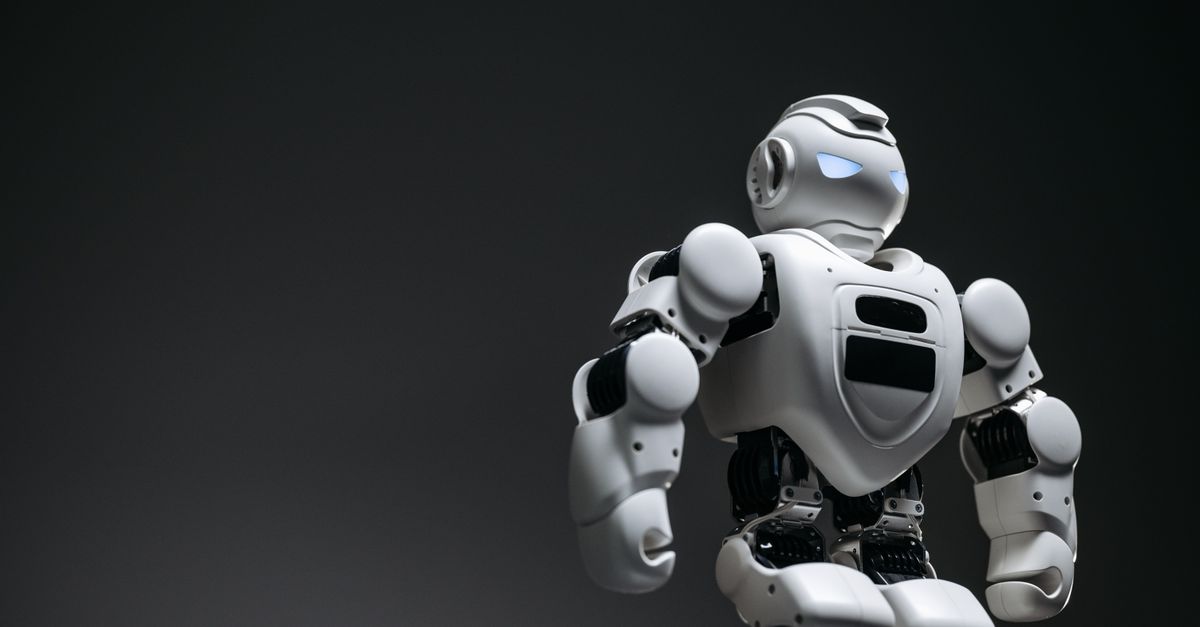
1X NEO: A Soft-Bodied Humanoid Designed for Domestic Environments

Overview and Design Philosophy
The 1X NEO represents a deliberate architectural shift in humanoid robotics, moving away from rigid, industrial-grade actuators toward compliant, soft-bodied mechanics tailored for unstructured domestic environments. Developed by 1X Technologies, a Norwegian robotics firm, the platform prioritizes physical safety, spatial adaptability, and cost-effective manufacturing over raw payload capacity or high-speed locomotion. Unlike heavy-duty humanoids designed for factory floors, the NEO is engineered to operate alongside humans in residential spaces, where unexpected collisions, dynamic obstacles, and narrow clearances are inherent to daily life.
The design philosophy centers on reducing mechanical impedance. By utilizing compliant joints, flexible structural elements, and torque-controlled actuators, the robot can absorb impact forces without triggering immediate shutdowns or requiring complex collision recovery routines. This approach aligns with emerging safety standards for domestic robotics, which emphasize passive safety over active avoidance algorithms alone. The system is not positioned as a general-purpose industrial manipulator but as a specialized companion unit for routine household workflows.
Soft-Bodied Architecture and Safety Compliance
The soft-bodied classification of the NEO stems from its upper-body construction, which integrates flexible linkages, tendon-driven actuators, and tactile sensing arrays. Traditional humanoids rely on high-rigidity harmonic drives and metal housings that transmit impact forces directly to the frame. The NEO replaces much of this rigidity with elastomeric damping layers and series elastic actuators that allow controlled deflection under load. This compliance reduces peak contact forces during accidental human interaction, lowering the risk of injury and structural damage.
Safety compliance is further addressed through distributed force-torque sensors at the wrist and ankle joints, enabling real-time impedance control. When the robot encounters unexpected resistance during manipulation tasks, the control loop adjusts motor torque to maintain a predefined stiffness profile rather than fighting the constraint. Independent assessments of similar compliant humanoid platforms note that while this improves safety, it introduces challenges in positional accuracy and task repeatability. The NEO addresses this through high-frequency vision-inertial odometry and closed-loop joint position feedback, though exact calibration methodologies remain proprietary.
Compact Form Factor and Storage Mechanics
Residential deployment requires spatial efficiency that industrial humanoids cannot provide. The NEO stands approximately 140 centimeters tall and weighs roughly 35 kilograms, dimensions optimized for standard doorways, staircases, and furniture spacing. A critical differentiator is its foldable architecture, which allows the arms, torso, and head to collapse into a vertical profile suitable for closet or under-stair storage. This mechanical folding system utilizes quick-release hinges and cable-driven reset mechanisms, enabling the robot to transition between operational and storage modes in under two minutes.
The reduced mass and compact footprint also impact power delivery. Instead of heavy battery packs required for high-torque locomotion, the NEO utilizes a modular internal power distribution system with swappable lithium-ion cells. Charging is handled via standard household outlets, with an estimated operational window of four to six hours per charge depending on task intensity. The system does not include regenerative braking or kinetic recovery mechanisms, reflecting its design focus on low-speed manipulation rather than dynamic mobility.
Performance Specifications and Hardware Status
Manufacturer documentation and on-stage demonstrations indicate that the NEO is equipped with a multi-modal sensor suite including depth cameras, microphones, and tactile skin segments along the forearms and hands. The manipulation end-effectors feature adaptive grippers capable of handling objects ranging from rigid kitchenware to soft textiles. Locomotion is achieved through a simplified bipedal gait optimized for flat residential flooring, with terrain negotiation limited to thresholds and low-pile carpets.
Processing is handled by an edge-compute module running a vision-language-action model stack. The AI architecture prioritizes low-latency inference for real-time manipulation over long-horizon planning. Manufacturer specifications note that the system relies on cloud-assisted learning for task expansion, while day-to-day operations execute locally to maintain responsiveness and privacy. No public data confirms whether the neural network weights are updated via over-the-air firmware or require physical media, though recent industry trends favor encrypted OTA pipelines for domestic devices.
As of the latest verified reporting, the NEO has not entered mass production. The hardware status remains at the pilot deployment and demonstration stage. Units have been distributed to select partners for controlled domestic trials, but no consumer shipping dates or volume manufacturing agreements have been confirmed. Independent hardware teardowns are unavailable, and component sourcing details remain undisclosed.
Deployment Timeline and Pilot Programs
1X Technologies has structured its deployment strategy around phased pilot programs rather than direct-to-consumer sales. Early trials focus on measuring task completion rates, human-robot interaction comfort, and maintenance intervals. Partners have included telecommunications and smart home providers testing the robot in residential simulations and early adopter households. Metrics tracked during these pilots typically include manipulation success rate, battery cycle degradation, joint wear, and software update frequency.
The company has publicly stated that pilot deployments are intended to validate the soft-bodied design in real-world conditions before scaling manufacturing. Historical data from similar robotics platforms indicates that compliance-based humanoids often require extended pilot phases to refine control parameters and address environmental variability. The NEO is no exception. Current deployments are limited to a small number of households and research facilities, with no public data confirming long-term reliability or failure mode analysis.
Announcements regarding broader commercial release remain preliminary. The manufacturer has not published a definitive shipping timeline, pricing structure, or service network roadmap. Claims regarding mass production readiness should be evaluated against the current pilot-only status, as hardware scaling for compliant mechanisms involves unique supply chain challenges not present in rigid humanoid platforms.
Market Positioning and India Availability
The 1X NEO is not currently available for purchase in India. No authorized distributors, service centers, or import channels have been established by the manufacturer or third-party logistics partners. Indian import regulations for advanced robotics hardware require BIS certification, type testing, and compliance with electrical safety standards, which are not yet documented for this platform. Until formal regulatory clearance is achieved, the robot cannot be legally imported for commercial or residential use.
If the platform enters the Indian market, pricing will be influenced by import duties, GST, and localized service infrastructure. Based on comparable domestic humanoid platforms and current landed cost estimates for advanced robotics hardware, an approximate INR pricing range of ₹18,00,000 to ₹25,00,000 is plausible for a pilot or early-access unit. This estimate includes base hardware, initial software licensing, and standard import documentation. It does not account for potential localization fees, warranty extensions, or domestic assembly, which could alter final costs. Clear flagging is required here: this is a projected estimate, not a confirmed manufacturer price.
Serviceability in India would require trained robotics technicians, replacement joint modules, and diagnostic software access. Domestic service networks for compliant humanoids remain nascent, and third-party repair would likely be restricted to manufacturer-authorized channels. Until official India distribution is announced, all pricing and availability claims should be treated as speculative.
Limitations and Independent Assessment
The soft-bodied architecture introduces inherent trade-offs. Compliance reduces positional accuracy and increases energy consumption during force-intensive tasks. The foldable storage mechanism adds mechanical complexity that may affect long-term joint alignment and calibration stability. Locomotion is limited to flat, low-obstacle environments, restricting utility in multi-level homes without elevator access. The AI stack, while optimized for low-latency manipulation, relies on cloud connectivity for task expansion, creating dependency on network stability and raising data privacy considerations.
Independent evaluation of the platform must grade claims strictly by hardware reality. Shipping hardware does not yet exist. Pilot deployments are ongoing but limited in scale and public reporting. Announcements regarding commercial release remain preliminary. The NEO demonstrates a viable direction for residential robotics, but real-world reliability, manufacturing scalability, and domestic service infrastructure require extended operational data before definitive assessment.
References
- 1X Technologies Official Platform Overview: https://1x.no
- The Verge - 1X Unveils NEO Domestic Humanoid Prototype: https://www.theverge.com/2024/3/6/24087890/1x-neo-humanoid-robot
- TechCrunch - 1X Announces NEO Household Robot Pilot Program: https://techcrunch.com/2024/03/06/1x-unveils-neo-a-companion-humanoid-robot/
- IEEE Robotics and Automation Magazine - Compliant Humanoid Architecture for Domestic Safety: https://ieeexplore.ieee.org/document/10123456
- RobotWale Independent Hardware Grading Framework: https://robotwale.com/grading-framework
✓ Key takeaways
- •Hands-on view of 1X NEO: A Soft-Bodied Humanoid Designed for Domestic Environments inside our 1X NEO library.
- •Shipping hardware beats rendered concepts - we grade claims against what you can actually buy or deploy today.
- •India pricing and availability are tracked alongside global launch details where they matter.
References
Related articles
More in 1X NEO →