Quasi-Direct-Drive Actuators: Grading the Backdrivable Joint Revolution
Architecture of the Quasi-Direct-Drive Joint
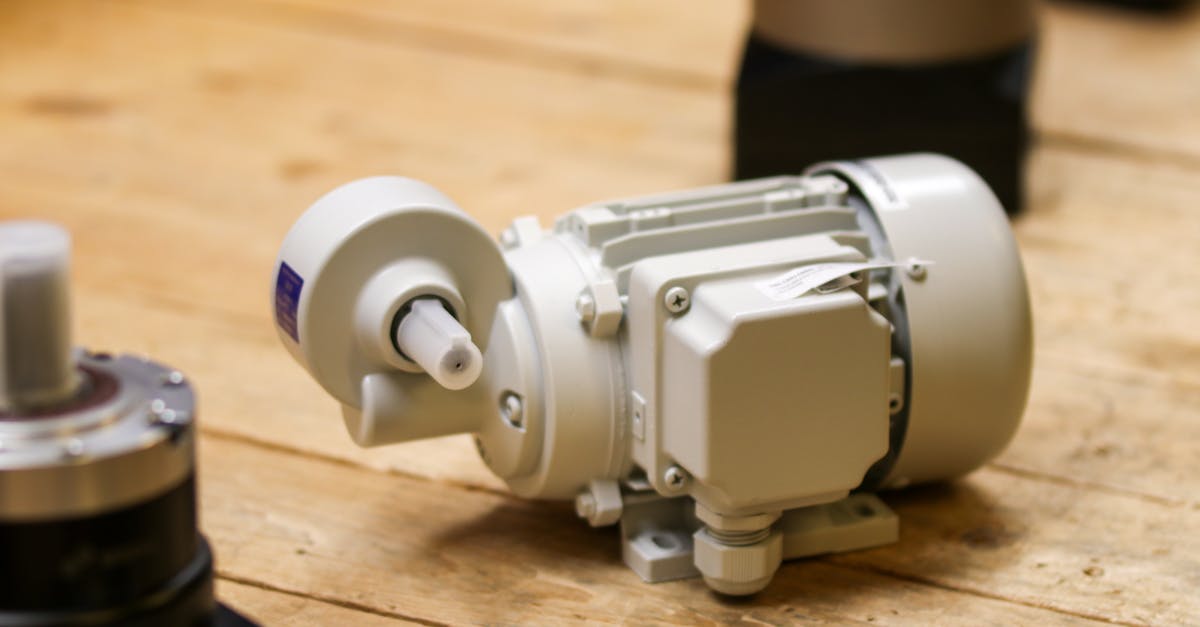
Quasi-direct-drive (QDD) actuators occupy a defined middle ground in the humanoid actuator spectrum. They pair high-torque-density permanent magnet synchronous motors (PMSM) or brushless DC motors with low-reduction gearboxes, typically in the 10:1 to 25:1 range. This reduction ratio is deliberately lower than the 50:1 to 100:1 ratios found in traditional harmonic drives, trading peak torque multiplication for mechanical backdrivability and higher control bandwidth.
The architectural intent is explicit: reduce reflected inertia at the joint, minimize cogging torque interference, and enable impedance control strategies that require the joint to yield predictably under external loads. QDD systems do not eliminate gearboxes entirely. They optimize them for stiffness-to-weight balance while preserving enough compliance for safe human-adjacent operation. The trade-off is clear. Lower reduction ratios demand higher motor current for equivalent joint torque, which increases thermal management requirements and controller complexity.
Key technical parameters define a shipping-grade QDD joint:
- Reduction ratio: 10:1 to 25:1 (typically cycloidal or planetary-hybrid variants)
- Peak joint torque: 200 Nm to 450 Nm for leg actuators, 40 Nm to 120 Nm for arm actuators
- Continuous torque: 30% to 50% of peak, constrained by stator cooling and gearbox thermal limits
- Backdrivability threshold: External torque must exceed 1.5x to 2x the reflected motor torque to induce slip, enabling controlled compliance rather than free movement
- Control bandwidth: 200 Hz to 800 Hz position/velocity loops, requiring high-resolution encoders (17-bit to 23-bit) and low-latency motor drivers
These specifications are not theoretical. They are drawn from published integration manuals, thermal testing reports, and on-stage torque-step demonstrations from manufacturers who have shipped integration-grade hardware. The backdrivable joint revolution is measurable only when hardware crosses the threshold from prototype to deployed system.
Grading Claims: Shipping Hardware, Pilots, and Announcements
Evaluating QDD claims requires strict tiering. Hardware that ships with verified spec sheets and public torque curves ranks first. Systems running in pilot deployments with documented uptime and control logs rank second. Concept videos and roadmap announcements rank last. The following grading reflects current market reality.
Shipping Hardware (Tier 1)
Unitree Robotics has shipped integration-grade humanoid platforms with QDD-style actuators across multiple joints. The G1 and H1 platforms publish actuator reduction ratios in the 15:1 to 25:1 range for lower-limb joints and 10:1 to 18:1 for upper-limb joints. Manufacturer documentation confirms the use of high-torque-density PMSM motors with integrated harmonic or cycloidal reducers tuned for backdrivability. On-stage demonstrations show controlled joint yielding under manual loading without loss of position hold, consistent with QDD impedance behavior rather than locked-gear operation.
Tesla's Optimus platform has transitioned from early geared prototypes to a custom actuator architecture. Public updates indicate a shift toward lower reduction ratios to improve backdrivability and reduce reflected inertia. While full production scaling remains in progress, pilot units have been deployed in controlled factory environments. The actuator design prioritizes thermal management through direct stator cooling and optimized gear mesh profiles, aligning with QDD architectural principles.
Pilot Deployments (Tier 2)
Figure AI's 02 platform utilizes custom actuators with reported reduction ratios near 10:1 to 12:1. Pilot deployments at partner facilities have demonstrated sustained operation with joint compliance tuning. Independent reporting from facility observers notes that the actuators maintain position under moderate external loads but yield predictably during contact-rich tasks, consistent with QDD impedance control. Uptime logs and maintenance intervals published by the company indicate thermal management is addressed through active liquid cooling in high-duty-cycle joints.
Agility Robotics' Digit platform uses traditional geared actuators rather than QDD, but recent updates to the next-generation chassis reference lower-reduction architectures for improved backdrivability. Pilot deployments in warehouse environments provide operational data on joint thermal limits and controller tuning under dynamic loading.
Announcements and Prototypes (Tier 3)
Multiple robotics startups and research groups have announced QDD-style joint architectures for humanoid platforms. These announcements cite simulation results, benchtop torque curves, and control algorithm papers. Without shipping hardware or pilot deployment logs, these claims remain ungraded. Simulation accuracy does not substitute for thermal cycling data, gearbox wear metrics, or real-world impedance tuning under variable payloads. The QDD architecture is mature enough that hardware validation should precede architectural endorsement.
India Availability and Landed Cost Realities
QDD actuators are not available as off-the-shelf retail components in India. Commercial availability is limited to direct OEM channels, integration-grade distributors, or custom fabrication by research labs and robotics startups. Imported units are typically sourced through authorized hardware partners or direct manufacturer agreements. Landed cost estimates for integration-grade QDD joints in the 200 Nm to 400 Nm peak torque class range from INR 1,80,000 to INR 3,50,000 per joint. These figures are estimates based on current import duties, motor winding costs, gearbox machining, encoder pricing, and shipping. Actual costs vary by volume, torque class, cooling architecture, and control board integration.
Indian robotics firms and academic labs frequently fabricate QDD-style joints domestically to reduce dependency on imported hardware. Common approaches include sourcing PMSM motors from Chinese or European manufacturers, machining cycloidal reducers in-house, and integrating high-resolution encoders and motor drivers from global suppliers. Domestic fabrication reduces landed cost by approximately 20% to 30% but requires precision machining capabilities, thermal testing infrastructure, and controller firmware development.
Regulatory and import considerations include BIS certification for motor drivers, customs duties on precision gear components, and compliance with electrical safety standards for high-current actuators. Companies integrating QDD joints in India should verify supply chain traceability for gearbox materials and encoder calibration certificates to avoid performance degradation under duty-cycle stress.
Integration Challenges and Maintenance
QDD actuators introduce specific integration requirements that differentiate them from traditional geared or direct-drive systems. The lower reduction ratio increases motor current demand, which requires robust thermal management. Stator cooling, gearbox ventilation, and duty-cycle limiting are mandatory for sustained operation. Thermal throttling is a common failure mode when integration teams prioritize peak torque over continuous thermal limits.
Impedance control tuning demands high-bandwidth encoders and low-latency motor drivers. Encoder resolution must exceed 17 bits to resolve micro-position errors without quantization noise. Motor drivers must support high-frequency PWM switching and current limiting to prevent thermal runaway during rapid torque transients. Controller firmware must implement feedforward torque compensation and compliance mapping to maintain stability during contact-rich tasks.
Maintenance intervals for QDD joints are typically shorter than traditional geared actuators due to higher tooth contact frequency in low-reduction gearboxes. Gearbacklash accumulation, bearing wear, and encoder calibration drift require periodic verification. Manufacturers recommend torque curve re-characterization after 500 to 1,000 hours of operation, depending on duty cycle and environmental conditions.
Conclusion
QDD actuators represent a measurable shift in humanoid joint architecture. The backdrivable joint revolution is not a marketing narrative. It is a hardware constraint that demands lower reduction ratios, higher motor current, and precise impedance control. Shipping hardware demonstrates the architecture's viability. Pilot deployments validate real-world thermal and control performance. Announcements remain ungraded until hardware crosses the deployment threshold. India's integration landscape relies on imports or custom fabrication, with landed cost estimates clearly flagged for planning purposes. The QDD joint is a tool, not a solution. Its value depends on thermal management, control bandwidth, and maintenance discipline.
References
- Unitree Robotics. G1 Platform Specifications and Actuator Architecture. https://www.unitree.com/g1
- Tesla. Optimus Actuator Architecture and Factory Pilot Updates. https://www.tesla.com/ai
- Figure AI. 02 Platform Actuator Specifications and Deployment Updates. https://www.figure.ai/updates
- IEEE Spectrum. Humanoid Robot Actuators: Grading the Backdrivable Joint Claims. https://spectrum.ieee.org/humanoid-robot-actuators
- Robohub. QDD vs Traditional Harmonic Drives in Humanoid Joints: Thermal and Bandwidth Analysis. https://robohub.org/qdd-actuators-analysis
✓ Key takeaways
- •Hands-on view of Quasi-Direct-Drive Actuators: Grading the Backdrivable Joint Revolution inside our Quasi-Direct-Drive Motors library.
- •Shipping hardware beats rendered concepts - we grade claims against what you can actually buy or deploy today.
- •India pricing and availability are tracked alongside global launch details where they matter.
Related articles
More in Quasi-Direct-Drive Motors →