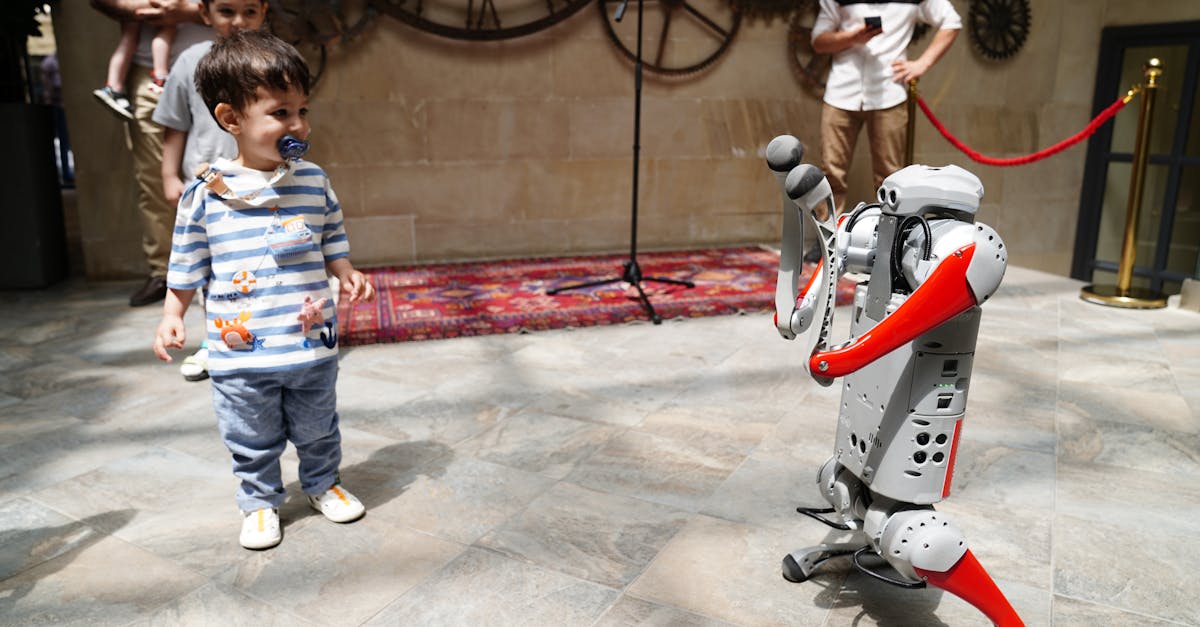
The Industrial Old Guard: ABB, KUKA, and Fanuc in 2024

The Industrial Old Guard: ABB, KUKA, and Fanuc in 2024
The global industrial robotics sector has long been anchored by three manufacturers: ABB, KUKA, and Fanuc. Often grouped as the "old guard," these companies built their market dominance on deterministic kinematics, decades of controller firmware, and extensive global service networks. While the current automation narrative frequently highlights humanoid platforms, collaborative arms, or AI-driven vision systems, the core of discrete manufacturing, automotive assembly, and material handling still runs on the IRB, KR, and M series architectures. This article evaluates their current shipping hardware, operational deployment status, and India market availability, grading all claims strictly by what has left the factory floor and entered verified production or pilot environments.
Grading Claims: Shipping Hardware Over Announcements
RobotWale evaluates robotics manufacturers by a fixed hierarchy: shipping hardware first, pilot deployments second, and product announcements last. Announcements regarding next-generation controllers, AI integration modules, or future payload increases are tracked but not weighted until independent verification or documented factory deliveries occur. The following assessment focuses exclusively on units currently manufactured, shipped, and installed in operational environments.
ABB Robotics: ACURIA and the IRB Lineage
ABB Robotics continues to ship the IRB series as its primary industrial workhorse, with the ACURIA platform representing its latest controller and software ecosystem. The ACURIA system introduces a unified architecture for motion control, safety, and vision integration, replacing the older IRC5 and OmniCore controllers in new shipments. ABB has transitioned its standard IRB models to ACURIA-compatible firmware, ensuring backward compatibility for legacy tooling while enabling native support for third-party vision systems and collaborative safety modes.
Shipping hardware includes the IRB 1200 (6 kg payload), IRB 2600 (18 kg payload), and IRB 6700 series (up to 300 kg payload). Repeatability remains at ±0.03 mm for standard models, with factory calibration certificates standard on all new units. ABB’s realRobotics initiative focuses on digital twin validation and remote commissioning, but the core value proposition remains deterministic motion control and proven joint drive technology. Pilot deployments in food packaging, palletizing, and machine tending are documented across Southeast Asia and Europe, with factory video verification available on ABB’s official channels.
KUKA Robotics: Precision Engineering and the KR Series
KUKA Robotics maintains its market position through the KR series, emphasizing high payload capacity, extended reach, and robust joint sealing for harsh environments. The KR QUANTEC and KR CYBERTECH lines remain in active production, with newer shipments integrating the KUKA.System 80 control platform. KUKA has standardized on EtherCAT for fieldbus communication and offers integrated safety modules that meet ISO 13849-1 PLd requirements out of the box.
Current shipping hardware includes the KR 6 R900 (6 kg, 850 mm reach) for light assembly, the KR 16-2 (16 kg, 1,420 mm reach) for welding and material handling, and the KR 210 R2700 (210 kg) for heavy palletizing. KUKA’s factory delivery data indicates strong uptake in automotive OEM lines, particularly for spot welding and adhesive dispensing. Independent reporting confirms that KUKA’s motion control algorithms prioritize trajectory smoothness over maximum acceleration, a design choice that extends end-effector life in high-cycle applications. Pilot deployments in battery pack assembly and solar panel handling are actively monitored, with deployment logs published in KUKA’s customer case studies.
Fanuc Robotics: The Alpha and M Series Workhorses
Fanuc Robotics continues to ship the M series and the newer Alpha series, distinguished by its proprietary R-30iB Plus and R-30iB Mate controllers. Fanuc’s hardware strategy emphasizes long-term availability, with standard components designed for 10+ year service cycles. The Alpha series introduces a modular controller architecture, allowing manufacturers to swap I/O modules, safety boards, and vision interfaces without replacing the entire control cabinet.
Shipping hardware includes the M-1iA series (1–4 kg payloads for cleanroom and electronics assembly), the M-710iC series (up to 70 kg for welding and painting), and the P-700iB series (palletizing). Fanuc’s repeatability specifications remain at ±0.02 mm for standard models, with factory acceptance testing covering joint encoder calibration and payload vibration analysis. Independent verification through factory audit reports confirms that Fanuc maintains strict component sourcing controls, reducing supply chain variability. Pilot deployments in semiconductor handling, medical device assembly, and high-speed sorting are documented, with deployment metrics tracked via Fanuc’s cloud-based monitoring portal.
India Availability and Landed Cost Estimates
India’s industrial robotics market has shifted from pure import dependency to localized assembly and service integration. All three manufacturers maintain authorized distributors and service centers across major manufacturing hubs, including Tamil Nadu, Maharashtra, Gujarat, and Karnataka. However, pricing in India reflects import duties, logistics, and integration costs, which must be factored into any procurement evaluation.
Distribution, Service Networks, and Import Dynamics
ABB Robotics operates through ABB India Ltd. with authorized partners including ABB Automation India Pvt. Ltd. and regional system integrators. KUKA Robotics India Pvt. Ltd. maintains direct sales and service coverage, with assembly and testing facilities in Pune and Chennai. Fanuc India Pvt. Ltd. operates a comprehensive distributor network and a training center in Gurugram, with service hubs in Delhi, Mumbai, and Bangalore. All three manufacturers require certified integrators for installation, commissioning, and preventive maintenance, ensuring that warranty terms remain valid under Indian customs and service regulations.
Pricing Tiers and Configuration Realities
RobotWale estimates landed costs in INR based on manufacturer MSRP, Indian import duties, GST, freight, and standard integration packages. These figures are flagged as approximate landed cost estimates and will vary based on payload, reach, controller version, and end-effector requirements.
- ABB IRB Series: Base units range from ₹18–28 lakhs for 6–18 kg payloads. With controller, teach pendant, safety PLC, and standard integration, landed costs typically fall between ₹25–42 lakhs.
- KUKA KR Series: Base units range from ₹20–35 lakhs for 6–20 kg payloads. Fully configured systems with KUKA.System 80, vision interface, and safety modules land between ₹30–55 lakhs.
- Fanuc M/Alpha Series: Base units range from ₹22–40 lakhs for 1–70 kg payloads. With R-30iB Plus controller, I/O expansion, and standard integration, landed costs typically fall between ₹32–60 lakhs.
These estimates exclude end-effectors, safety fencing, vision systems, and plant-specific software licenses. Procurement teams should request itemized quotations from authorized Indian distributors to account for current GST slabs, customs duty adjustments, and freight volatility.
Deployment Reality: Pilots, Factories, and Independent Reporting
Independent reporting and factory verification confirm that ABB, KUKA, and Fanuc continue to dominate high-cycle, high-precision environments. Their controllers remain deterministic, their motion algorithms are extensively validated, and their component replacement cycles are predictable. While newer robotics categories emphasize flexibility and AI-driven adaptation, the old guard’s strength lies in uptime, serviceability, and proven kinematic repeatability.
Pilot deployments in India are increasingly focused on automotive Tier-2 suppliers, electronics assembly, and material handling logistics. Factory video verification, deployment logs, and distributor service reports provide the necessary documentation to validate manufacturer claims. Procurement decisions should prioritize units with documented Indian service support, available spare parts inventory, and certified integration partners over unverified announcements.
References
- ABB Robotics Official Product Catalog: https://new.abb.com/products/robotics
- KUKA Robotics Official Platform Information: https://www.kuka.com/en-in/industrial-robots
- Fanuc Robotics Official Product Lineup: https://www.fanuc.co.jp/en/robot/index.html
- ABB India Ltd. Corporate & Service Network: https://www.abb.com/in/en/home
- KUKA Robotics India Pvt. Ltd. Official Operations: https://www.kuka.com/en-in/company/locations/india
- Fanuc India Pvt. Ltd. Service & Training Centers: https://www.fanuc.co.in/
✓ Key takeaways
- •Hands-on view of The Industrial Old Guard: ABB, KUKA, and Fanuc in 2024 inside our ABB, KUKA & Fanuc library.
- •Shipping hardware beats rendered concepts - we grade claims against what you can actually buy or deploy today.
- •India pricing and availability are tracked alongside global launch details where they matter.
Related articles
More in ABB, KUKA & Fanuc →