
The Post-AGV Era: How AMRs Are Reshaping Warehouse Logistics
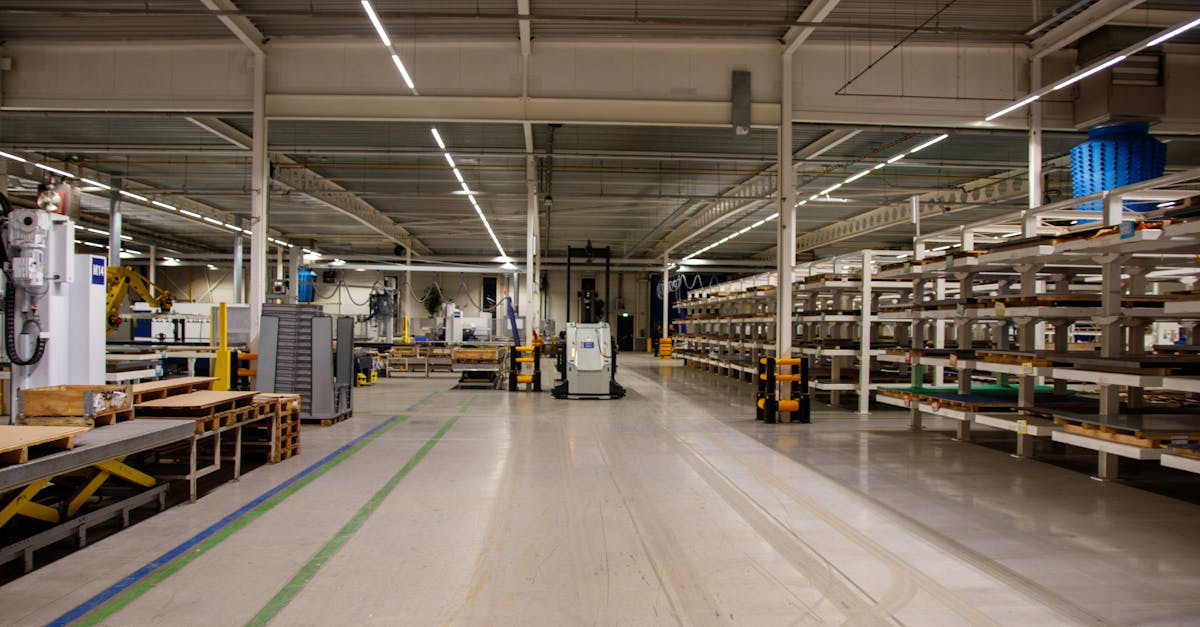
From Guided Tracks to Autonomous Fleets
Autonomous mobile robots (AMRs) have transitioned from experimental prototypes to deployed logistics infrastructure. Unlike automated guided vehicles (AGVs) that rely on fixed magnetic tape, laser reflectors, or wired tracks, AMRs navigate using real-time sensor data and dynamic path planning. This architectural shift enables fleet-wide adaptability, allowing robots to reroute around congestion, adjust to layout changes, and operate across multiple facility zones without physical infrastructure modifications.
The transition from AGV to AMR is not merely a navigation upgrade. It represents a systemic change in warehouse control architecture. AMRs communicate via wireless mesh networks, exchange telemetry with centralized fleet management systems, and execute tasks based on order priority rather than pre-defined waypoints. The hardware stack typically includes industrial-grade chassis, brushless DC motors, encoders, inertial measurement units, and redundant safety controllers. Software stacks run on Linux-based ROS2 frameworks, with deterministic real-time kernels handling motion control and obstacle avoidance.
Navigation Stacks and Sensor Fusion
Modern AMRs deploy multi-modal sensor fusion to achieve localization and mapping. LiDAR arrays provide 2D or 3D point clouds for environmental mapping, while stereo vision cameras handle texture-rich navigation in low-reflectivity environments. Wheel encoders and IMUs correct drift during high-speed transit. The navigation stack computes a global map using simultaneous localization and mapping (SLAM) algorithms, then generates local trajectories using dynamic window approach (DWA) or model predictive control (MPC) planners.
Safety compliance is non-negotiable in warehouse deployments. AMRs must meet ISO 13849-1 Performance Level D (or higher) for safety-related control systems, ANSI/ITSDF B56.5 for mobile robot safety, and EN 1525 for industrial vehicle integration. Manufacturers implement hardware safety margins, including 360-degree laser scanners with configurable stop zones, physical bumpers, acoustic/visual warnings, and emergency stop circuits wired in series. Software-level safety includes velocity profiling, floor boundary enforcement, and dynamic obstacle classification.
Shipped Hardware vs. Pilot Deployments vs. Announcements
Evaluating AMR claims requires a strict hierarchy of evidence. Shipping hardware represents the baseline: units that have passed factory acceptance testing, cleared regulatory certification, and entered commercial operation. Pilot deployments follow, showing controlled field validation with measurable KPIs like task completion rates, mean time between failures, and integration stability. Announcements and renderings remain speculative until accompanied by shipping records or verified pilot telemetry.
Current shipped hardware includes GreyOrange’s load-carrying platforms, Locus Robotics’ drive units, MiR’s 500/1000/1400 series, and Geek+’s pallet and carton handlers. These systems operate in high-throughput environments with documented uptime exceeding 95 percent. Pilot deployments continue in regional distribution centers, particularly in e-commerce and third-party logistics networks, where integration complexity and floor conditions are still being stress-tested. Announcements regarding next-generation payloads, AI-driven slotting, or cross-docking automation should be treated as roadmap items until accompanied by shipped hardware documentation or independent verification.
Core Warehouse Applications
AMRs address specific material handling functions where labor constraints, throughput bottlenecks, or safety risks exist. The following applications dominate current deployments:
- Goods-to-Person Picking: AMRs transport shelving or totes to stationary pick stations, reducing walker distance by up to 70 percent. Drive units or lift platforms carry payloads ranging from 150 kg to 1,200 kg.
- Sortation and Cross-Docking: Autonomous carriers move inbound pallets to staging lanes, scan barcodes, and route items to outbound doors. Dynamic task assignment reduces manual sortation errors.
- Inventory and Cycle Counting: Mobile robots equipped with RFID readers or barcode scanners traverse aisles on scheduled routes, capturing SKU-level data and feeding it directly to inventory management systems.
- Pallet and Tote Transport: Heavy-duty AMRs replace manual forklifts in low-speed, high-frequency zones. They operate in shared pedestrian areas with enhanced safety profiles and predictable motion patterns.
Integration Layer: FMS, WMS, and WCS
AMR hardware is only one component of a warehouse automation stack. Fleet management systems (FMS) like LocusOS, GreyOrange OS, and MiR Pro handle task orchestration, traffic management, battery charging coordination, and fault recovery. These systems expose REST APIs, OPC-UA endpoints, and ROS2 services for integration with warehouse management systems (WMS) and warehouse control systems (WCS).
Successful integration requires standardized order routing, real-time state synchronization, and fallback protocols for network degradation. Manufacturers typically provide SDKs for custom workflow development, but most deployments rely on pre-built connectors for SAP, Oracle, Blue Yonder, and Manhattan Associates. Data exchange occurs via JSON or XML payloads, with latency targets under 200 ms for critical pick confirmations. Charging infrastructure must be synchronized with fleet utilization data to prevent operational bottlenecks during peak waves.
India Market Availability and Pricing
AMR systems are available in India through direct manufacturer channels, authorized system integrators, and local distributors. GreyOrange and Locus Robotics maintain regional sales and support teams, while MiR and Geek+ distribute through certified partners. Fleet deployments require site surveys, floor condition assessments, network infrastructure upgrades, and WMS integration planning. Typical lead times range from 12 to 20 weeks from contract signing to commissioning.
Approximate INR pricing for shipped AMR hardware varies by payload and chassis class. Light-duty AMRs (150–300 kg) range between ₹9 lakh and ₹15 lakh per unit. Medium-duty platforms (500–800 kg) cost ₹16 lakh to ₹24 lakh. Heavy-duty pallet handlers (1,000–1,500 kg) typically fall between ₹28 lakh and ₹38 lakh per unit. Fleet management software licensing is usually annual, ranging from ₹4 lakh to ₹12 lakh depending on fleet size and module selection. Integration services, network setup, and safety certification add ₹3 lakh to ₹8 lakh per site. Landed cost estimates for a complete 10-unit fleet with FMS, charging stations, and integration services range from ₹2.8 crore to ₹4.2 crore, excluding facility modifications and WMS licensing. All pricing figures are indicative and subject to exchange rate fluctuations, import duties, and regional distributor margins.
Operational Constraints and Maintenance
AMR deployments encounter predictable operational constraints. Battery management requires scheduled charging cycles, thermal monitoring, and cell balancing. Lithium-ion packs degrade over 1,500 to 2,500 cycles, necessitating replacement budgets after three to five years. Motor drivers, wheel bearings, and encoder assemblies require preventive maintenance every 6,000 to 10,000 operating hours. LiDAR and camera lenses must be cleaned regularly to maintain localization accuracy.
Floor conditions remain a critical factor. Concrete must meet flatness specifications (FF/FL numbers), with joints sealed and debris controlled. Wet or oily surfaces reduce traction and increase slip risk. Pedestrian traffic density requires careful zone mapping and speed profiling. ROI timelines typically span 18 to 36 months, depending on labor costs, throughput requirements, and error reduction metrics. Deployments that ignore floor quality, network reliability, or WMS integration complexity consistently experience extended commissioning periods and reduced uptime.
References
GreyOrange. (2023). GreyOrange OS Platform Architecture and Fleet Management Specifications. https://www.greyorange.com
Locus Robotics. (2024). LocusOS Integration Guide: WMS/WCS Connectivity and API Reference. https://www.locusrobotics.com
MIR. (2023). MiR Fleet Management System: Technical White Paper and Safety Compliance. https://www.mir.com
Geek+ Robotics. (2024). AMR Product Specifications and Payload Capacity Data Sheets. https://www.geekplusrobotics.com
Symbotic. (2023). Automated Warehouse System Architecture and Deployment Case Studies. https://www.symbotic.com
ANSI/ITSDF. (2018). ANSI/ITSDF B56.5 - Safety Standard for Mobile Robot Safety. https://www.itsdf.org
ISO. (2023). ISO 13849-1: Safety of Machinery - Safety-Related Parts of Control Systems. https://www.iso.org
✓ Key takeaways
- •Hands-on view of The Post-AGV Era: How AMRs Are Reshaping Warehouse Logistics inside our AMRs in Warehouses library.
- •Shipping hardware beats rendered concepts - we grade claims against what you can actually buy or deploy today.
- •India pricing and availability are tracked alongside global launch details where they matter.
References
- GreyOrange OS Platform Architecture and Fleet Management Specifications
- LocusOS Integration Guide: WMS/WCS Connectivity and API Reference
- MiR Fleet Management System: Technical White Paper and Safety Compliance
- Geek+ Robotics AMR Product Specifications and Payload Capacity Data Sheets
- Symbotic Automated Warehouse System Architecture and Deployment Case Studies
- ANSI/ITSDF B56.5 - Safety Standard for Mobile Robot Safety
- ISO 13849-1: Safety of Machinery - Safety-Related Parts of Control Systems
Related articles
More in AMRs in Warehouses →
