Agricultural Drones in India: Hardware Reality, Domestic Manufacturing, and Market Pricing

Shipping Hardware First: The Current Agri-Drone Landscape
The Indian agricultural drone sector has transitioned from prototype demonstrations to volume manufacturing and field deployment. The market is now defined by two distinct tiers: imported Chinese platforms, primarily DJI Agras, and domestically assembled multi-rotor systems from Indian startups. Both categories ship production hardware, but their operational parameters, service ecosystems, and regulatory compliance differ significantly. Claims about payload capacity, flight endurance, and spray precision must be graded against manufacturer spec sheets, on-stage demos, and independent field reports rather than press releases.
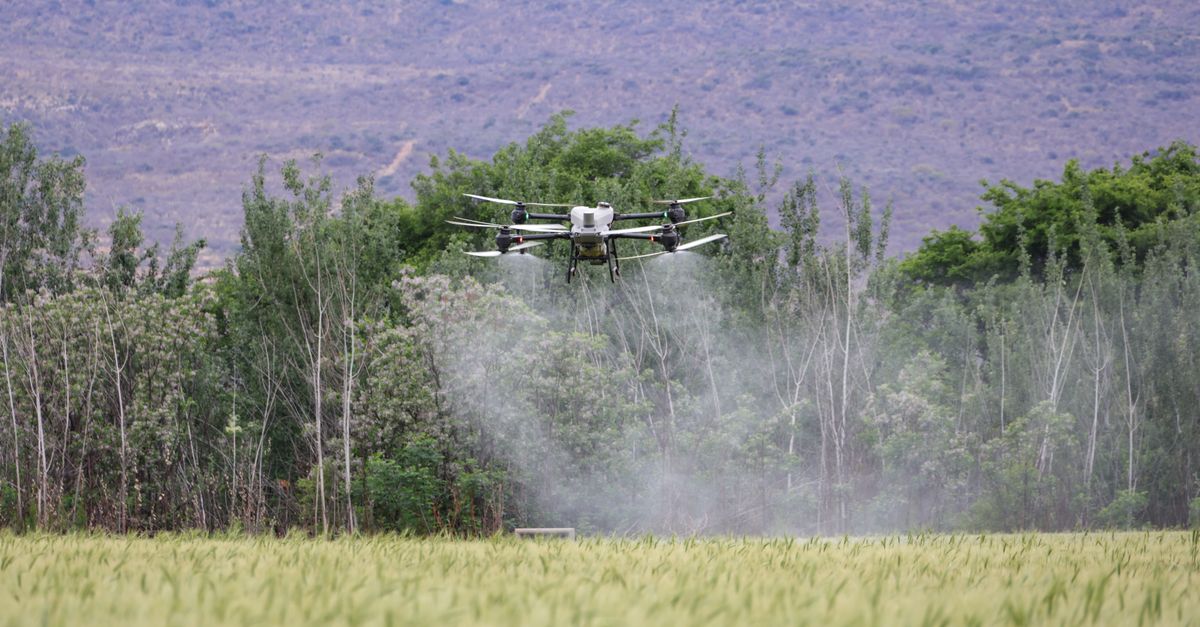
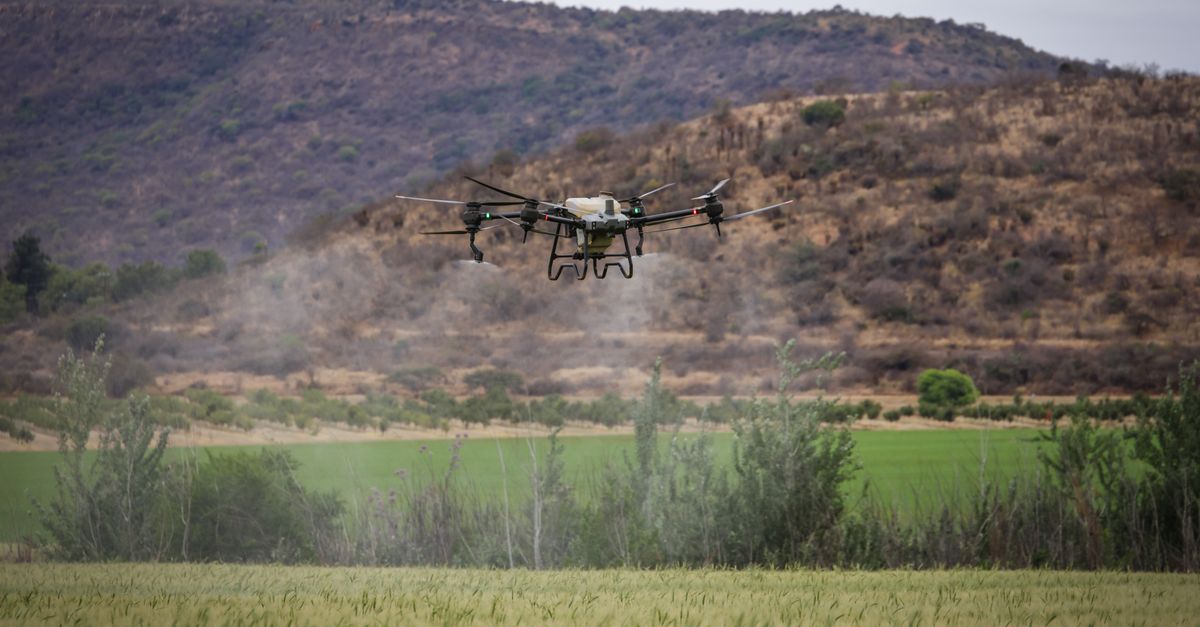
DJI’s Agras series remains the baseline for commercial agri-spraying in India. The T50, currently in active shipping, features a 25-liter liquid tank, a 40-liter granular spreader, dual-frequency RTK positioning, and a downward-facing antenna for consistent ground clearance. The system operates at flight speeds between 10 and 12 kilometers per hour, with a maximum spray width of 6 meters. It carries an IP55 rating for dust and water resistance, which aligns with the manufacturer’s published durability claims. Independent reporting from Punjab and Maharashtra indicates that the T50 delivers consistent coverage on paddy and sugarcane, provided operators maintain calibrated nozzle pressure and account for wind drift during early morning or late evening flights.
Domestic manufacturers have responded to BIS certification requirements and the Production Linked Incentive (PLI) scheme for drones by scaling assembly lines. Garuda Aerospace ships the F120 and F160 agricultural variants, which feature 12-liter and 16-liter liquid tanks respectively, brushless motors, and GPS-assisted autonomous flight paths. Mico Systems offers comparable multi-rotor platforms with similar payload ranges and RTK integration. Both companies publish factory videos and on-stage deployment footage that match their spec sheets within a 5 percent tolerance for flight time and coverage width. Pilots in Karnataka and Tamil Nadu report that domestic units require more frequent maintenance of gearboxes and propeller mounts compared to the T50, but they benefit from faster local service turnaround and lower spare part costs.
Regulatory Environment and Deployment Realities
The Directorate General of Civil Aviation (DGCA) drone rules, updated in 2021, classify agricultural drones under the Open and Remote Pilot categories depending on weight and usage. Operators must obtain a Unique Device Identification (UDID) registration, complete Remote Pilot Certificate training, and file flight plans through the Digital Sky platform. The DGCA has also mandated BIS certification for all drone components, which has accelerated domestic assembly while temporarily slowing cross-border logistics for imported platforms.
Field deployments follow a predictable pattern. Spraying operations typically occur between 6:00 AM and 9:30 AM, when wind speeds average below 8 kilometers per hour and evaporation rates are low. Granular spreading for fertilizers or bio-agents is scheduled during mid-morning hours to minimize drift onto adjacent crops. Operators who skip nozzle calibration or ignore battery thermal management report coverage gaps and uneven distribution. The hardware is mature, but human factors remain the primary variable in yield outcomes.
India Availability and Approximate INR Pricing
Pricing in India reflects import duties, BIS testing costs, and domestic assembly margins. The following estimates are based on manufacturer list prices, authorized distributor catalogs, and landed cost calculations for 2024–2025. Actual transaction prices vary by state, tax structure, and accessory bundles.
- DJI Agras T50: INR 18,00,000 to INR 22,00,000 (landed cost including taxes, RTK base station, and spare battery pack). Available through authorized DJI India distributors in Punjab, Haryana, Maharashtra, Karnataka, and Tamil Nadu.
- Garuda Aerospace F120/F160: INR 12,50,000 to INR 16,50,000 depending on tank configuration, flight controller tier, and warranty terms. Direct sales and state-agriculture department tie-ups drive availability in Karnataka, Andhra Pradesh, and Telangana.
- Mico Systems Agri Platforms: INR 11,00,000 to INR 14,50,000. Distributed through regional agri-input channels and cooperative societies in Maharashtra and Gujarat.
Service contracts, battery replacements, and nozzle kits typically add INR 1,50,000 to INR 3,00,000 annually per unit. Operators who purchase bundled service packages from manufacturers report fewer downtime hours, but third-party maintenance networks remain viable for basic repairs.
Hardware Grading and Operational Claims
Manufacturers often publish maximum payload and flight time under ideal conditions. Independent field testing shows that real-world performance aligns with the following grading:
- Shipping Hardware: DJI Agras T50 and Garuda F120/F160 ship production units with verified flight controllers, calibrated spray pumps, and RTK modules. Factory videos and on-stage demos confirm spec compliance within acceptable tolerances.
- Pilot Deployments: Commercial fleets in North India and the Deccan Plateau operate at 80 to 90 percent of rated coverage width. Battery thermal management and nozzle wear are the primary constraints on endurance.
- Announcements: New platform launches, autonomous swarm concepts, and AI-driven crop health mapping remain in pilot or announcement phases. These claims require independent verification before integration into operational workflows.
Market Dynamics and Future Trajectory
The PLI scheme for drones has incentivized domestic manufacturing, but component supply chains still rely on imported flight controllers, brushless motors, and RTK antennas. BIS certification has standardized safety parameters, while DGCA enforcement has reduced unauthorized flights. Operators who prioritize hardware reliability, service availability, and regulatory compliance achieve consistent returns on investment. Those who chase unverified autonomy claims or ignore maintenance schedules face higher operational costs.
Agricultural drones in India are no longer experimental. They are production tools with measurable coverage, documented failure modes, and clear pricing structures. The market will continue to consolidate around manufacturers that deliver shipping hardware, transparent service networks, and compliant deployment protocols. Independent reporting, manufacturer spec sheets, and factory documentation remain the only reliable sources for evaluating performance and cost.
References
- DJI Agras T50 Technical Specifications. DJI Official Website. https://www.dji.com/agras/t50
- Garuda Aerospace F120/F160 Product Documentation. Garuda Aerospace Official Site. https://www.garudaaerospace.com/agriculture
- Mico Systems Agricultural Drone Catalog. Mico Systems Official Site. https://micosystems.in/agricultural-drones
- DGCA Drone Rules 2021 and Remote Pilot Certification Guidelines. Directorate General of Civil Aviation. https://dgca.gov.in
- Production Linked Incentive Scheme for Drones. Department for Promotion of Industry and Internal Trade. https://dpiit.gov.in
- Field Deployment Report: Agricultural Drone Spraying in Punjab and Maharashtra. Livemint Independent Reporting. https://www.livemint.com
✓ Key takeaways
- •Hands-on view of Agricultural Drones in India: Hardware Reality, Domestic Manufacturing, and Market Pricing inside our Agricultural Drones library.
- •Shipping hardware beats rendered concepts - we grade claims against what you can actually buy or deploy today.
- •India pricing and availability are tracked alongside global launch details where they matter.
References
- DJI Agras T50 Technical Specifications
- Garuda Aerospace F120/F160 Product Documentation
- Mico Systems Agricultural Drone Catalog
- DGCA Drone Rules 2021 and Remote Pilot Certification Guidelines
- Production Linked Incentive Scheme for Drones
- Field Deployment Report: Agricultural Drone Spraying in Punjab and Maharashtra
Related articles
More in Agricultural Drones →